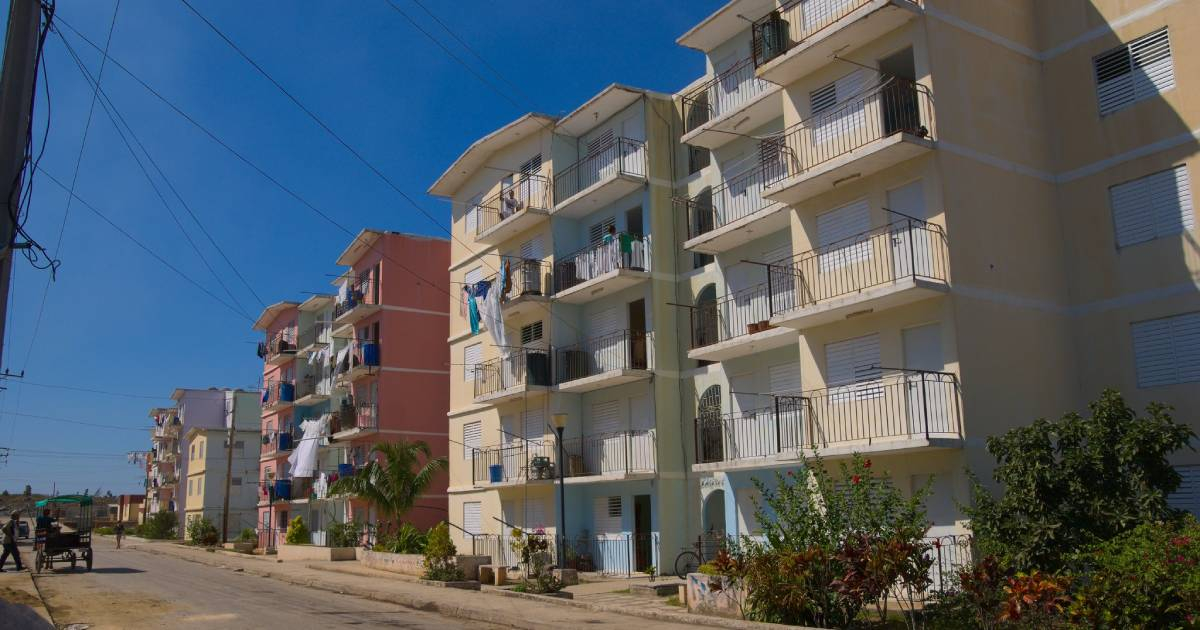
The Council of Ministers of Cuba approved the , which establishes the Horizontal Property Regulation and governs the rules of coexistence, the rights and obligations of owners, and the management of apartment buildings in the country.
The regulation was published this Wednesday, October 14, in the and complements Law 187, "Residential Law," which was approved on July 30.
The new regulation applies to buildings that share both private and common spaces, whether they are simply or complexly managed. It also pertains, as applicable, to the residents and occupants of the properties.
The regulation recognizes two forms of horizontal property: the formally established one through a public deed and the so-called "de facto horizontal property," which pertains to communities that operate under this regime without a formal deed of establishment.
It also introduces legal definitions such as "finca matriz," which includes the land and the original building, and "finca filial," which refers to independent real estate units, such as floors or apartments.
Rules of coexistence for residents
Among the provisions of Decree 177, it is established that residents must avoid noise, disturbances, and activities that disrupt the peace of other neighbors.
They are also required to keep shared spaces clean, use common facilities properly, and undertake necessary repairs when their residence causes damage to other apartments.
The regulations also state that festive activities must adhere to the established schedules and that the use of common areas for these celebrations requires the approval of the Board of Administration.
Regarding animals, the regulation states that they should not be allowed to roam freely in common areas and assigns responsibilities for any damage or harm they may cause.
The regulation also governs construction interventions and prohibits modifications to common areas that alter their original purpose.
To carry out economic or service activities in the buildings, approval from two-thirds of the property owners is required. When these activities are conducted in a common area, unanimity will be necessary.
Maintenance and administration fees for the buildings
The decree establishes that buildings must have a Management Board responsible for overseeing the common areas and ensuring compliance with community regulations.
This structure will have an Executive composed of a president, a secretary, and a treasurer, although in smaller buildings one person may assume multiple roles. It must hold regular meetings at least twice a year.
Among their responsibilities are approving expenses, managing the building's funds, and establishing the monthly fees that the owners must contribute.
These contributions are allocated for cleaning, maintenance, repairs, and the operation of shared services, such as elevators, water pumps, tanks, and common electrical installations.
Tenants of apartments leased for residential, commercial, or other uses must pay a monthly fee for general repairs of common elements, which shall be at least three times the amount set in the Internal Regulations, as stipulated in article 5.
If a titleholder or occupant stops paying the approved fees for more than three consecutive months without justification, the Board of Administration may decide to suspend their voting rights for one year, impose a payment of triple the monthly fees for the following fiscal year, and request the competent court to garnish their income.
The regulation also states that owners with outstanding fees may not transfer their apartments unless the new holder assumes the debts under the agreed conditions.
Regulation comes in a context marked by the deterioration of numerous residential buildings, especially in Havana, where funding for repairs is one of the main challenges. From the presentation of the Housing Law project in June, it was envisaged that property owners would contribute financially to the maintenance and preservation of shared spaces.
Regulations on rooftops, garages, and equipment
The Horizontal Property Regulation also governs the use of rooftops and parking spaces.
To install equipment on the rooftops, including solar panels, water tanks, antennas, or air conditioning systems, the approval of the Board of Administration by an absolute majority is required, and, when applicable, the approval of the relevant authorities.
The facilities must not compromise the structure of the building or affect the rights of other stakeholders.
Conditions are also established for installing security cameras in common areas, which must not record the interior of apartments or adjoining or nearby balconies or patios.
In shared garages, the authorizations for use and rental are regulated, and activities such as bodywork and mechanics that could disrupt the community are prohibited, except for emergency repairs.
Fines for violating the rules
The decree includes penalties for administrative offenses and violations related to coexistence.
Sanctionable behaviors include obstructing access to common areas, causing leaks that harm other neighbors, throwing waste in shared spaces, conducting unauthorized works, and storing hazardous materials.
Fines are calculated using a quota system, with individual values ranging from 10 to 200 pesos. For violations of coexistence regulations, the decree specifies between 40 and 59 quotas, which can represent penalties from 400 to 11,800 Cuban pesos, depending on the severity of the infraction and the value assigned to each quota.
The authority to impose sanctions belongs to the inspection bodies of the territorial governments and, for violations, also to the agents of the Revolutionary National Police.
The regulation also includes administrative and judicial procedures to resolve conflicts between owners related to common areas, as well as the option to use mediation.
Decree 177 repeals the previous Regulation on Multifamily Buildings, approved through Resolution 4 of the National Housing Institute on January 14, 1991, while maintaining the validity of actions established under that provision.
The new regulation will come into effect on October 21, 2026, seven days after its publication in the Official Gazette. The administrative boards will have one year to adjust their internal regulations to the new provisions.
Related videos:
Filed under: