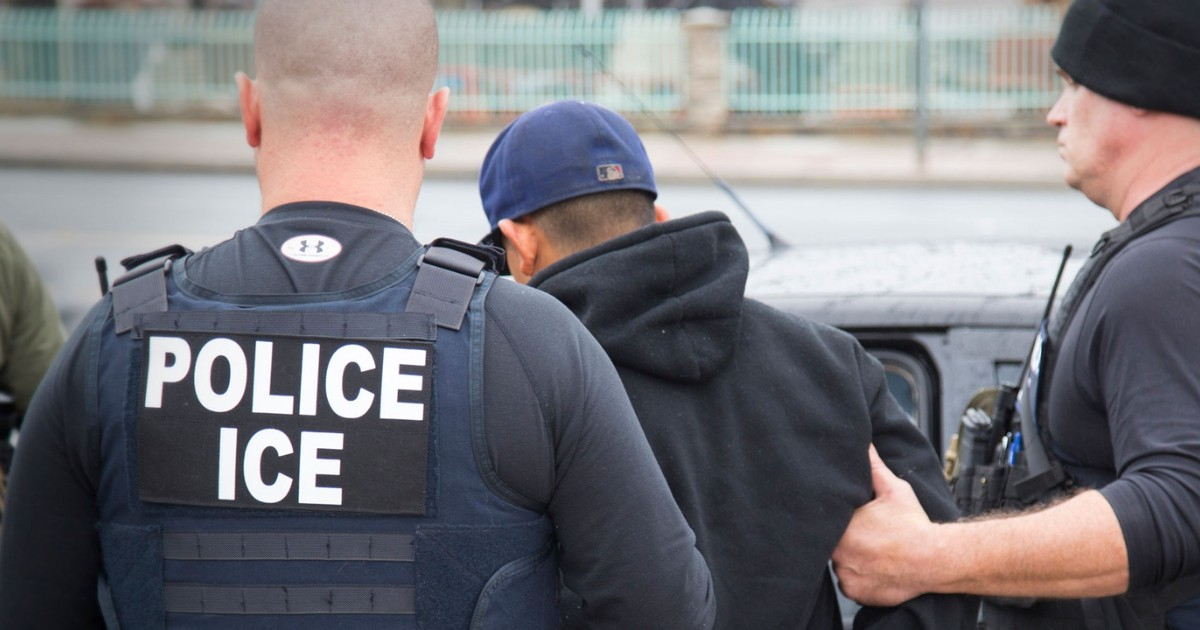
The Immigration and Customs Enforcement (ICE) arrested more than double the number of minors in the first seven months of 2026 compared to the same period in 2025, according to an investigation by The Marshall Project published this Wednesday in Spanish.
Florida is among the states with the most pronounced increase, alerting thousands of immigrant families—including those from Cuba with precarious documentation—living in the state.
The data, obtained by the Deportation Data Project —a collaboration between the University of California, Berkeley, and UCLA— reveals that between January 1, 2025, and August 8, 2026, ICE arrested 8,592 minors during Donald Trump's second term. In total, 8,755 children went through immigration custody, including 562 infants and toddlers. On average, 198 minors were detained each day.
Florida ranks fourth nationally with 802 juvenile arrests, behind California (1,635), Texas (1,477), and New York (1,336). However, the most concerning statistic for advocates is the pace: in the first seven months of 2026, Florida and Massachusetts have already exceeded double the total juvenile arrests recorded throughout 2025. In New York and New Jersey, the figures have tripled.
El aumento de arrestos de menores por parte de ICE es parte de un panorama migratorio en constante cambio. Sigue todos los detalles y novedades en nuestra sección de
This shift in Florida is not coincidental. The state has transitioned from having no local police agency participating in the 287(g) program— which allows local police to act as immigration agents— to having agreements in all 67 counties by January 2026. Additionally, there is the Baker Correctional Institution, known as the "Deportation Depot," in the northern part of the state, which houses approximately 1,000 individuals and operates without having been inspected by the ICE Office of Detention Oversight.
The vast majority of minors listed in arrest records have no criminal background or pending charges beyond the immigration offense, which in almost all cases is civil rather than criminal. Nevertheless, the report documents operations marked by a violence that has shocked lawyers and activists. A 16-year-old identified as J.A.I. recounted in court how agents burst into his home in Texas at five in the morning: "They pointed a gun at my little brother, threw him against the wall, grabbed him by the hair, and handcuffed him. They did the same to me."
Other minors ended up being detained in places where neither their lawyers nor their families could locate them. Judicial documents from the Flores agreement record 86 children who stayed more than three days in hotels during February and March. Becky Wolozin, a lawyer at the National Center for Youth Law, described these spaces as "black boxes" where families practically disappear, with little to no contact with legal representation and relatives.
For Cuban families in Florida —especially those with I-220A, expired parole, or pending deportation orders— the situation is particularly dire. Detentions of Cubans by ICE increased by 463% between late 2024 and early 2026, and more than 42,000 Cubans have final deportation orders pending in the country. Experts recommend that at-risk families prepare an emergency plan: designate a trusted caregiver in writing, sign medical and school authorizations, keep copies of key documents, and memorize the phone numbers of lawyers.
The Department of Homeland Security (DHS) did not answer the specific questions posed by the investigators and, in a written statement, claimed that the data from the Deportation Data Project was inaccurate, without providing any evidence or alternative figures.
Elora Mukherjee, a lawyer and professor at Columbia Law School who has represented over 100 children and parents in ICE custody in the past year, summarized the situation as follows: "As a nation, we should not be cruel to children. This is the time of year when children should be back in school, in their classrooms." The report is released less than three weeks ahead of the legislative elections on November 3, 2026, where immigration policy has become a divisive factor within the Cuban-American vote in Florida.
Related videos:
Filed under: