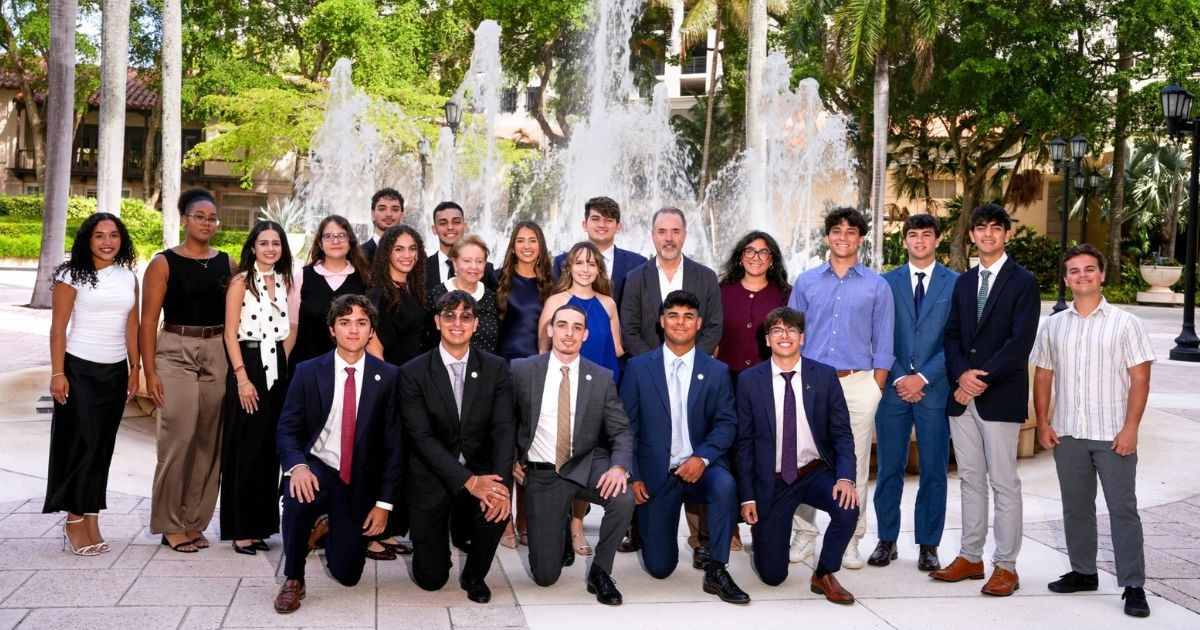
Students born in Cuba and direct descendants of Cubans have a new opportunity to receive financial support for pursuing university studies. The private program Mas Family Scholarships opened its application period on October 15 for the 2027–2028 academic year, aimed at candidates who excel in their academic results, leadership, and participation in community activities.
Applications may be submitted until January 31, 2027, as stated in the official call for Mas Family Scholarships.
The program, established in 1996 and associated with the legacy of the Cuban exile leader Jorge Mas Canosa, provides financial scholarships and mentorship opportunities to facilitate access to and continuity in higher education.
The call is open to both those born in Cuba and those who can prove they have direct Cuban ancestry. This allows children and grandchildren of Cubans to apply for assistance, as long as they meet the other requirements set by the organization.
To participate, interested individuals must have a minimum academic average of 3.5 out of 4.0, unweighted, known in the U.S. educational system as unweighted GPA. This is the average that does not include additional points for advanced courses.
They must also be enrolled in full-time university studies during the academic year 2027–2028 at an accredited institution, whether to obtain an undergraduate or graduate degree.
The official application form is for both students who are already enrolled in a university and for those who will complete high school and enter higher education next year.
It also allows for the identification of institutions to which the applicant is seeking admission, where they have already been accepted, or where they are currently studying.
In addition to the grades, the evaluation committee will consider leadership skills, involvement in community service initiatives, and the economic circumstances of the student and their family.
Financial need is not the main criterion for selecting beneficiaries, but it does influence the determination of assistance. For that reason, the program does not set a single amount of money for all scholarship recipients.
To verify Cuban origin, applicants can present documents such as birth certificates, passports, citizenship certificates, or notarized affidavit declarations, in accordance with the options outlined in the form.
In the case of descendants, it is not enough to provide a document from a relative born in Cuba; they must also demonstrate a direct relationship with that person.
For example, a grandchild might need the document of their Cuban grandfather, that of their father or mother, and their own birth certificate to establish the family chain.
The application also requires a recent academic record, information about grades and exam results when applicable, as well as a curriculum that details educational background, work experience, awards, extracurricular activities, community involvement, and languages.
Another requirement is to prepare a personal statement of no more than 500 words. In it, the applicant should explain their academic achievements, leadership experiences, commitment to their community, and professional goals, as well as how the scholarship could help them achieve those goals.
Separately, you must submit an essay of approximately 1,000 words on the topic indicated in the form. For this call, the organization invites reflection on freedom, its impact on personal life, and how its presence or absence can shape a person's future.
The essay must be written in your own words, have a title, be submitted double-spaced, and have numbered pages, according to the organization's guidelines.
Candidates will also need to provide the details of three individuals who can recommend them, including professors, employers, mentors, or community leaders. The recommenders will receive an email with a link to complete their respective forms.
There is an important difference in the instructions on this point. The general section of the form indicates that the three recommendations must be completed before the application closes, while the final check sets February 8, 2027 as the deadline for the recommenders.
In light of that discrepancy, it is advisable to confirm directly with Mas Family Scholarships which of the dates will apply to the recommendations.
In any case, the deadline to submit the student application remains January 31, 2027; February 8 should not be interpreted as an extension of that period.
In the economic section, the organization requests the summary presentation of the FAFSA 2027–2028 —the Free Application for Federal Student Aid in the United States— and/or the CSS profile, used by certain educational institutions to assess financial needs.
The FAFSA for the 2027–2028 school year has been available since October 1. However, it is important to distinguish between the two processes: the FAFSA is a tool for evaluating and requesting federal aid, while Mas Family Scholarships is a private program with its own requirements and selection process.
The scholarship application asks about the applicant's immigration status and allows for the selection of U.S. citizenship, residency, or other status.
Nonetheless, the published guidelines do not specify which immigration categories are accepted nor do they explicitly outline the conditions applicable to individuals with pending immigration processes or residents outside the United States.
Therefore, those who have doubts about their eligibility due to their immigration status or place of residence should consult the program directly before preparing the documentation.
The option to select "other" status on the form does not, by itself, guarantee admission.
Regarding the duration of the benefit, Mas Family Scholarships explains that selected students can apply for its renewal until they complete their intended studies, with a maximum of four years, provided they maintain the required conditions.
Among those permanence requirements is to maintain a minimum academic average of 3.0 and to remain enrolled full-time in an accredited institution. This average is different from the 3.5 initially required to apply for the scholarship.
The organization does not guarantee that all beneficiaries will receive full funding for their studies or that the assistance will be automatically renewed each year. The amount depends on the economic assessment and the conditions of the program.
Founded in 1996, the program started as an initiative to support the education of young people of Cuban descent.
According to the organization in its institutional presentation, over these three decades it has supported hundreds of students and has developed a network of scholars and professionals linked to mentoring activities.
Its creation was associated with the family of Jorge Mas Canosa, founder of the Cuban American National Foundation, who championed education as a tool to expand opportunities for the new generations of the exile community.
According to the official calendar, interviews with the finalists are scheduled for March 2027, and the beneficiaries will be announced in April of that year.
Interested parties can review all the requirements at masfamilyscholarships.org/apply and complete the official application for 2027–2028 directly.
For inquiries regarding documentation, recommendations, or eligibility criteria, the program provides the email contact@masfamilyscholarships.org and the phone number (305) 507-7323.
With more than three months available to submit applications, interested students have time to gather their documents, establish their family ties to Cuba, and prepare the texts and recommendations required by the announcement.
Related videos:
Filed under: