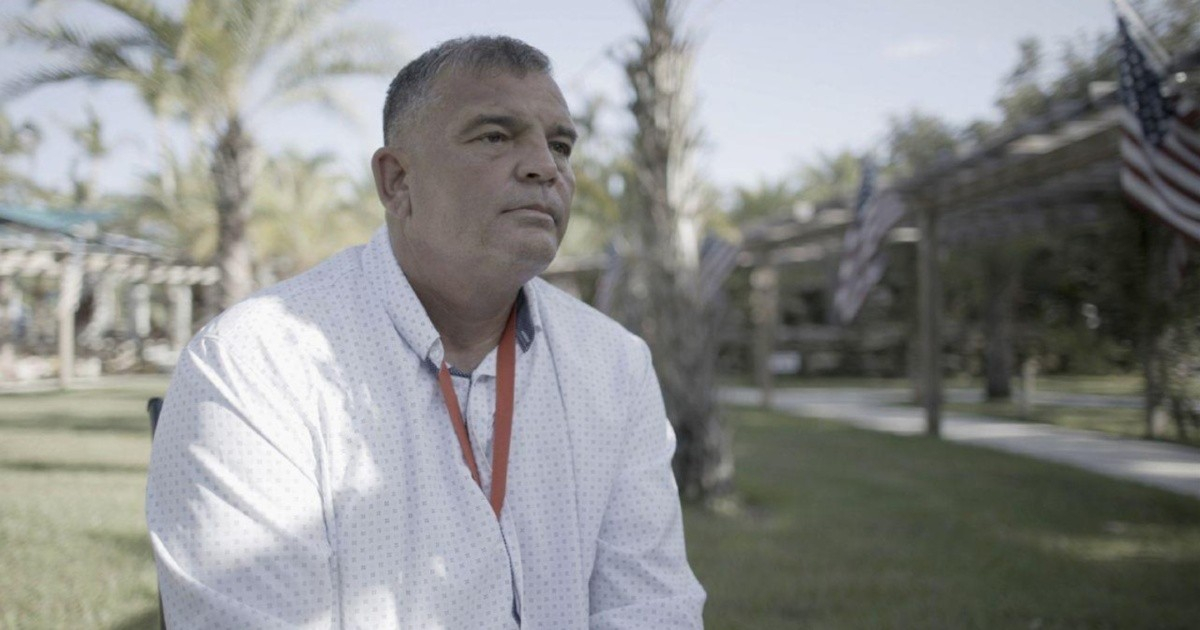
The Republican candidate for Congress in Rhode Island Vic Mellor acknowledged that the communication plan regarding Cuba included in his file to the Department of Justice was developed with the assistance of artificial intelligence.
"Simply put, we just put something into AI," he stated in an interview granted to the Washington Examiner on October 12, published three days later.
The revelation adds a new element to the case of Mellor, who registered on June 16 with the FARA Registration Unit of the Department of Justice as an agent of the General Directorate of Personal Security of the Cuban Ministry of the Interior (MININT), the regime's structure responsible for protecting Raúl Castro and other leaders of the Communist Party.
The Cuban official identified in the FARA file number 7740 as his contact is Raúl Guillermo Rodríguez Castro, grandson of Raúl Castro, known as "El Cangrejo".
Mellor insists, however, that the record does not reflect any real work for the regime. "I have had no contact with anyone from the Cuban government since I left," he stated in the October interview.
His explanation for having registered points to a legal precaution motivated by his long-standing relationship with retired General Michael T. Flynn: “I registered to protect myself for the years I worked with General Flynn.” His lawyer, Jesse R. Binnall, who co-signed the registration, would have advised him that “it wouldn’t hurt to do so.”
The informational documents submitted with the registration include two proposals. The first one, titled “Partner with Cuba Engagement Brief”, outlines a four-phase social media campaign under the hashtag #PartnerWithCuba, featuring posts in both English and Spanish, as well as an allegorical video of a flower growing through concrete.
The document requires, as a condition for the launch, a point of contact in Cuba with veto power over the content within 48 hours.
The second proposal, “How We Respond”, is a nine-page manual for the @CubanConversation account containing draft responses to actual publications by Cuban-American congress members.
The document explicitly instructs to avoid terms such as "regime," "dictator," or "failed state" when responding on social media. Both materials are labeled as proposals or teaching samples, not as executed campaigns.
The very Exhibit B of the record states that there is no "formal agreement or understanding," that Mellor did not receive or disburse any money, and that the relationship began on May 29, 2026.
These data are relevant for calibrating the actual scope of the file: the FARA registration does not equate to a crime or evidence of espionage.
Mellor made two trips to Havana in the spring of 2026, where he met with Rodríguez Castro during two dinners lasting about four and a half hours in total, as reported at the time. Following those meetings, he stated to AFP that "Raúl's vision for the future is very promising."
The State Department clarified that Mellor was not authorized to speak on behalf of the U.S. government.
In a television interview in Rhode Island published weeks after the recording, Mellor had already denied being a Cuban agent: "Absolutely not," he said, adding that he acted "on my own and at my own expense."
His Democratic rival, the incumbent representative Seth Magaziner, then responded that "a registered agent of a foreign dictatorship should not represent Rhode Island in Congress, period."
Mellor has indicated that he would withdraw from the FARA registry if elected in November, as federal law prohibits members of Congress from serving as agents of foreign governments.
Related videos:
Filed under: