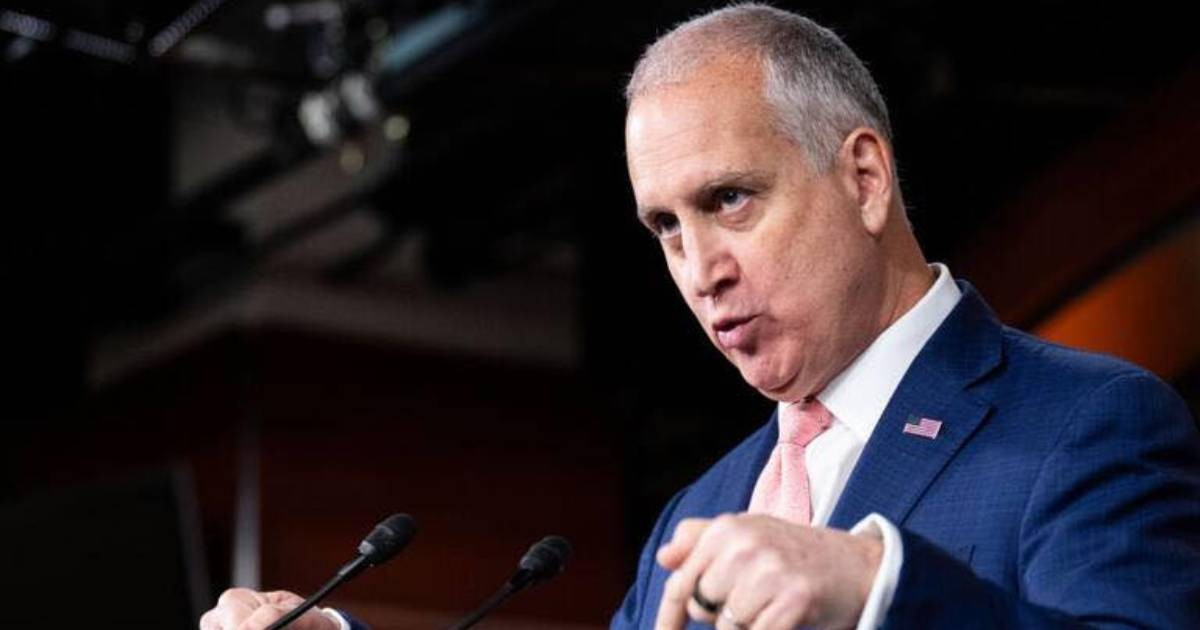
The Republican Cuban-American congressman Mario Díaz-Balart defends the measures to secure the border, but admits that some of the immigration control operations implemented afterwards were an "exaggeration," according to statements collected by CBS News Miami.
In the context of the campaign for the midterm elections on November 3, Díaz-Balart claims to support legislation that would allow for a case-by-case review of undocumented immigrants from certain countries.
The legislator, who has spent over two decades representing South Florida in Congress, is running for District 26—redrawn this year to include areas of southwestern Broward along with Hialeah, Miami Lakes, and Doral—against Democrat Nicole Locklin and independent Deborah Ann Meidinger Hosey.
His stance is well known. Last August, he declared his opposition to the deportation of Cubans and his support for a legal pathway for holders of the I-220A form. “I advocate that Cubans should not be deported to Cuba, so that Cubans are not sent back,” he stated at that time.
Now, before CBS News Miami, he added that he supports legislation that would allow for a case-by-case review of undocumented individuals from certain countries.
Las declaraciones de Díaz-Balart reflejan el debate en curso sobre las operaciones de ICE y sus efectos en comunidades como Hialeah y Doral. Sigue toda la actualidad sobre redadas, deportaciones y políticas migratorias en nuestra sección de
The politician has insisted that the only way to move forward is through dialogue with the White House, not public confrontation. "We continue to work to restore the ability of Venezuelans, Cubans, and Nicaraguans who are in this legal limbo of staying here," he stated in August, emphasizing that collaboration with the administration—"without causing a scandal"—is the way to go.
This position places him in a similar, albeit more discreet, line as his colleague María Elvira Salazar (District 27), who in September had a public clash with Trump by denouncing that the government had detained 50,000 people in July, half of whom had no criminal record. Trump responded that he supported her, but that she had won "only thanks to me".
The backdrop of the race is the so-called Cuban voting dilemma: the electorate of the district supports maximum pressure against the dictatorship in Havana, but feels the direct impact of the raids in their community.
More than 70% of residents in Doral and Hialeah were born outside of the United States, according to Census data cited by CBS News Miami.
Sociologist Guillermo Grenier from Florida International University (FIU) warned that the real risk for Republicans is not the loss of votes to Democrats, but rather voter abstention: "Trumpism is creating immigration issues for a minority of Cubans, but for them, as Republicans, voting for a Democrat is not an option that exists here."
He added, "The issue of Cuba is always a hot topic, and it will be one of the two most important issues, but coming after the economy and immigration."
The three candidates for District 26 present very different proposals. Díaz-Balart defends his legislative record—highlighting $12 billion in spending cuts through the subcommittee he chairs—and supports tax cuts for tipped workers and retirees.
Democrat Locklin, a 38-year-old lawyer from California, proposes to abolish the Immigration and Customs Enforcement (ICE), expand legal immigration pathways, and hire more specialized judges. Meidinger Hosey, a resident of Weston with no party affiliation, presents himself as an alternative to the two-party system and prioritizes reducing the costs of housing, food, and basic services.
Early voting in Miami-Dade starts this Sunday, October 19, at 28 centers, and the deadline to request a mail-in ballot is October 22.
Related videos:
Filed under: