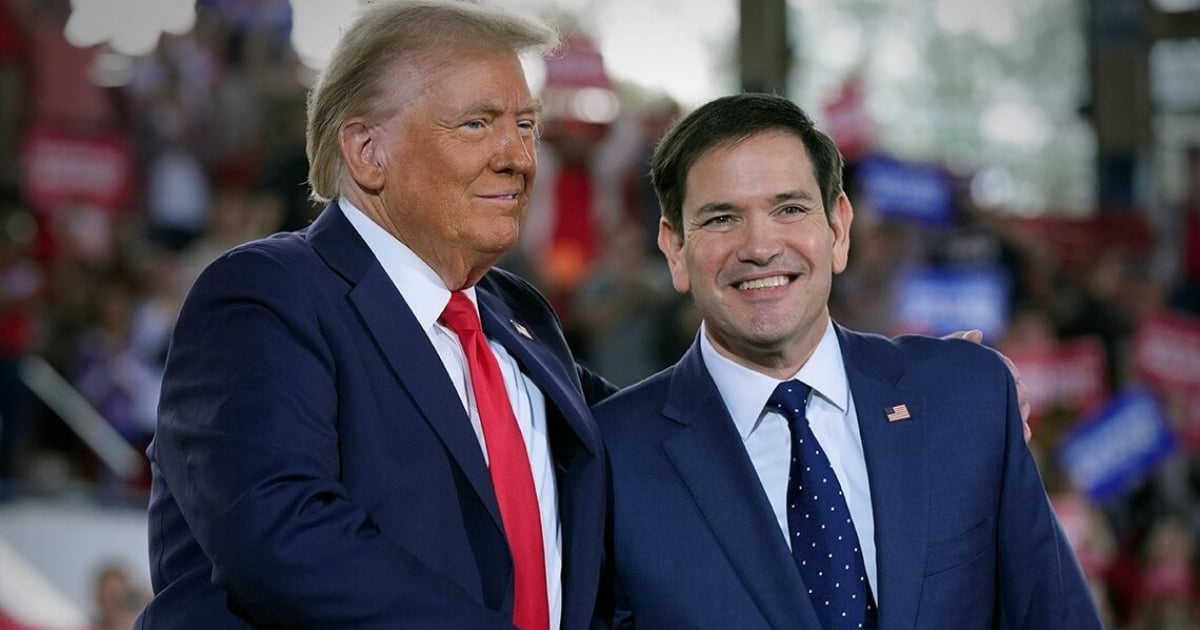
Frustration with Donald Trump and Marco Rubio is growing among sectors of the Cuban exile community in South Florida, nine months after U.S. special forces captured Nicolás Maduro in Caracas, sparking hopes of similar action against the Cuban dictatorship.
This is documented by a report by Kirk C. Nielsen in Florida Bulldog, published this Thursday, which uses Miami's Spanish radio as a barometer of the exiles' mood just weeks before the legislative elections on November 3.
The operation on January 3 —in which 32 Cuban soldiers guarding Maduro died— sparked expectations of an intervention in Cuba. Trump fueled these expectations eight days later with a threat on social media: “THERE WILL BE NO MORE OIL OR MONEY FOR CUBA. ZERO. I strongly suggest you reach an agreement BEFORE IT'S TOO LATE.” In June, he reiterated his stance, stating that the island could receive “the same treatment as Venezuela” and that it was just “a leap away.”
But nine months later, there has been no military action.
The reasons for the stalemate are multiple. According to an investigation by The Atlantic, the secret conversations between Rubio and Raúl Guillermo Rodríguez Castro, also known as "El Cangrejo" —grandson of Raúl Castro—, came to a halt when Washington demanded Díaz-Canel's departure as a non-negotiable condition.
This was compounded by the administration's shift towards conflict with Iran, which strained available military resources. In September, Trump publicly ruled out military action and favored a negotiated agreement.
That shift has had an immediate impact on the Spanish-speaking radio stations in Miami — América Radio (1260 AM), La Nueva Poderosa (990 AM), and the program of Alberto Cutié — which serve as a political forum for the exile community and reach tens of thousands of people via AM and digital broadcasting.
Nielsen's report warns that the voices collected are anonymous calls, not a representative survey of the entire community.
Omar Moynelo, midday host at La Nueva Poderosa, described the situation in August using a metaphor: "And she says, 'Now, yes, let's build something very beautiful.' But you no longer believe her because she left you and took too long. This is happening to many people here."
An elderly and agitated listener who called the same program was more direct: "December is still going to catch us in this nonsense! Nothing is going to happen! They’re not going to intervene militarily, they’re not going to do anything, especially with the elections. Two Marines die and we lose the House and the Senate. They have no vision, they have nothing planned, and this is a disaster. It's sad! It's shameful!"
In Cutié's program, another listener was even more blunt: "I won't vote for anyone else if Cuba is not free this year."
In light of this discontent, voices from within the exile itself are calling for calm. Congressman Mario Díaz-Balart has argued that any action must avoid civilian casualties. Cossío, from América Radio, cites the "patience and persistence" that Rubio himself advocated in August as a reason to maintain confidence. Moynelo has also come to Trump's defense in front of his more critical listeners.
The frustration over Cuba is compounded by the discontent regarding deportations: the administration has sent nearly 6,000 Cubans to Mexico and others to African countries, which has sparked criticism from Actualidad Radio.
Congresswoman María Elvira Salazar, a long-time ally of Trump, released a bilingual ad in September warning that the Hispanics who elected him "now feel betrayed," and polls show her tied at 45% with her Democratic rival in Florida's District 27.
The analyst Guillermo Grenier from Cuba Poll at Florida International University warns that discontent will not translate into Democratic votes but rather into abstention— the true electoral risk for Republicans on November 3— in a community that supported Trump with 68% of its votes in Miami-Dade in 2024.
Related videos:
Filed under: