The accumulation of waste near homes in the city of Holguín has sparked new criticisms regarding the decline of urban hygiene and the neglect of neighborhoods, in a city that for years was known for its cleanliness and that today its own residents describe as a dump.
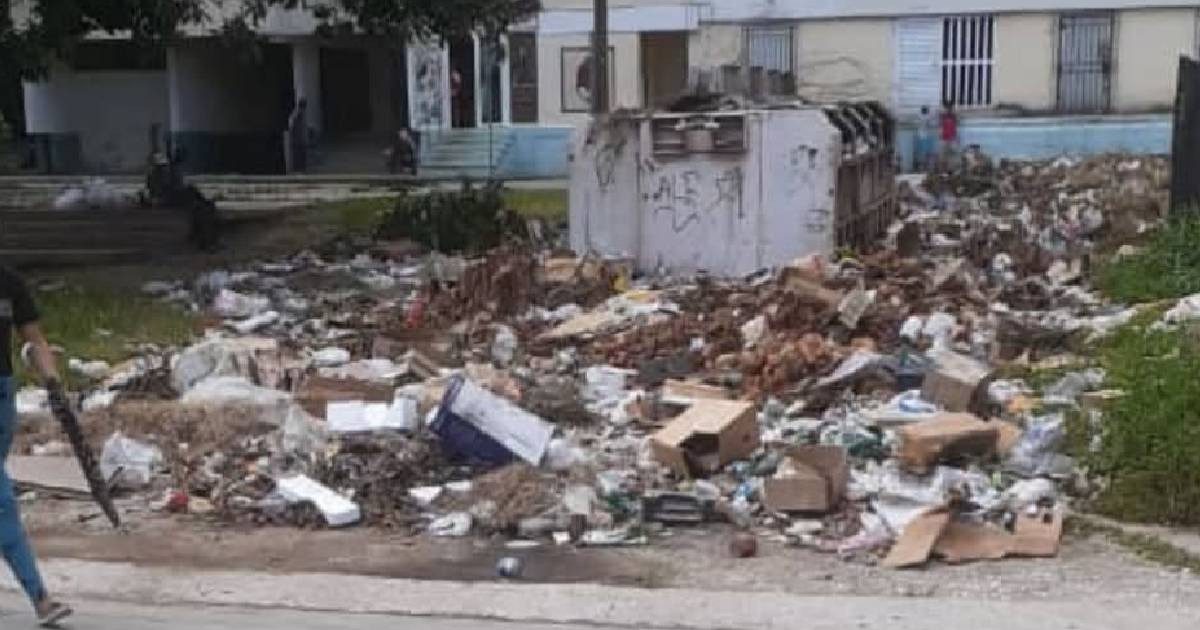
The report was published on Facebook by Israel García Góngora, who shared a photograph taken in front of his house showing a pile of trash and debris next to a multi-story apartment building.
The image shows cardboard boxes, bricks, plastics, and household waste piled up near the homes, where numerous families live together.
The author accompanied the publication with a question that reflects his indignation at the problem. "How much longer will the Cuban people have to live like this?" he wrote.
"We're not talking about luxury, comfort, or extraordinary demands. We're talking about something as basic as collecting trash, keeping the streets clean, and protecting the health of the population," Gongora pointed out.
The complainant noted that the accumulation of waste encourages the presence of flies, cockroaches, and rodents, in addition to producing bad odors and posing health risks to the neighbors. They also questioned the lack of responses to a problem that affects the living conditions of those residing in the area.
"The cleanliness of a city is also dignity. Hygiene is also health. Living in dignified conditions should not be a privilege," he concluded.
The publication sparked numerous reactions from citizens who lamented the decline of the Cuban City of Parks, remembered by its residents for the cleanliness of its streets.
"Holguín, my beautiful city, used to be the cleanest in Cuba, and it saddens me to see the deterioration and neglect; every neighborhood has become a dumping ground, even in the city center... the leaders are blind and do not seek solutions, and diseases continue," commented a user.
Another person summarized their perception of the situation with a striking phrase. "You can’t walk anymore. The entire Holguín is like this. It’s a dump."
"My beautiful city of Holguín, the city of parks, has always been the cleanest; in every park, there were bins to collect waste, and the people did not throw anything in the streets. Today it is as dirty as the rest of the country; there is a dump on every corner, in front of schools, hospitals, and daycare centers," lamented another citizen, summarizing what many Holguineros feel.
At the beginning of October, residents reported a dump near the central Plaza de la Marqueta, as well as a nursery and food kiosks, while noting that the garbage truck passes but does not collect the waste.
"There are trucks and more trucks; it's not a lack of oil, it's a lack of organization, a lack of interest in keeping our city clean," reported a resident.
At the end of September, another citizen alerted about improvised landfills in the Lenin neighborhood, just meters away from the children's circle Mis primeros años and the Amistad con los pueblos school.
"The smell is unbearable; the garbage hasn't been collected in over a month," he warned, while indicating the risk of arbovirus and hepatitis for children.
The Ministry of Public Health (Minsap) acknowledged in September a simultaneous increase in dengue, diarrhea, and hepatitis linked to sanitation deficiencies.
In this context, the Pan American Health Organization (PAHO) donated 50 fumigation equipment units to the province to strengthen the control of the mosquito Aedes aegypti in its 14 municipalities.
The eviction of more than 350 vendors from the informal market Los Chinos on the grounds of sanitation issues did not solve anything, as the kiosks set up in the new location are already surrounded by garbage again.
Related videos:
Filed under: