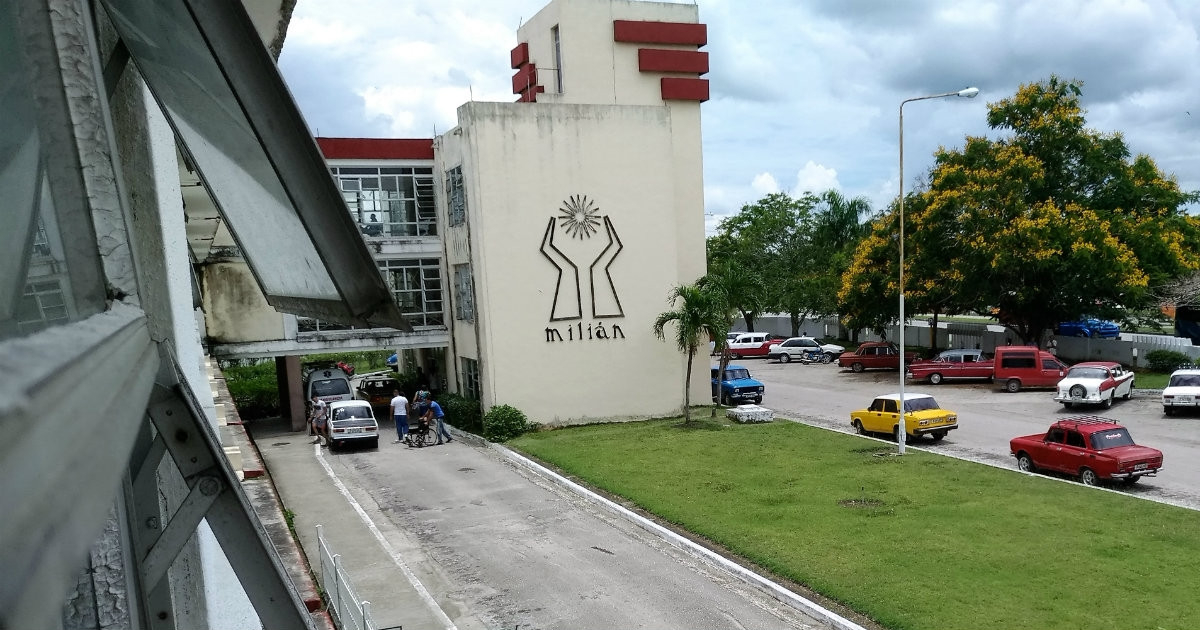
Renal patients from the Arnaldo Milián Castro provincial hospital in Santa Clara have been living at the Rivierita hotel (also known as the Riviera hotel) for approximately nine months without any solution provided by the authorities in Villa Clara, according to a testimony shared on social media on Thursday by one of the housed patients.
The post on Facebook, signed by Luis Alberto Borges, describes a situation of institutional neglect where patients, in addition to staying at the hotel, must travel to Caibarién to receive their dialysis sessions, a journey that the patients themselves describe as exhausting.
"If today my words are blood, it is because I carry deep wounds in my soul, seeing the situation we are undergoing not only the kidney patients, but also their loved ones who accompany them in this battle for life," wrote Borges.
What most outrages the complainant is the physical proximity of power to the misery they endure. The Rivierita hotel is located across from the homes of the first secretaries of the Communist Party of Cuba and the Provincial Assembly, and on the same block as the State Council's Guest House.
"Throughout the time we have been here, it has been visited by ministers, including from the Presidency, and no one has come to see our situation," denounced Borges, who wonders if the provincial officials have deliberately concealed from the central authorities "the abandonment we are subjected to," he wrote in the continuation of his testimony.
The comments on the post reflect accumulated desperation. One citizen warns that "in four months it will be a year at the Riviera and there is no indication of when things will return to normal," suggesting that the shelter started around January of this year.
Another person points out that "the exhaustion is terrible... many have already left in this race and we still have no short-term solution," apparently referencing deaths among patients during these months.
A patient currently housed there reports that they are "sick and poorly nourished" in the hotel, while a companion who works outside laments that no one is explaining "what the real situation is regarding the contamination of the dialysis room’s plant," which has been identified by the citizens themselves as the reason for the transfer to Rivierita.
"I don't understand why it has always been said that the Revolution does not abandon any of its children," Borges wrote as he concluded his denunciation. "It seems that the concept has gradually been forgotten."
In June, the Arnaldo Milián Castro hospital was without water supply for over 72 hours due to a malfunction of the pumping turbines, with patients collecting rainwater for hygiene purposes.
In April, patients reported outbreaks of hepatitis in the hemodialysis unit and alleged misappropriation of resources.
In September, hemodialysis patients in Maisí were surviving in inhumane conditions in Baracoa, without electricity, without drinking water, and sleeping on mattresses on the floor.
A few days ago, a short circuit caused a fire in the hemodialysis room in Bayamo, in Granma, resulting in partial service disruptions.
In July, patients in Santiago de Cuba reported a reduction in their sessions from four to two hours due to a shortage of supplies.
About 3,000 patients rely on hemodialysis nationwide, spread across 56 or 57 units. The Minister of Public Health, José Ángel Portal Miranda, acknowledged in February that the Cuban healthcare system was "on the verge of collapse."
Related videos:
Filed under: