
Related videos:
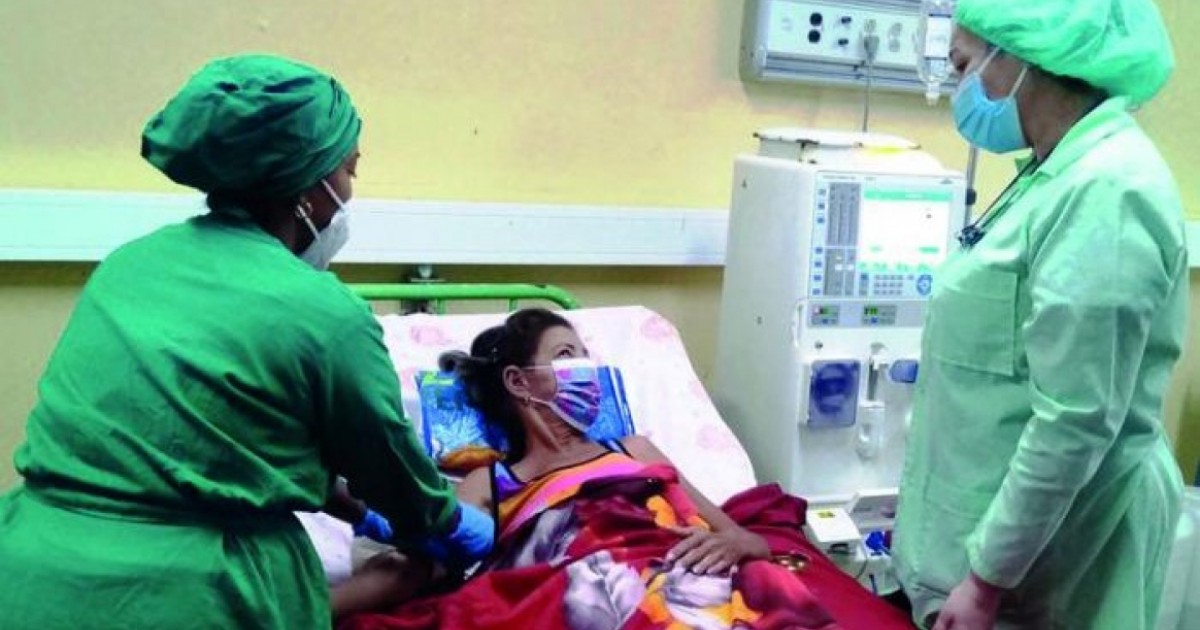
Dozens of renal patients at the Saturnino Lora Provincial Hospital in Santiago de Cuba were left waiting in the waiting room on Tuesday, unsure if they would receive the treatment they need to survive, according to a report by independent journalist Yosmany Mayeta Labrada shared on Facebook.
The problems began the previous Saturday, when patients were only able to undergo dialysis thanks to a small amount of concentrate donated from the municipality of Guamá.
On Monday, the treatment was delayed, and on Tuesday, the patients scheduled for the 5:00 a.m. shift waited seated because, as they were informed, there was no way to package the essential concentrate for the procedure.
Although the supplies finally arrived at the hospital that same Tuesday, the situation is far from resolved. The patients themselves warned that the supply would be insufficient and that they might face the same crisis this Thursday.
To make matters worse, the shortage forces a reduction of the usual four-hour treatments to just two, compromising the effectiveness of the procedure and additionally endangering the health of those who depend on it.
"No one cares about us. A long time ago, the situation of hemodialysis patients stopped being of interest to anyone," expressed one of the affected individuals.
The whistleblowers turned to Mayeta Labrada hoping that public visibility would pressure health authorities to act swiftly and ensure a stable supply, rather than responding only when the crisis becomes urgent.
"Health cannot depend on whether a supply appears at the last minute. For these patients, every hour of wait can mean the difference between life and death," wrote Mayeta Labrada at the conclusion of her statement.
This situation is not an isolated incident; rather, it is part of a pattern that repeats across the country.
In June, patients at the Manuel Ascunce Domenech Hospital in Camagüey went almost a week without treatment due to a lack of acid concentrate and bicarbonate.
In April, the provincial authorities of Las Tunas threatened to suspend the prioritized taxis for kidney patients due to fuel shortages.
In February, healthcare transportation was halted in multiple provinces, leaving patients without access to dialysis units.
The Hospital Saturnino Lora itself has a long list of complaints: in April, a power outage in the ICU forced the evacuation of 12 patients from intensive and intermediate care, and in December 2025, the nearby Hospital Juan Bruno Zayas halted hemodialysis due to a lack of salt for the disinfection plant.
The collapse of the system is acknowledged even by the authorities of the regime. The Minister of Public Health, José Ángel Portal Miranda, admitted in February that the Cuban healthcare system was "on the brink of collapse", and in July 2025, he recognized that the country operates with barely 30% of the essential medicine supply.
Cuba has approximately 3,000 patients who depend on hemodialysis, distributed across 56 units throughout the national territory.
As a partial response to the transportation crisis, in May the regime added 200 electric vehicles for the transportation of these patients, a measure that those affected consider insufficient in the face of a problem that goes far beyond mobility: the shortage of essential chemical supplies directly threatens their lives every week.
Filed under: