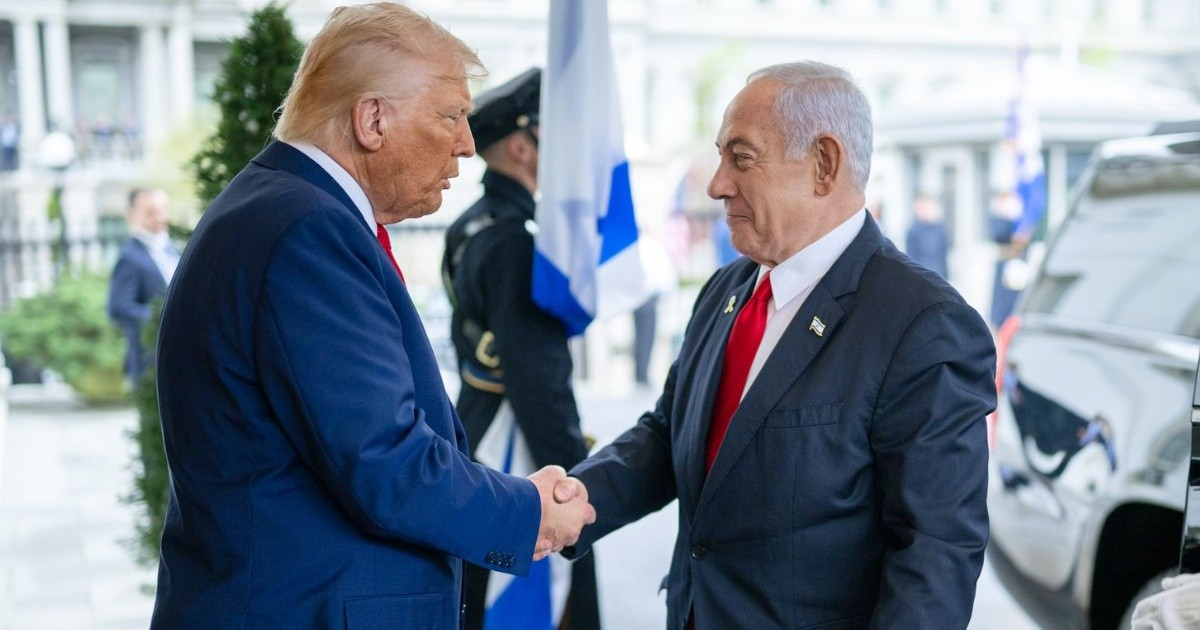
The President of the United States, Donald Trump, declared this Sunday his unconditional support for Israeli Prime Minister Benjamin Netanyahu ahead of the parliamentary elections on October 27, just nine days before Israelis head to the polls.
Through a post on his social network Truth Social, Trump expressed his full support for Netanyahu with these words: "Please let this letter represent my total support for Bibi Netanyahu in his upcoming campaign for re-election as Prime Minister of Israel," in order to continue working together.
In the same message, Trump described the Israeli leader as "strong, brave, and brilliant," referring to him as a "great warrior prime minister" and an essential partner in the fight against Iran.
The U.S. president also issued an implicit warning to the Israeli electorate: if Israel were to choose a different leadership, Washington would have to take on part of the regional work alone, something he stated he was not willing to do.
Netanyahu quickly responded publicly and thanked Trump for his "tremendous support," stating, "Together, we will complete the mission."
The elections on October 27 will be the first in Israel since the Hamas attacks on October 7, 2023, which triggered the war in Gaza and a broad regional escalation with Hezbollah in Lebanon and military exchanges with Iran.
The Knesset completed its four-year constitutional term on July 17, and October 27 is the last legally permissible date to hold elections. An opposition attempt to dissolve the parliament early was defeated in June by a vote of 61 to 53, with the support of the ultra-Orthodox parties Shas and United Torah Judaism, which backed Netanyahu following an agreement on military service legislation for the ultra-Orthodox.
The main rival of Netanyahu is Gadi Eisenkot, former chief of staff of the Israeli Army and leader of the centrist party Yashar. A survey published between October 14 and 15 allocated 26 seats to Yashar compared to 20 for Netanyahu's Likud, with the opposition bloc projected at 54 seats and the Prime Minister's bloc at 49, both below the 61 needed to govern in a Knesset of 120 members.
In direct voting intention for prime minister, Eisenkot led Netanyahu with 46% to 40%.
The relationship between Trump and Netanyahu in 2026 has combined strategic alliance with occasional tensions. In June, Trump had a very tense call with the Israeli Prime Minister, accusing him of acting "crazy" by expanding operations against Hezbollah and considering attacks in Beirut. However, Trump subsequently authorized an Israeli military response against Iran after being convinced that not responding would give Tehran an advantage in the nuclear negotiations.
Netanyahu is also facing a trial for corruption amid accusations of genocide in Gaza, which have significantly marked both his tenure and the ongoing electoral campaign.
The real impact of Trump's support among the Israeli electorate is uncertain: according to Reuters, public support for the U.S. president in Israel had declined in recent months due to previous disagreements between the two countries regarding the strategy towards Iran.
Related videos:
Filed under: