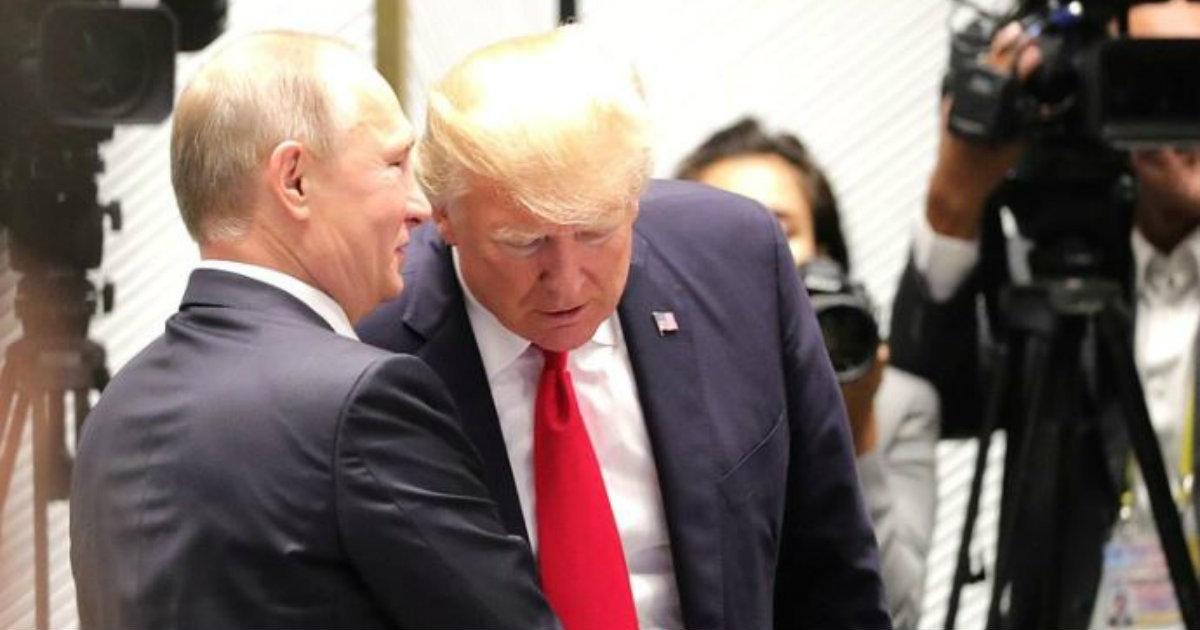
Donald Trump signed an executive order on Friday suspending the major sanctions and tariffs planned by the Lindsey Graham Act against Russia, just two days before they were set to take effect, according to reports from CNN and Reuters.
The measure sparked bipartisan criticism in Congress and exacerbated the already tense relationship between Washington and Kyiv.
In the decree, Trump claimed that the suspension was in response to the "national interest of the United States", without specifying the concrete reasons.
The Secretary of State Marco Rubio specified that this is a pause of up to 60 days to analyze the impact of the sanctions on the global economy.
A law enacted and suspended in less than a month
The legislation is named after Republican Senator Lindsey Graham, who passed away in July at the age of 71.
Trump had enacted it on September 18, just 29 days before suspending it.
The regulation authorized tariffs of up to 100% on imports from the five largest purchasers of Russian oil and gas — including China and India — and included sanctions against high-ranking Russian officials, including Putin, financial institutions, and Moscow's "shadow fleet."
The Senate approved it with 86 votes in favor in a bipartisan process expedited following the senator's death.
Zelensky condemns the measure amid bombings
The suspension coincided with one of the largest Russian attacks on Ukrainian energy infrastructure: over 320 drones and missiles struck more than 15 facilities across 10 regions, leaving Vinnytsia completely without electricity and affecting more than 500,000 consumers.
The Ukrainian president Volodymyr Zelenski condemned the decision:
"In a moment when the Russians have carried out such a massive attack against our energy sector, unfortunately, the decision was made in the United States to completely disregard the Lindsey Graham Law, which was meant to exert truly effective pressure on Russia to end this war."
Zelenski also warned that "Russia is trying to cause a blackout in Ukraine, just before winter" and noted that he fears the Trump administration will lift more sanctions in the coming days.
Despite the accumulated tension, Zelensky indicated on Sunday that negotiators from both countries spoke on Friday and that a possible meeting between the two teams could take place next week.
Criticism from both parties
The reaction in Washington crossed party lines. Senator Darline Graham —sister of the late Lindsey Graham, appointed to his seat— expressed her disagreement: "I would choose to maintain pressure on Russia to end the war, because I do not trust Putin or Russia."
The Republican senator Ted Cruz described the suspension as a "mistake" on Fox News and warned that "the current path, unfortunately, only benefits Putin." Senator Thom Tillis called it "irresponsible to the highest degree."
The senator John Cornyn was more direct: "Helping Putin in Ukraine is reckless. He wouldn't stop with Ukraine, and our NATO allies would be next."
From the Democratic side, Senator Elizabeth Warren spoke of "a predictable and resounding failure of leadership"; while Senator Richard Blumenthal, a co-author of the bill, wrote that "these exemptions have nothing to do with our national security and have everything to do with trying to win Vladimir Putin's favor."
Moscow celebrates the decision
The Russian envoy Kirill Dmitriev, director of Russia's sovereign fund, celebrated the exemption in X, describing it as "an important and truly historic moment," and stated that "economic cooperation between Russia and the United States benefits the interests of both nations."
The suspension is the final episode of a tumultuous week.
On October 9, Trump announced an agreement with Putin to import up to 4.8 million tons of Russian diesel, a measure that Zelenski condemned as a way to finance the Russian war effort.
Days later, Trump announced an "energy ceasefire" that was never formally confirmed by Moscow or Kyiv, and Russia attacked six Ukrainian energy facilities that same day.
Behind the decision looms the political calendar: the midterm elections of November 2026.
The White House has attributed the rise in fuel prices — diesel surpassed $6.28 per gallon in September — to the war between Ukraine and Russia.
Related videos:
Filed under: