The Spanish Minister of Foreign Affairs, José Manuel Albares, acknowledged this Monday that it will be "very difficult" for the consulates to verify in time who among those naturalized under the Grandchildren's Law are descendants of exiles in order to be able to vote in the general elections on November 29, according to statements made on Telecinco.
The minister's warning comes at a time of heightened judicial tension: the Fourth Section of the Constitutional Court also decided this Monday, unanimously, to elevate to the Plenary —the 12 judges presided over by Cándido Conde-Pumpido— the decision on whether to admit or reject the appeal for protection presented by the Ombudsman, Ángel Gabilondo, against the suspension of overseas voting for some 163,020 individuals naturalized under this law.
The Plenary is scheduled to meet this Tuesday to make a statement; however, a report from the court's own legal advisors, prepared at the request of Magistrate Enrique Arnaldo and revealed by El Mundo, considers the appeal "premature" because it was filed while the deadline for submissions before the Supreme Court is still open, which ends on October 22.
Albares explained that the General Directorate of Consular Affairs had already warned, through the State Legal Service, that the verification process would take "at least until January" to complete. Only the cases of those who obtained nationality in 2025 and 2026 have already been integrated into the digital system DICIREG; the rest must be manually entered into a software tool connected to the Electoral Census Office.
In light of the urgency, the minister canceled all permits for the consuls and sent a telegram with instructions for them to act "diligently" and "mobilize all the personnel they need." Even so, he was unequivocal: "No one is obliged to do the impossible."
Albares took the opportunity to denounce what he called a "campaign of harassment, with insinuations that are often personal, including names and photographs of the consuls of Spain around the world," attributing it to the PP and Vox. "It is really something that I will never tolerate," he stated, promising to always defend consular officials against such attacks.
For Cubans who obtained Spanish nationality through this route, the situation has a particularly specific dimension. The Spanish consulate in Havana is one of the most overwhelmed in the world in this process: it received 107,338 applications just in 2025, and it is estimated that over 350,000 Cubans have started procedures since the law came into effect in October 2022.
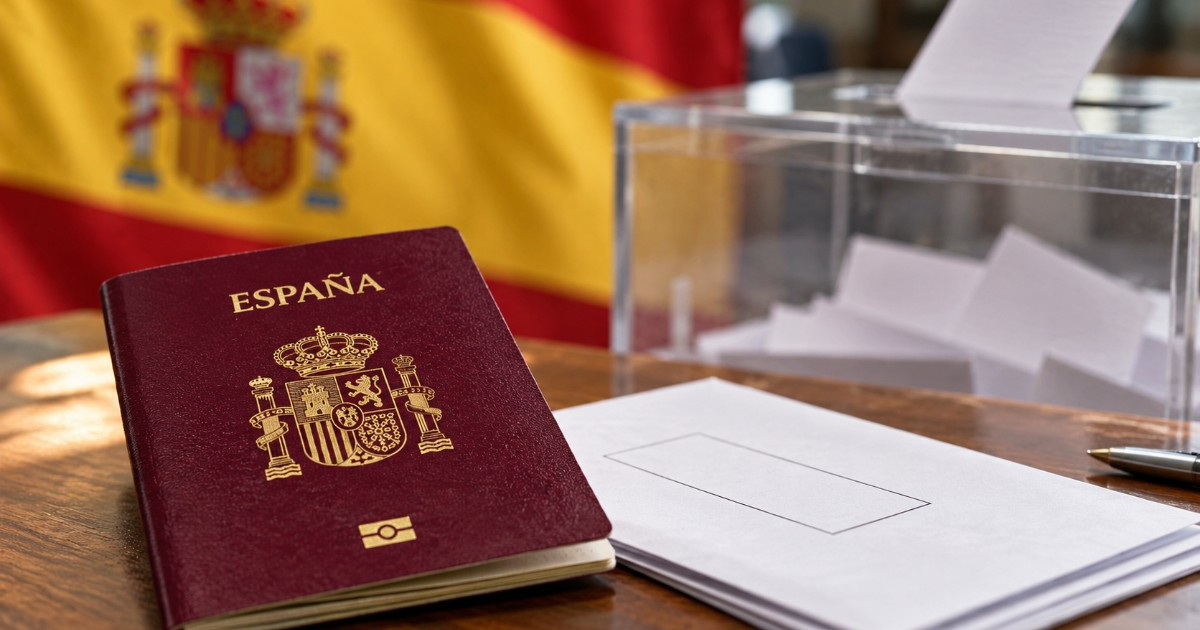
It is essential to clarify what is at stake: the suspension ordered by the Supreme Court does not revoke the Spanish nationality of those affected nor does it annul their passports. What is being restricted is solely the right to vote from abroad on November 29 through the CERA registry. Naturalized Cubans residing in Spain will be able to vote without any limitations.
The Ombudsman's resource argues that the measure creates unjustified discrimination: it affects those who have availed themselves of the Law of Democratic Memory and reside outside of Spain, but not those in the same legal situation who live within the country. Gabilondo requests the Constitutional Court to lift the restriction immediately through urgent precautionary measures, even though his own term expires on November 16, before the elections are held.
The legal experts of the TC, however, argue that the appeal "should be considered premature" because "it was filed while there was still an open opportunity for a ruling from the ordinary jurisdiction," which contradicts the subsidiary nature that this type of remedy should have.
Those wishing to join the procedure before the Supreme Court as co-defendants have until October 22 to appear with a lawyer and representative, according to the BOE published on October 15. The decision of the Constitutional Court's Plenary on Tuesday will mark the next step in a dispute that, with the 29-N just over five weeks away, cannot afford any further delays.
Related videos:
Filed under: