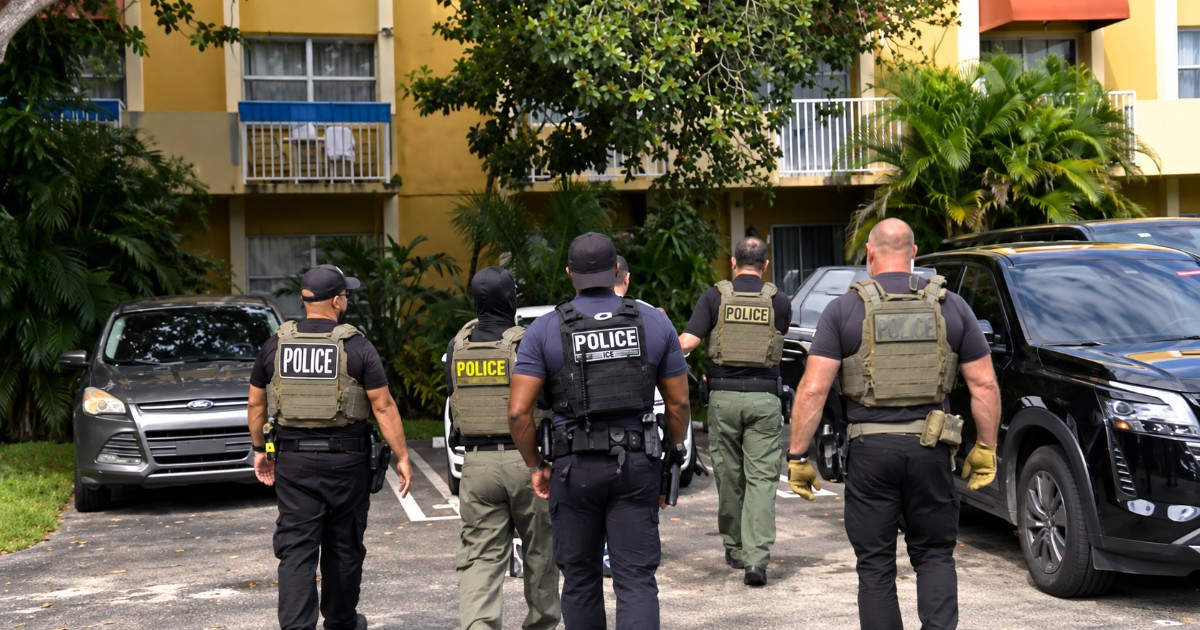
The Hialeah Police, one of the cities with the largest presence of Cubans in the United States, issued a warning about a type of phone scam in which criminals impersonate police officers and demand money from residents under the threat of arresting them.
To make the deception more believable, scammers go as far as using real names of officers, badge numbers, and even manipulated phone numbers that seem to come from the institution itself.
The Hialeah Police Department warned in an Instagram post that those responsible are contacting potential victims to falsely inform them about alleged legal proceedings, arrest warrants, or pending bail payments.
During the conversation, individuals demand that a payment be made to prevent the person from being arrested or facing other legal consequences, as the institution explained in a warning reported this Tuesday by NBC6.
The warning is especially important because criminals do not necessarily use made-up names.
Some resort to the identities of officials who actually belong to the police force, which can generate trust or fear among those who receive the call.
"These individuals may use the names of real officials, badge numbers, and even manipulate the caller ID to make it seem like the call is legitimate," authorities warned.
This latest technique, known as caller ID spoofing or call identification spoofing, allows the number displayed on the telephone screen to be faked, making the recipient believe that the communication is coming from an official institution.
Therefore, the appearance of a number associated with the Police on the screen does not guarantee that the call is authentic. It is also not enough for the caller to know the name of an officer or provide a badge number that can be publicly verified.
The Hialeah Police Department was emphatic in refuting the procedure used by the scammers.
“The Hialeah Police Department will NEVER call you to demand money in exchange for avoiding an arrest”, the institution emphasized.
Authorities advised residents to be wary of anyone claiming to be a police officer who asks for money to cancel an alleged court order, resolve a criminal case, or prevent an arrest.
If you receive a call of this nature, the first recommendation is not to provide personal, financial, or banking information.
Agents also advise against sending money or making payments, regardless of the urgency or threats used by the counterpart.
Instead of continuing the conversation, they recommend hanging up immediately and contacting the institution directly using a number obtained from an official source, not through the phone number provided by the caller.
Additionally, it is advisable to retain any evidence of the attempted fraud, including voice messages, text communications, and screenshots that can help document what occurred.
Incidents can be reported to the Hialeah Police by calling 305-687-2525, a number that also appears in the official service directory of the department.
The institution requested to share the warning with family and friends, especially with older adults, whom they identified as a group often affected by this type of scam.
Phone calls can be particularly intimidating for individuals who are not familiar with U.S. legal procedures or how authorities notify about legal actions.
The threat of immediate arrest can also instill fear among immigrants who have pending proceedings or legal situations.
An important detail is that the mechanism described by the Police involves psychologically pressuring the person who receives the call to make a payment without having enough time to verify whether the alleged accusation is true.
Common signs of telephone fraud include demands for immediate payment, refusal to allow the person to consult with a lawyer or family member, and requests for difficult-to-recover transfers.
Payments made through gift cards, cryptocurrencies, or transfer applications such as Zelle should also raise suspicions when they are presented as the only way to avoid detention.
These are general signs of potential scams and not specific methods that the Hialeah Police have attributed to those responsible for the reported calls.
The fraudulent use of police identities is not an unknown phenomenon in Hialeah and other areas of Miami-Dade.
In September, agents from Immigration and Customs Enforcement (ICE) , 45 years old, in Hialeah, accused of impersonating a high-ranking official from that federal agency to allegedly extort the owner of a business in Miami Gardens.
According to the investigation released at that time, the suspect had contacted the merchant, posing as a high-ranking ICE officer, before arriving at his establishment carrying a badge and a firearm.
Months earlier, in July, Enrique Pérez-Palenzuela, 55 years old and a resident of Hialeah, was arrested after being caught driving a car outfitted like a police patrol.
The vehicle was equipped with emergency lights, sirens, a spotlight, a front protective bar, and a compartment designed for transporting detainees. The driver was also wearing a uniform and had a badge, according to the details of the investigation.
Related videos:
Filed under: