There are setbacks that take centuries to become visible. Others fit in a cup of coffee. In Cuba in 1870, while the island was under Spanish colonial rule, many families' breakfasts could include coffee sweetened with sugar or honey, freshly baked bread, and milk. This was not the reality for everyone: slavery, social inequalities, and poverty were part of that society. However, there existed a productive economy that, with all its contradictions, generated goods, traded, and fed a portion of the population.
One hundred and fifty-six years later, in Cuba in 2026, millions of people are confronted with a much more fundamental question: what will be on the table today?
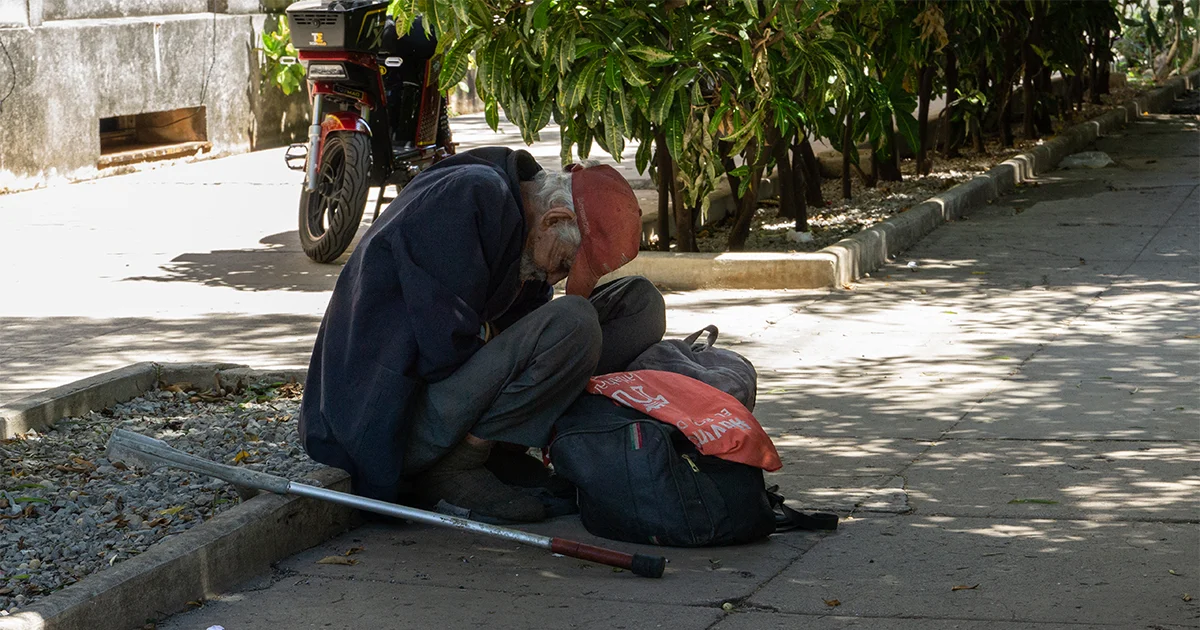
Coffee can be a blend of substitutes; milk, a memory from childhood; bread, an insufficient portion; and butter, a luxury that many don't even consider. Breakfast has ceased to be a routine and turned into a daily quest, a survival operation in which every missing product forces a reorganization of family life.
Who would have imagined such an achievement of progress!
In 1870, the peasant worked on land subjected to deep inequalities, but he cultivated products that entered commercial circuits. In 2026, the Cuban must also cultivate extraordinary patience: enduring scarcity, pursuing food, standing in line, and listening to explanations that do not fill the stomach.
Housing is not exempt from this irony. In the past, there were humble homes, with leaks and material needs; today, numerous families watch entire buildings deteriorate, while the official slogans seem aimed at propping up the walls that the cement can no longer support.
And when products are lacking, the usual explanation emerges: the embargo, external difficulties, the enemy's resistance. Real factors that must be analyzed, undoubtedly, but which are not enough to explain decades of unproductivity, economic mistakes, suffocating controls, and decisions that have weakened the country's ability to produce and supply itself.
An empty market cannot be filled with a slogan. A cow does not produce milk by decree. The land does not yield its fruits simply because a speech declares victory. The economy follows its own laws, no matter how much propaganda tries to replace them with political will.
The children of that Cuba were growing up in a profoundly unequal society. Today's children often have to learn too early to live amidst scarcity. Meanwhile, as families search for milk, eggs, fruits, or rice, the official rhetoric continues to offer sovereignty, resilience, and sacrifice.
But sovereignty should also be measured by the ability to feed its citizens. Independence cannot become a permanent justification for scarcity, nor can the sacrifice of the people be an excuse for those who hold power.
It is not about idealizing colonial Cuba nor denying its injustices. It is about understanding a historical paradox: a country that has undergone profound political transformations can end up regressing in fundamental aspects such as daily sustenance.
Therefore, this comparison is not meant to be a nostalgia for the past. It is an invitation to examine the present critically and without ideological blinkers.
Because true progress is not measured by the street signs, the speeches of leaders, or promises of a bright future. It is also measured by something much simpler: that a mother can provide milk for her child, that a family can find bread, and that morning coffee is not just a memory of what once existed.
From the full cup to the empty shelf: that is the distance that deserves an explanation. And if after so many years of promises the Cuban has to have breakfast with irony, someone should explain why the revolution that promised to change everything has not managed to guarantee something as fundamental as putting food on the table.
Related videos:
Filed under:
Opinion article: Las declaraciones y opiniones expresadas en este artículo son de exclusiva responsabilidad de su autor y no representan necesariamente el punto de vista de CiberCuba.