A federal judge in California has ordered to limit certain operations of the United States Department of Homeland Security (DHS) in nine states, concluding that investigations into alleged non-citizen voters rely on unreliable data and could intimidate citizens participating in electoral activities.
The decision was made on Wednesday by Araceli Martínez-Olguín, judge of the United States District Court for the Northern District of California, according to an announcement by American public radio NPR on Thursday.
The resolution comes less than two weeks before the legislative elections on November 3rd.
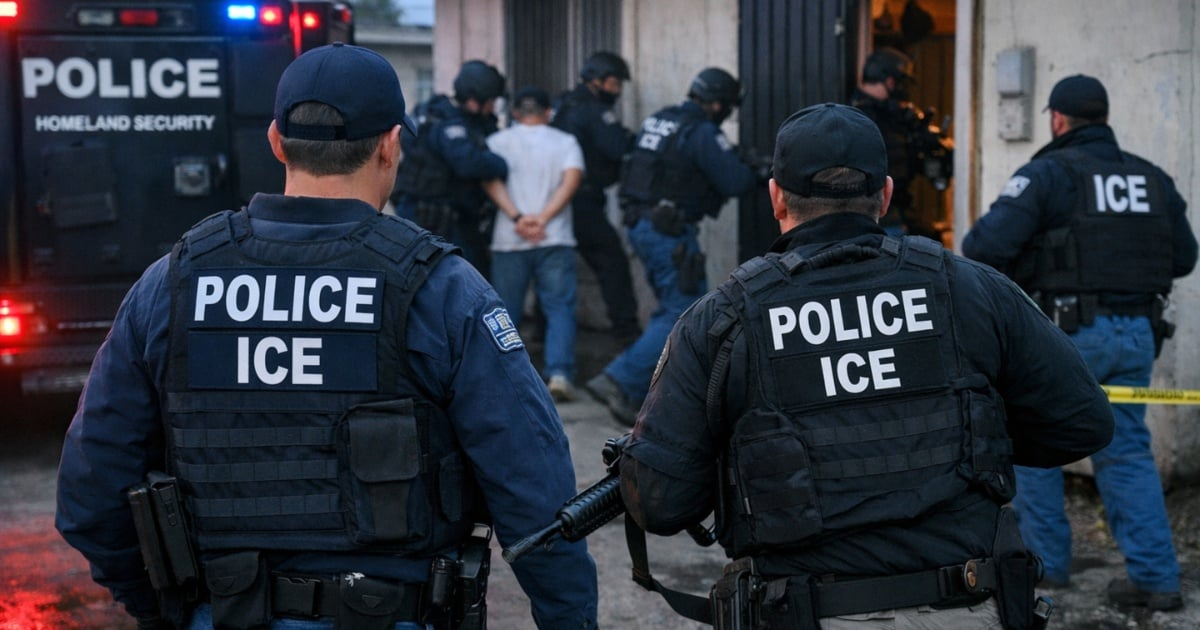
In recent weeks, armed agents from the Homeland Security Investigations (HSI), the investigative division of Immigration and Customs Enforcement (ICE), have conducted field operations and home visits to question individuals suspected of registering or voting illegally without U.S. citizenship.
Investigations can also target individuals who are currently naturalized citizens, but there are suspicions that they may have participated in elections before obtaining citizenship.
The judge preliminarily concluded that federal actions likely violate provisions of the Voting Rights Act that prohibit intimidation, threats, and coercion related to electoral participation.
The judicial resolution, consisting of 19 pages, particularly questions the quality of the records used by authorities to identify individuals who supposedly do not have the right to vote.
According to NPR, Martínez-Olguín stated that the initiative uses flawed data and that the arrests made public can instill fear among American citizens who participate in voter mobilization campaigns or assist others in exercising their right to vote.
The order affects California, Connecticut, Georgia, Missouri, Nevada, New York, Pennsylvania, Washington, and Wisconsin.
In those states, the judge prohibited certain field operations and interrogations related to the elections when agents know, suspect, or should reasonably suspect that the individuals involved are American citizens.
It also limited actions based solely on data obtained through record matching procedures from the U.S. Citizenship and Immigration Services (USCIS), without additional investigations to verify its reliability.
This does not constitute a general prohibition on investigating possible electoral crimes. Federal authorities retain their legal powers to investigate cases of illegal registration or voting, as long as their actions comply with the applicable judicial limitations.
The judge temporarily suspended the application of her decision until 5:00 p.m. on Friday, October 23, Pacific Time, in order to allow the federal government to request its review by a higher court.
One of the central elements of the case is the way the U.S. government has crafted the lists of individuals suspected of registering to vote without being citizens.
The judge referenced information released in September by a whistleblower linked to USCIS, who raised concerns about expedited database comparison procedures that could mistakenly include U.S. citizens among the alleged offenders.
The judicial investigation also examined HSI's social media posts, including one in which agents were seen handcuffing a man in California accused of registering to vote illegally.
According to Martínez-Olguín, the combination of incomplete records, potential identification errors, and widely publicized detentions can lead citizens to avoid participating in electoral activities for fear of becoming involved in police investigations.
The magistrate considered that these circumstances create an objectively reasonable fear of intervention by law enforcement, which could discourage those who promote or assist others in exercising their right to vote.
For his part, Nicolas Bartell, USCIS official, stated before the court that the records are manually reviewed before referring potential cases to HSI investigators.
Bartell acknowledged a reduced likelihood that American citizens may be mistakenly identified as foreigners in federal records, but maintained that there are controls in place to mitigate that risk.
According to his statement, any residual risk should be weighed against the government's responsibility to investigate potential electoral violations.
The DHS publicly defended its actions and stated that its goal is to identify, process, and expel foreigners who have voted illegally, in addition to protecting the votes of American citizens.
The agency also stated that it does not plan to interrogate or investigate individuals it considers American citizens.
The lawsuit that led to the resolution was filed in September by a coalition that includes, among other organizations, the California Nurses Association, National Nurses United, and Voto Latino Foundation, as well as local authorities from San Francisco and Santa Clara County.
The plaintiffs reported that federal operations were instilling fear among citizens and organizations dedicated to promoting electoral participation.
According to documents submitted to the court, some members of the plaintiff unions who obtained U.S. citizenship through naturalization stated that they no longer felt safe attending political events, working as election volunteers, or going in person to vote.
The legal organization Protect Democracy, which is involved in representing the plaintiffs, welcomed the decision as it safeguards the right of American citizens, both born in the country and naturalized, to participate in elections without intimidation.
Lawyer Beau Tremitiere from that organization stated that the DHS had built its lists using incorrect information and sent agents to homes without properly verifying the reliability of the records.
The case also coincides with other actions by the federal government related to electoral eligibility.
According to NPR, the Justice Department has demanded that California separate 20,000 ballots corresponding to individuals whom federal authorities believe are likely non-citizens.
However, a preliminary review conducted by election officials in Los Angeles County found that numerous entries on that list were canceled, inactive, or had no voting history. Some even corresponded to individuals who had claimed to have been born in the United States.
The Department of Justice also announced on Monday, October 19, charges against 28 permanent residents in California, accused of registering or voting illegally. These are allegations that will need to be resolved through the appropriate legal proceedings.
U.S. legislation reserves participation in federal elections to citizens of the country, while various state audits have indicated that verified cases of voting by non-citizens are rare.
The court order comes at a time of intense electoral mobilization in the United States, where millions of people have already begun casting their votes ahead of the November 3rd election.
This Thursday, the available data indicated that the number of voters who had voted early in the United States surpassed 18 million, with high levels of participation in states such as California, Georgia, Texas, and Florida.
Related videos:
Filed under: