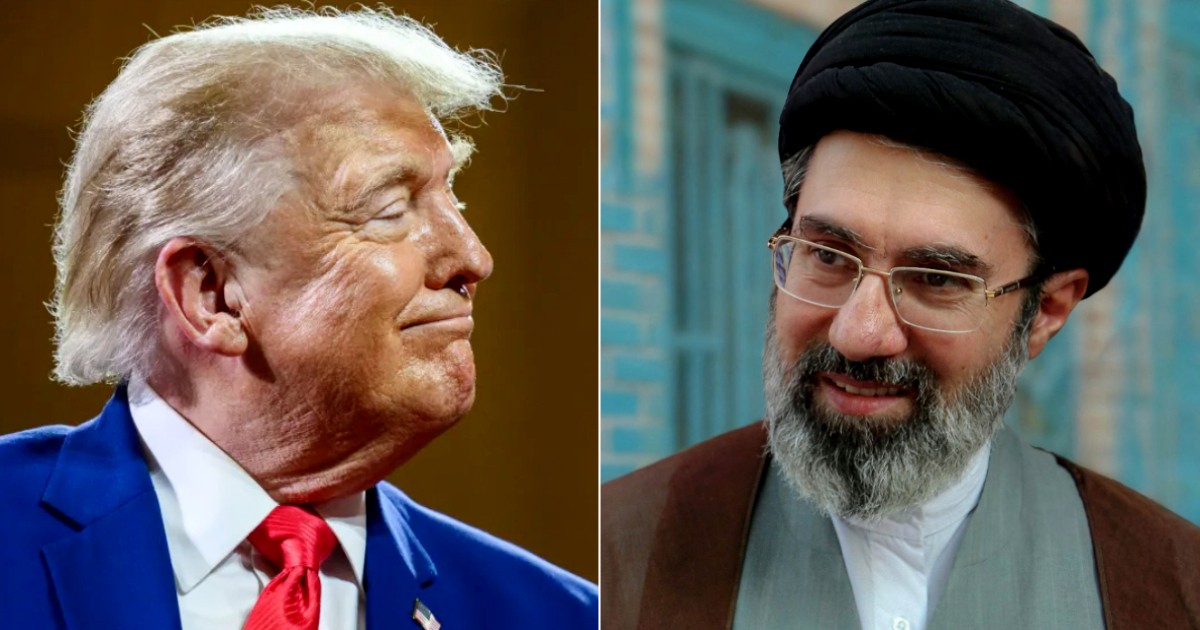
The president Donald Trump warned on Friday that Washington could launch a new military offensive against Iran, as the conflict approaches its eighth month and rising fuel prices squeeze the Republican Party ahead of the November 3 legislative elections.
“We could conduct another little Epic Fury,” declared Trump before thousands of supporters at a rally held in Fort Myers, Florida, according to Reuters, using the official name that the U.S. military gave to the campaign against Iran (Epic Fury). However, the president did not provide any additional details.
The warning contrasts with what the president himself had stated just days earlier: that the United States would not attack Iran before November 3, the date when the elections will determine control of Congress, where the Republicans hold narrow majorities in both chambers.
That same Friday, Trump also raised a strategic question: whether Washington should seek a quick exit from the conflict or let it gradually fade away. In recent campaign statements, the president has reiterated that the war will end soon, "one way or another."
The Epic Fury Operation began on February 28, 2026, when U.S. and Israeli forces attacked Iranian military and nuclear facilities. Tehran responded with its own strikes against Israel and U.S. bases in Gulf states. The toll has included thousands of deaths and millions displaced.
The conflict has shaken global energy markets. The price of a barrel of Brent crude oil surged from about $67 to over $126 during the escalation, and maritime traffic through the Strait of Hormuz fell by 97% at the peak of the crisis.
By the end of September, the traffic through that strategic passage had partially recovered, exceeding seven million barrels per day, although total exports from the Persian Gulf remained around 72% of pre-war levels.
While Trump signals a potential escalation, Bloomberg reported this Saturday that the president is already preparing a new offensive following the elections and has sent a third group of aircraft carriers along with 10,000 additional sailors and Marines to the Persian Gulf to expand his military commanders' options.
Iran, for its part, has not remained passive. Two high-ranking Iranian security officials confirmed to Reuters that Tehran has developed detailed plans to target underwater communication cables in the Gulf if bombings resume. General Yadollah Javani, the political chief of the Revolutionary Guard, warned that Iran could target seven major internet cables that cross the Strait of Hormuz if the U.S. damages Iranian infrastructure.
The U.S. and Iran reached a provisional agreement for 60 days in June 2026, but the pact collapsed within a few weeks. In September, Iran proposed a seven-day ceasefire that Trump rejected, although indirect negotiations remained active by mid-October.
Political pressure at home is also growing: some Republican lawmakers have begun to distance themselves from Trump due to the economic impact of the war, while the average price of gasoline in the U.S. exceeded $4.50 per gallon in May 2026, a more than 50% increase since the onset of the conflict.
According to Bloomberg, the war that Trump promised to resolve in a matter of weeks "now seems to be escalating as it enters its eighth month."
Related videos:
Filed under: