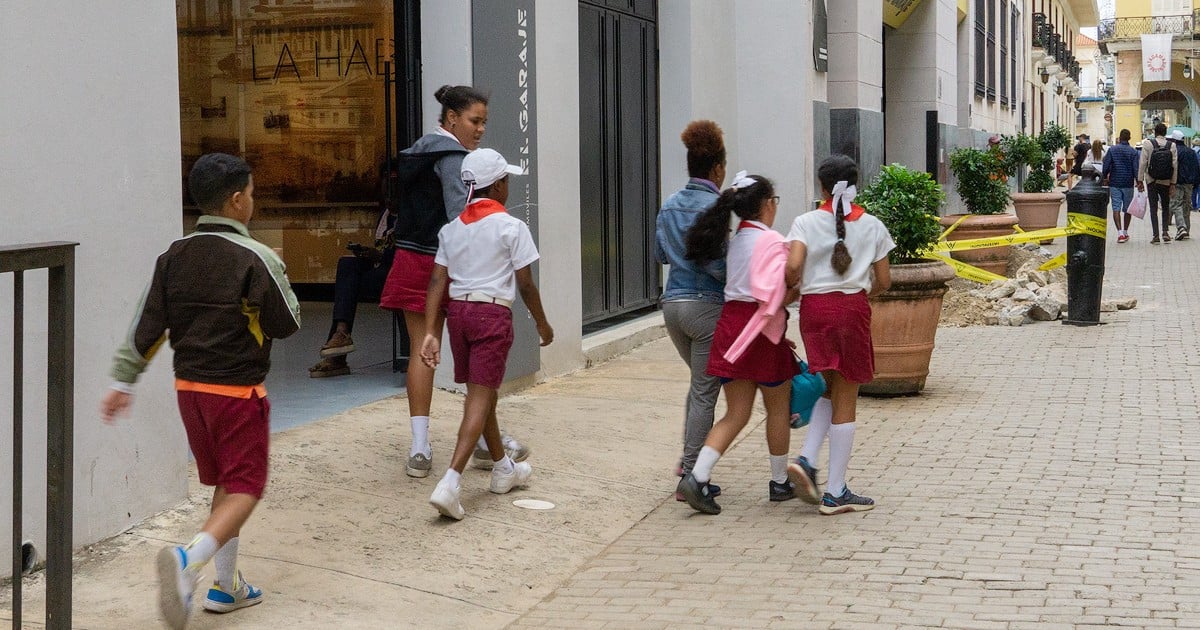
The Ministry of Education of Cuba (Mined) will delay the start time for all educational centers by 30 minutes starting November 1, following the government's decision to maintain daylight saving time during the period designated for standard time.
The adjustment is in response to the continuation of daylight saving time, which keeps clocks set forward during the months when it gets light later according to the official time.
The measure is part of the decisions announced the day before by the ministries of Energy and Mines (Minem) and Labor and Social Security (MTSS), which canceled the scheduled time change for next Saturday.
In a statement published on Facebook, the Mined indicated that educational institutions at all levels must inform students, families, and staff about the details of the change, as well as organize the teaching process to ensure compliance with the school calendar.
The decision is part of the severe electricity crisis the country is facing. According to the joint statement from Minem and MTSS, maintaining daylight saving time will prevent an increase in power outages of 126 MW during the peak evening demand period. Of that figure, 76 MW would come from reduced use of artificial lighting, while 50 MW would result from greater utilization of solar photovoltaic generation.
The first month of the 2026-2027 school year was marked by power outages, transportation issues, and schools without electricity. In Matanzas, an elementary school managed to go more than 23 days without electric service due to a transformer malfunction.
The decision has a precedent in the recent history of the country. Between March 2004 and October 2006, Cuba maintained daylight saving time continuously for more than two years in response to another electricity generation crisis. During that period, power outages lasted between six and ten hours daily, depending on the region.
The measure also sparked reactions of resignation and irony among Cubans on social media. "It doesn't matter what time it is if we have no electricity, neither at dawn nor at nightfall," wrote a user.
Another questioned the depth of the crisis with a question that summed up his frustration: "Can someone explain to me when we will hit rock bottom? We've already passed the Earth's core, and I see no end in sight."
Related videos:
Filed under: