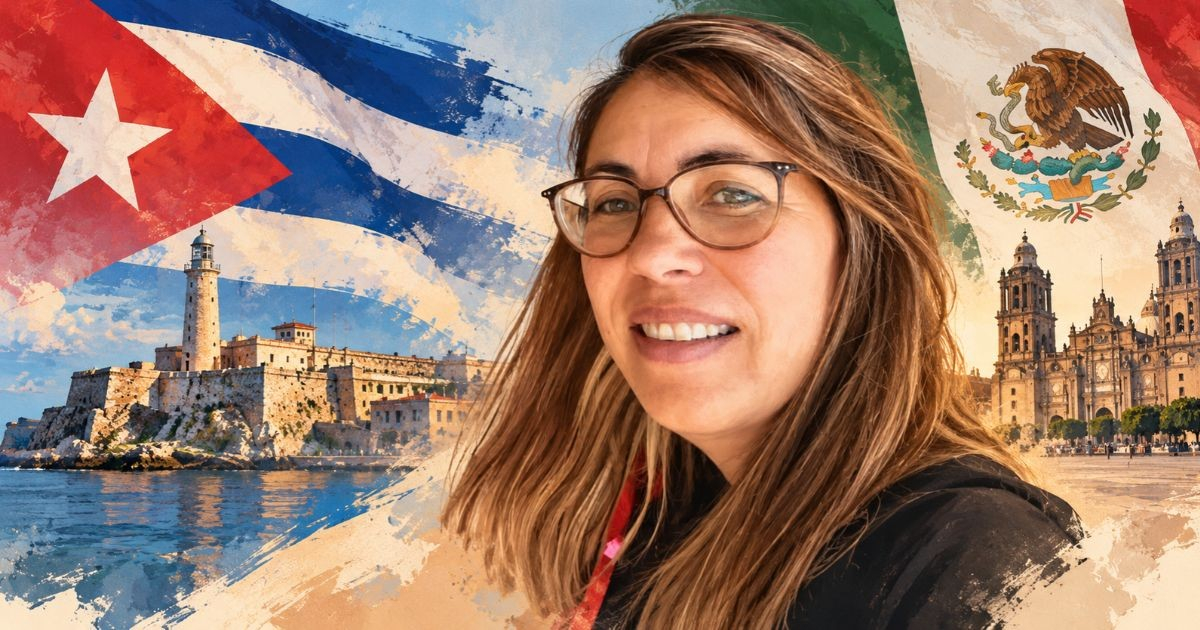
Yusleidy Llerena Fernández, known as Yuli, emigrated to Mexico in 2022 with a degree from the Superior Institute of Design and a master's in Design Management. This year, a diagnosis of metastatic breast cancer completely changed her life, according to an interview published this Sunday by elTOQUE.
It all began unexpectedly: while accompanying a family member to a surgeon's appointment, Yuli casually mentioned that she had noticed a lump in one of her breasts. She had just finished breastfeeding her youngest daughter, whom she nursed until the age of three, and thought it might be residual milk. The doctor recommended a mammogram, the result of which was BI-RADS 4, a suspicious finding that required a biopsy. The biopsy confirmed what she did not expect.
"I have never smoked or drunk; I nursed my two children, and there is no history of cancer in my family, so statistically, there would be no reason. It was very difficult for me to communicate the news to my family, especially my mother, because I never get sick," she told the media.
Without health insurance, Yuli went to the Health Center in her area, which referred her to a High Specialty Hospital. A social worker determined that the public system would help cover the treatment, subject to the availability of medications. The hospital also assigned her a supportive psychologist. The therapeutic plan includes six sessions of chemotherapy every 21 days, followed by surgery.
The economic burden of the process has been considerable. The prior studies —mammograms, CT scans, biopsies, oncology consultations, immunohistochemistry of lymph nodes...— depleted her reserves. "The tests leading up to the diagnosis wreaked havoc on my emergency fund. The public health system takes a long time, and I urgently needed to undergo several tests," she explained.
For this reason, encouraged by family and friends, she launched a fundraising campaign on the GoFundMe platform: “Help for my breast cancer treatment”.
Each chemotherapy session can last about five hours, and her husband must accompany her, making him the main economic provider for the household as well. "There have been days when I haven’t been able to work emotionally, out of fear that I might cut the fabric and it could go to waste," admitted Yuli, who reinvented herself in Mexico by making clothes and costumes for festivals.
The treatment has also transformed her life as a mother of two children aged three and seven. Chemotherapy weakens her immune system, preventing her from carrying and hugging her children when they return from school. "It's hard to have to cut your hair, to look at the kids and explain to them..." she said. Still, she clings to one certainty: "This will be temporary."
What has supported Yuli throughout this process is a network of affection built on both sides of the ocean. Friends are taking care of her children so that she can complete her treatment, and her mother crossed the Atlantic to be by her side: "She has been able to come from Cuba to accompany me."
"It's very difficult for everyone to come and ask me to be strong; I prefer a visit that helps me forget I'm sick. Being a mom, being a migrant, and not having insurance filled me with a lot of fear; it was just too much all at once," she confessed to El Toque.
The case of Yuli is not the only one among Cuban women facing cancer both on and off the island without the necessary support network or medications to cope with it. Breast cancer is the most common malignant tumor among Cuban women, with an incidence of 68.5 cases per 100,000 inhabitants recorded in 2023, according to data from ONEI cited by IPS.
The Cuban health system is facing a severe crisis that threatens the continuity of oncology treatments on the island. Hundreds of medications are missing from the essential list in pharmacies, and many Cubans have had to turn to natural and traditional medicine and other alternatives as almost their only solution for their ailments.
Related videos:
Filed under: