For Cubans who love freedom and democracy, the triumph of Luiz Inácio Lula da Silva is not good news. I respect the actual outcome of the elections if it is proven to be clean and legitimate. Following the first round, where Flávio Bolsonaro's Liberal Party (PL) achieved very positive results in the Senate and the Chamber, and the Workers' Party (PT) lagged behind, I am not clear on the turnaround that occurred given the initial lead held by Flávio.
A judge from the Supreme Federal Court, Cristiano Zanin —former lawyer of Lula— has ordered to extend the voting hours by two hours. If the process proves to be transparent, I respect the decision of the Brazilian people. If there are clouds of doubt and fraud is proven, I will condemn it without hesitation.
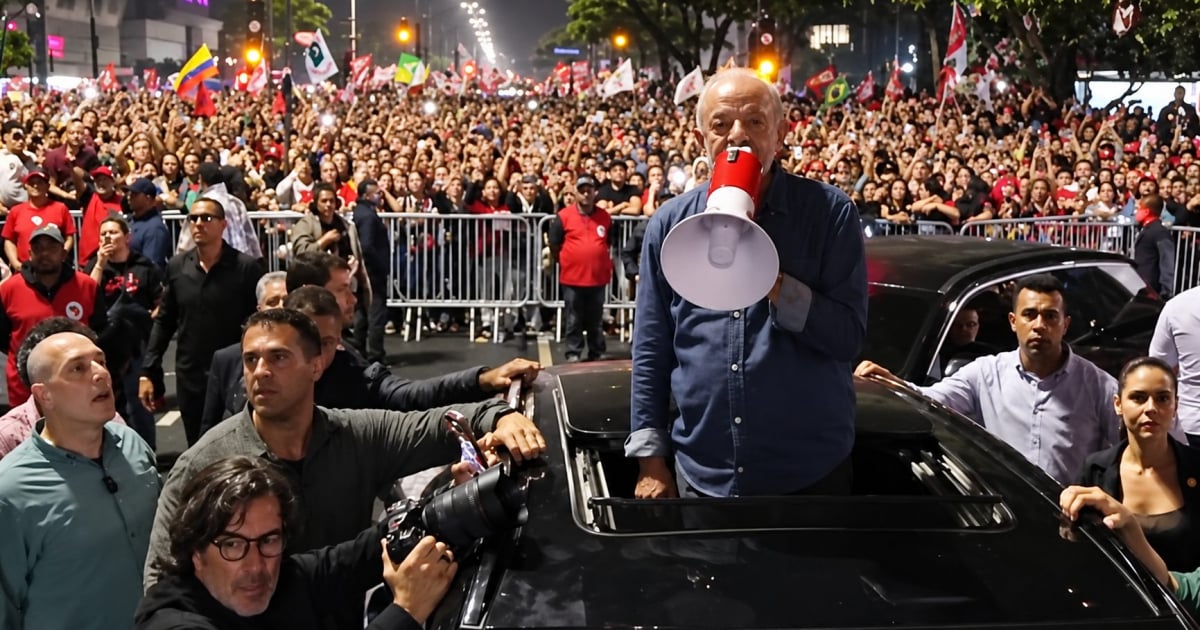
Lula, 80 years old, secured a non-consecutive fourth term with approximately 51.8% of valid votes against 48.2% for Flávio Bolsonaro, a difference of about 4.4 million votes. It was the first time since 1989 that the runner-up in the first round (Flávio led on October 4 with 47.03% against Lula's 45.16%) won the second round. Lula spoke of a “defeat of denialism” and of “democracy” before his supporters in São Paulo. His supporters celebrated the comeback.
Leftist Latin American allies enthusiastically congratulated him: Claudia Sheinbaum (Mexico) proclaimed, "Long live democracy, the people of Brazil have won!"; dictator Miguel Díaz-Canel (Cuba) described it as a "historic victory" that guarantees "peace, sovereignty, and social justice"; Yamandú Orsi (Uruguay) greeted him as a close friend.
Other leaders also took similar actions, such as José Antonio Kast (Chile), Santiago Peña (Paraguay), Rodrigo Paz (Bolivia), and Daniel Noboa (Ecuador), maintaining a tone of institutional continuity. Those who criticize or express reservations are mainly Flávio himself and his inner circle; there is no broad coalition of presidents openly questioning the outcome, although internal polarization is evident.
The economic impact of the announced victory was immediate and negative. The markets, which had bet on Flávio after his lead in the first round and were expecting greater fiscal discipline, reacted strongly. An exchange-traded fund (ETF) tracking the Ibovespa in Tokyo fell nearly 15% (up to 16% at its peak); futures for the real weakened by about 10% (to around 5.55-5.60 per dollar); the EWZ in New York sharply declined in pre-market trading.
Specialists and operating tables in São Paulo anticipate significant drops in the Ibovespa (projections of up to 11% in the first hour, with the risk of circuit breakers), depreciation of the real, and short-term interest rate increases, due to the perception that Lula will prioritize social spending over fiscal adjustments. The outlook for the coming days will depend on signals of economic policy and whether the judicial dispute extends.
The PL does not accept the result. Flávio stated it is “impossible to recognize” the elections due to Zanin's extended hours (“former lawyer of Lula”), who “changed the rules in the middle of the game” and broke the equality, and announced he will request annulment. His supporters in Brazil back him in this legal approach; some more radical individuals speak of mobilization, although there are no reports of widespread violence in the early hours.
The south, a stronghold of Bolsonarism, maintains tense moods, and echoes of regional discontent circulate. The state representative from Santa Catarina announced his intention to promote a plebiscite to separate the south from the rest of the country. The Liberal Party, strengthened in the national Congress, positions itself as a staunch opposition.
There are those who argue that Lula, despite being friends with criminal dictatorships like the Cuban one, is a true democrat. To think that an admirer and old friend of Fidel Castro is a sincere democrat is akin to believing that a fan of Lionel Messi has never dreamed of being a star football player and scoring the goal of the century in a World Cup.
If Lula has not made further progress in radicalizing the left in Brazil, it has been because the conditions have not been favorable for him. The record is clear: in 1990, alongside Fidel Castro, he founded the São Paulo Forum in the city of the same name (Hotel Danubio), bringing together Latin American leftist parties and organizations after the fall of the Berlin Wall. The goal was to coordinate strategies to advance electorally and promote an anti-neoliberal and integrationist agenda beneficial to the interests of the Cuban regime and the undemocratic left.
Before Hugo Chávez became the main reference and ally of the Castros, Lula was Fidel's preferred agent for spreading that influence across the continent. The friendship and ideological coordination are not trivial details.
Today, the communists of Havana breathe a sigh of relief; they feared being left with only Sheinbaum in Mexico and the Frente Amplio in Uruguay. The grand reception of María Corina Machado yesterday in Venezuela, makes them feel that they will never again be able to get their hands on Venezuelan oil. Of course, they are aware that relief does not equate to salvation. Lula won't be able to do much for them.
Related videos:
Filed under:
Opinion article: Las declaraciones y opiniones expresadas en este artículo son de exclusiva responsabilidad de su autor y no representan necesariamente el punto de vista de CiberCuba.