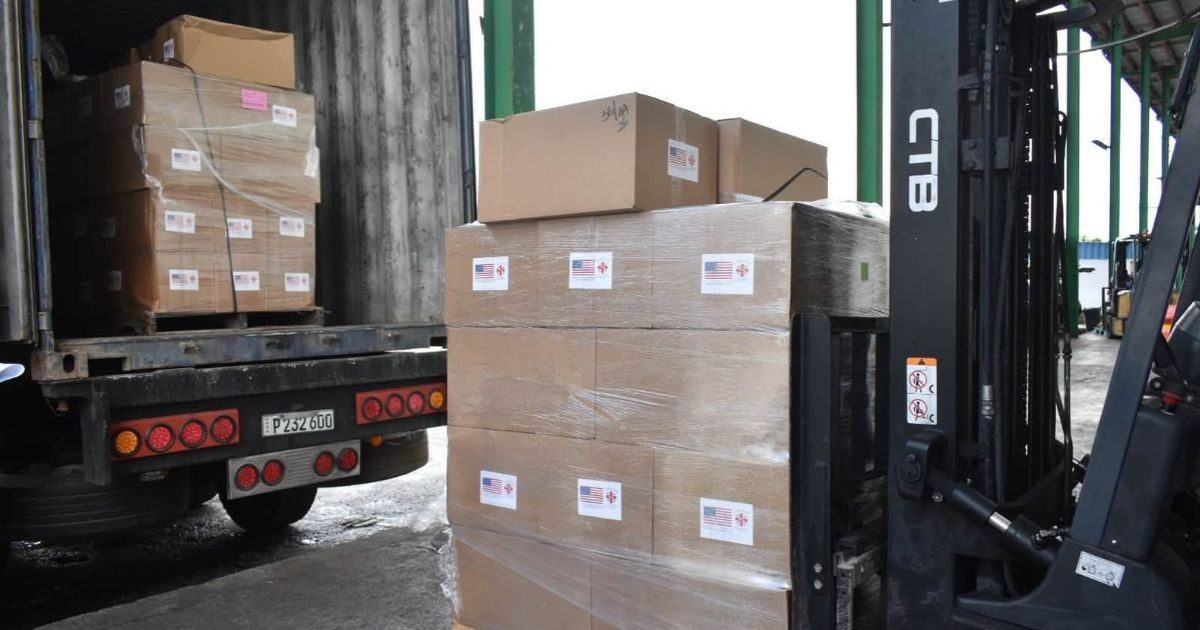
A second shipment of humanitarian aid from the United States arrived in Cuba this Tuesday with 700 food kits and another 700 hygiene modules intended for families in extreme vulnerability in the Diocese of Pinar del Río.
The Catholic organization Cáritas Cuba reported the arrival of the new shipment, funded by the U.S. government, which will allow for an expanded distribution of essential goods in underserved communities in the western part of the country.
In this instance, the aid will be distributed in communities and rural areas of the parishes of Guanajay and Bahía Honda, localities that administratively belong to the province of Artemisa but fall within the ecclesiastical jurisdiction of Pinar del Río.
According to the institution, the Italian priests Daniele and Damiano, along with volunteers from both locations, will coordinate the direct delivery of the products to the selected homes.
"Solidarity does not stop for those who need it most in the Diocese of Pinar del Río," Cáritas emphasized in its statement.
The organization explained that the goal is to provide material relief and support to families facing challenges in accessing food and basic hygiene items.
This is the second flight of U.S. aid destined for the diocese during October. The first arrived on October 8 at José Martí International Airport in Havana, also with 700 food kits and 700 hygiene modules.
That shipment was received by Monsignor Juan de Dios Hernández Ruiz, Bishop of Pinar del Río, and Abel Castillo López, director of Caritas in the diocese, along with volunteers from the organization.
The first beneficiaries were families from Candelaria and Quiebra Hacha, communities belonging to Artemisa, where parish teams had previously identified individuals with particularly serious needs.
On October 10, Caritas volunteers began to directly distribute the aid packages in six rural communities of Candelaria: Mango Dulce, Bayate, La Picadora, Tabaco Rubio, El 20, and Barrancones.
The food packages included rice, beans, oil, sugar, pasta, and canned fish. The hygiene kits contained personal care products, detergent, items for purifying water, and other useful supplies for households.
Assistance is primarily directed towards elderly individuals living alone, pregnant women, breastfeeding mothers, young children, people with disabilities, and patients who require support for their daily activities.
The distribution in Pinar del Río is part of a 100 million dollar humanitarian aid program announced by the U.S. administration, which includes sending food and essential items to Cuban families through independent organizations.
Of that amount, 60 million dollars are channeled through Cáritas Cuba and Catholic Relief Services (CRS), while the remaining 40 million corresponds to other participating organizations.
Supplies are procured in the United States and distributed in Cuba through diocesan and parish networks, without direct administration of those funds by the Cuban government.
The program has also been extended to other provinces. On October 14, the Diocese of Matanzas received its first shipment of assistance from the United States, intended for homes previously identified by volunteers.
However, the Catholic Church has acknowledged that the available resources are insufficient to meet the needs of all individuals. In August, church authorities explained that distributions would be made based on vulnerability criteria, without religious or political distinctions.
Related videos:
Filed under: