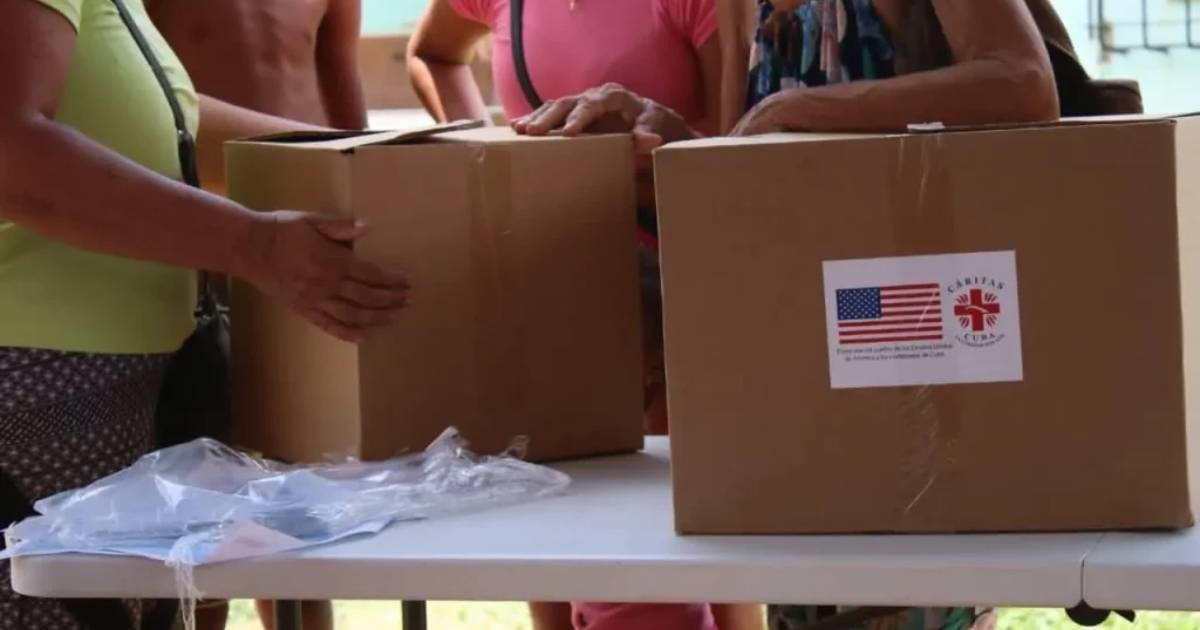
The Catholic Church explained that the humanitarian aid sent by the United States will not be able to reach all needy Cubans because resources have a limited scope and are primarily intended for individuals in extreme vulnerability.
The Diocese of San Rosendo, in Pinar del Río, clarified in a statement signed by Bishop Juan de Dios Hernández Ruiz that this assistance does not constitute a permanent social program or a universal right, but rather an emergency relief for those facing the most critical situations.
"Humanitarian aid is not a permanent social assistance program nor a universal right. It focuses on those in extreme vulnerability. Resources are limited and priority is given to those who need it the most," the text stated.
Assistance will prioritize elderly individuals living alone, pregnant women or those in the breastfeeding period with identified risks, children under five years old in vulnerable situations, and people with disabilities or bedridden individuals who cannot take care of themselves.
The diocese acknowledged the pain caused by excluding families who are also in need, but insisted that the selection is based on the severity of each case and the program's objective limitations.
“However, if assistance is not received, it does not mean that it is not needed, but rather that there are individuals in an even more critical condition,” explained the bishop, who requested understanding regarding the impossibility of reaching the entire population.
The religious leader added, "As a Church, we are fully aware that we cannot reach everyone, and that is a reality that pains us."
The Church explained that assistance should be granted solely based on the level of need, without distinctions of nationality, religion, race, or political position, and without using its provision to intervene in political controversies.
The bishop of Pinar del Río called for support for those in the worst conditions and stated that respecting the established priorities is also an act of solidarity.
Cáritas Cuba had already acknowledged that the coverage of assistance would not be sufficient to reach all those in need. The organization then stated that beneficiaries would be selected based on vulnerability criteria.
The distribution is in the hands of volunteers and teams from the parish communities. The first shipment of the package was received in Havana, containing modules for 700 families, and Cáritas explained that deliveries would be made directly to the selected households.
The program is part of a $100 million humanitarian aid fund set up by the United States government for Cuba.
The diocese specified that this amount covers the entire logistics assurance process and does not only represent the value of the products delivered to the beneficiaries.
Of the 100 million dollars, 60 million will be channeled through Cáritas Cuba, with logistical support from Catholic Relief Services. The remaining 40 million will be managed by other organizations.
The United States had previously confirmed that the humanitarian package would include food and other essential products, with the intention that the resources would reach the Cubans through the Catholic Church and non-governmental organizations.
Each selected household will receive a module consisting of food and essential hygiene items.
The hygiene kit includes four bath soaps, powdered detergent, two tubes of toothpaste, four toothbrushes, a bottle of water purification tablets, two packs of sanitary pads, a plastic bucket with a lid, a 20-liter container for water storage, and a rechargeable lamp.
The diocese warned that these modules should not be confused with other assistance that Cáritas Cuba continues to provide as part of its regular programs for support and human development.
These initiatives are being developed simultaneously and are not related to the funds from the United States.
The Catholic organization is simultaneously maintaining other humanitarian operations in the eastern provinces, aimed at families affected by Hurricane Melissa.
Related videos:
Filed under: