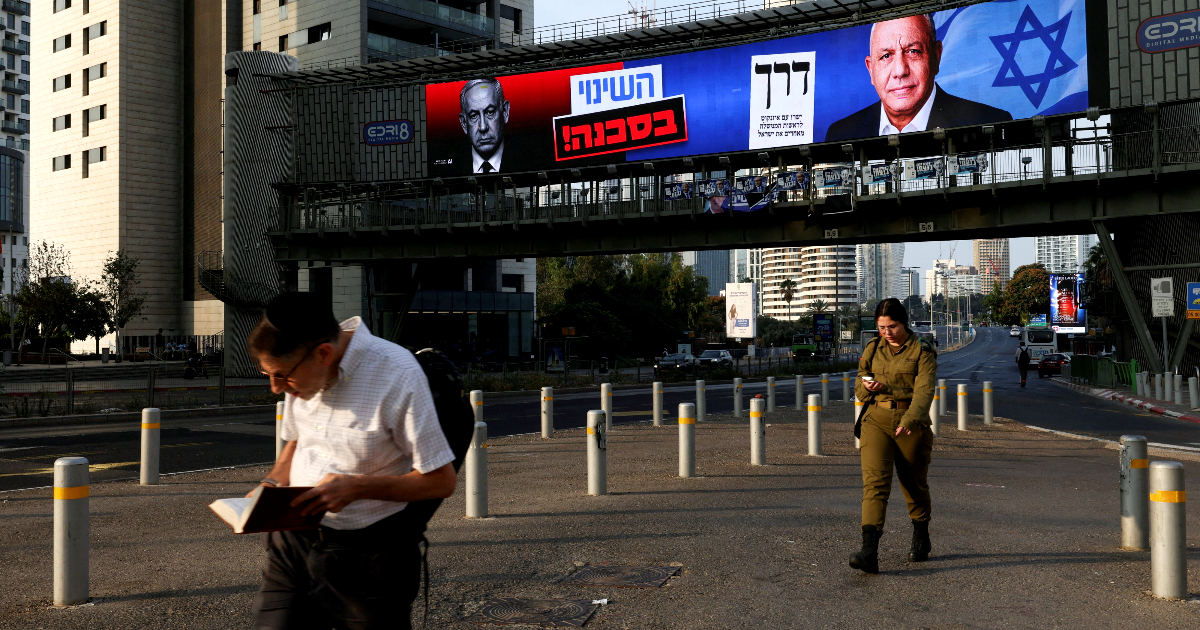
Israel is experiencing a historic election day this Tuesday: participation in the early hours of voting is the highest in 45 years, as confirmed by the Israeli Central Election Commission, in an election widely regarded as a referendum on the leadership of Prime Minister Benjamin Netanyahu after three years of war.
According to the live updates from CNN and the report from EFE, by 10:00 local time, 16.68% of the electorate had already voted — over 1.2 million people from a total of 7.33 million — the highest percentage in the early hours since 1981.
At 6:00 PM local time, voter turnout climbed to 66.7%, more than nine points above the figure recorded at the same hour during the 2022 elections and the highest number in the country's history, according to the Electoral Commission. More than 4.8 million Israelis had cast their ballots before the polls closed at 10:00 PM local time.
These are the first elections since the Hamas attacks on October 7, 2023, which resulted in approximately 1,200 Israeli deaths and the capture of more than 250 hostages, triggering a war that escalated to include conflicts against Lebanon and Iran.
Netanyahu cast his vote in West Jerusalem alongside his wife Sara, while his main rival, former Army Chief Gadi Eisenkot, voted in Herzliya, north of Tel Aviv, accompanied by his wife Hana.
"I ask you all to go out, to vote, to fulfill your civic duty; only a broad and significant victory over Likud will send Netanyahu home," declared Eisenkot at the polling station.
Surveys indicate an extremely close contest. Projections from the three major television networks, published three days before the election, allocated between 52 and 56 seats to the bloc led by Eisenkot, compared to about 50 for Netanyahu's bloc, both falling short of the majority of 61 seats required to govern in the 120-member Knesset.
The support of the Arab parties —which polls attribute between 14 and 16 seats— could prove decisive for the inauguration of the opposition bloc.
The day was not free of incidents. The Yashar! party led by Eisenkot reported a "deliberate manipulation" of its ballots nationwide and announced a formal complaint to the Electoral Commission. A supporter of the far-right National Security Minister, Itamar Ben Gvir, assaulted a volunteer from the Democrats party in Holon "until he lost consciousness," as described by the party in a statement.
The Israeli police also arrested a man in his twenties who was carrying a concealed knife near an event of the leader of Los Demócratas, Yair Golán, at Mesila Park in Tel Aviv. In the West Bank, Israeli settlers set fire to three vehicles in the village of Umm Safa, northwest of Ramallah.
At least 67,000 Israelis living abroad returned to the country to cast their votes, most of them from Europe and the United States, thanks to the Fly&Vote initiative by the NGO AID Coalition.
The spokesperson for the Electoral Commission, Dean Livne, stated at a press conference that fewer incidents were reported during the first hours compared to previous elections, although he confirmed the detention of three people for alleged electoral bribery linked to the Islamist party Raam, who were found with envelopes containing money.
The final results and the start of coalition negotiations —which historically can last for weeks or even months— will be known after the polls close at 10:00 PM local time.
Related videos:
Filed under: