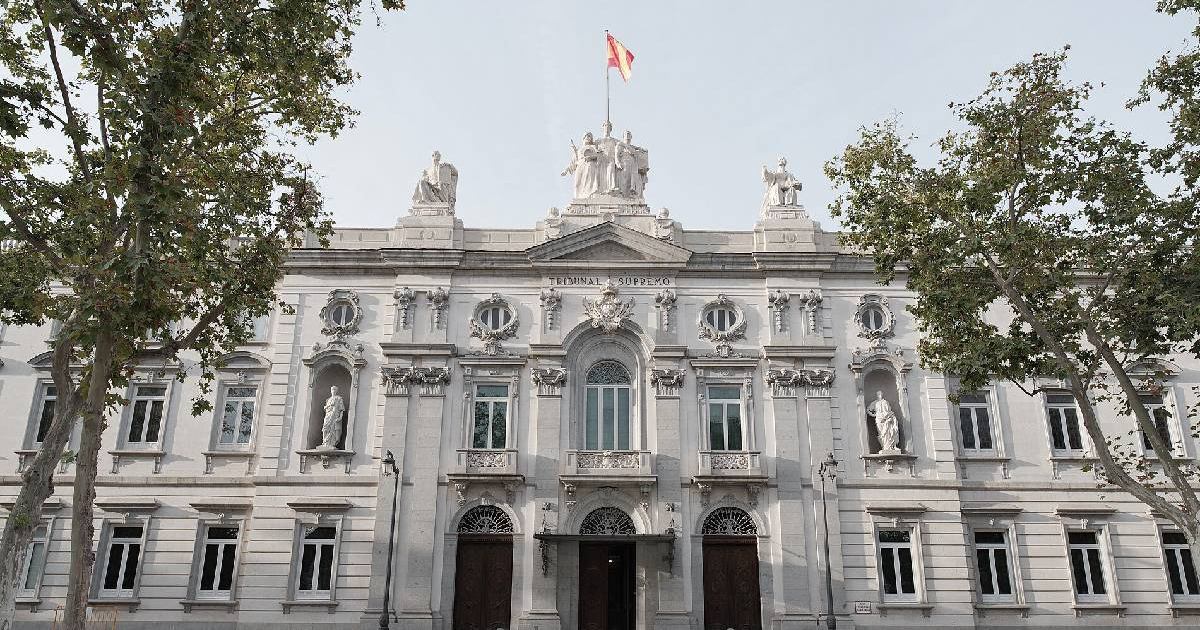
The Spanish government met the deadline set by the Supreme Court this Wednesday, delivering before 3:00 PM the nominal list of 163,355 individuals naturalized under the Law of Grandchildren, whose right to vote in the general elections on November 29 is currently suspended, according to sources from the Justice department reported to the news agency EFE.
Of that total, only 901 people will be able to vote from abroad: they are those who proved to the consulates that they are children or grandchildren of Francoist exiles through explicit certification, without relying on the general presumption of exile introduced by the ministerial instruction in October 2022.
Sources from the Ministry of Justice acknowledged to EFE that "a significant portion of them will likely have their right to vote suspended," which, in practice, affects almost all of those registered.
The final figure delivered exceeds the initial estimate of 163,020 by 335 individuals, which the Government had previously communicated without identifying those affected individually.
The Supreme Court had requested last Friday that the ministers Félix Bolaños (Presidency and Justice) and José Manuel Albares (Foreign Affairs) submit the list before 3:00 PM this Wednesday, under warning of coercive fines and even potential criminal liability in the event of non-compliance.
The Ministry of Foreign Affairs coordinated the review of files in the consular offices since mid-September, when it received notification from the court. The Ministry of Presidency and Justice, for its part, had sent to the Office of the Electoral Census on October 21 a partial list of 76,600 people who were registered in the digital Civil Registry as naturalized through this process.
The State Attorney's Office requested that the Third Chamber of the Supreme Court declare the list as confidential, arguing that it contains sensitive personal data and that the appealing parties could make "malicious or unlawful use of that information."
Regarding the electoral weight of the affected group, sources cited by EFE estimate that, applying the usual levels of external participation, the potential impact of the 163,355 registered individuals would be less than 14,000 votes distributed among 52 constituencies, equivalent to less than 0.06% of the votes cast in the 2023 general elections.
Cuba is one of the countries most affected by this process. The General Consulate of Spain in Havana received more than 107,000 nationality applications during 2025, and it is estimated that over 350,000 Cubans have started the paperwork since the law came into effect in October 2022.
It is essential to clarify that the precautionary suspension does not annul Spanish nationality nor revoke passports: it only affects the right to vote from abroad through the Census of Absent Residents on November 29. Cubans with Spanish nationality who reside and are registered in Spain can vote without any restrictions.
The litigation originates from the appeals filed by Vox and Iustitia Europa against the ministerial instruction of 2022, which established the presumption of exile for any Spaniard who had left the country between July 18, 1936, and December 31, 1955, leading to a surge in applications.
The Supreme Court temporarily suspended the electoral effects of those registrations in September 2026 and confirmed the measure on October 12, a decision that the Official State Bulletin published on October 15.
With the delivery of the list resolved, the Supreme Court still has to rule on two new requests from Iustitia Europa: to extend the suspension of voting rights to the adult children of those nationalized under the Grandchildren's Law—this group may exceed 195,000 registered individuals—and to also suspend the voting rights of those who, having been on the external census, have moved their residence to Spain.
The court must also resolve the claims of the nationalized individuals involved in the procedure, who are demanding a decision on their voting rights before November 29.
Related videos:
Filed under: