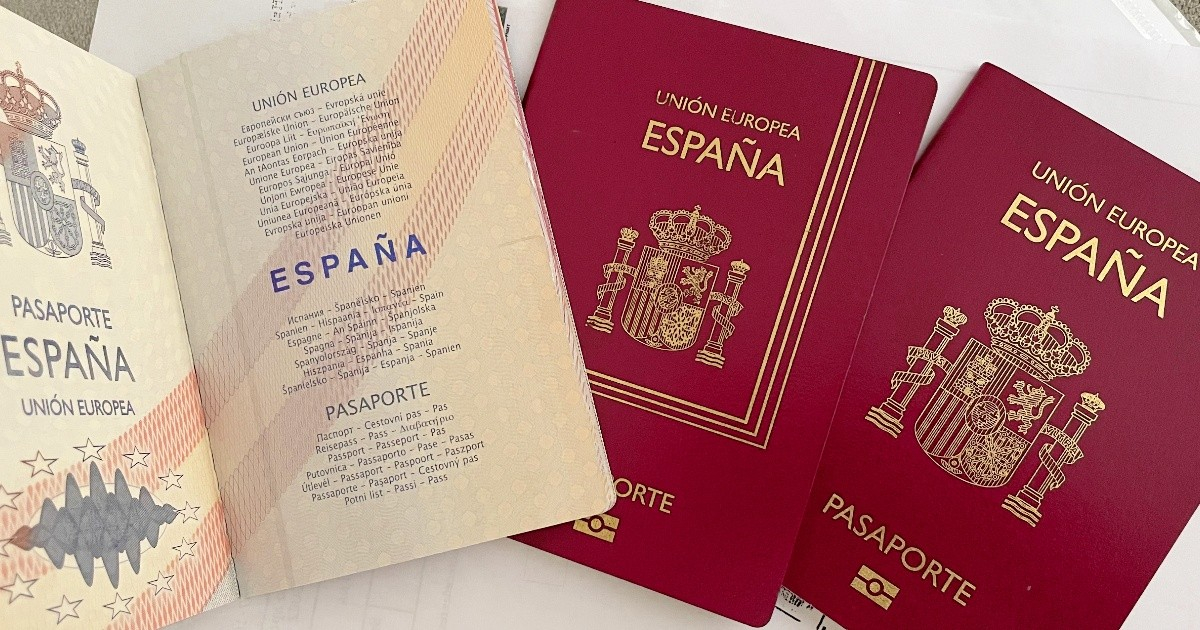
The Spanish Constitutional Court rejected on Wednesday, by a vote of 10 to 2, the appeal for protection presented by the Ombudsman, Ángel Gabilondo, against the precautionary suspension of the right to vote from abroad for citizens who were naturalized under the Law of Democratic Memory, known as the Grandchildren's Law.
The decision was recorded in the official note 94/2026 of the court, dated October 21, 2026.
The reason for the rejection is strictly procedural: the Plenary, presided over by Cándido Conde-Pumpido, deemed the appeal premature because, as the court's own notice states, "the prior judicial route in the aforementioned Third Chamber of the Supreme Court remains open."
The article 44.1.a of the Organic Law of the Constitutional Court requires exhausting ordinary remedies before resorting to constitutional protection, a condition that the Plenary deemed unfulfilled in this case.
The appeal challenged the Supreme Court orders of September 10 and October 12, 2026, corresponding to procedures 1013 and 1015/2026, by which the court agreed to and subsequently upheld precautionary measures that halt registrations in the Electoral Census of Absent Residents (CERA) related to the presumption of exile.
The majority also rejected Gabilondo's central argument, which claimed that the consulates' difficulties in timely verifying files justified bypassing the ordinary judicial process. According to El País, the majority's argument was compelling: "Administrative inefficiency does not serve as a basis for granting amparo."
The only two judges who voted in favor of admitting the appeal were Ramón Sáez Valcárcel and Juan Carlos Campo Moreno, who announced individual votes.
It is important to emphasize what this decision is not: the Constitutional Court did not rule on whether the suspension of the vote is constitutional or unconstitutional, nor did it annul or validate the precautionary measures from the Supreme Court.
The inadmissibility does not affect Spanish nationality or the passports of those involved; it only restricts the exercise of voting from abroad via the CERA registry for the general elections on November 29, 2026.
The suspension, which potentially affects 163,020 voters registered in the CERA, remains in effect and the procedure returns to the Supreme Court. Those nationalized under the Grandchildren's Law residing in Spain can vote on November 29 without any restrictions.
The appeal was submitted on October 16, five days before this resolution, after Gabilondo received requests from the General Council of Spanish Citizens Abroad.
The Ombudsman sought to stop the suspension of the right to vote by requesting urgent precautionary measures from the court. On October 19, Section Four unanimously raised the decision to the Plenary, and a report from the legal advisors of the Constitutional Court already recommended considering the premature appeal at that time.
The political context adds pressure to the judicial calendar: the Spanish government acknowledged that it would be very difficult to verify the consular files in time for November 29, and the Minister of Foreign Affairs, José Manuel Albares, admitted that the verification would take "at least until January" to complete.
The inadmissibility does not definitively close the door to the Constitutional Court: if the Supreme Court rules unfavorably for those affected after exhausting the ordinary route, a new appeal could be considered. However, Gabilondo's mandate expires on November 16, 2026, even before the elections are held.
Related videos:
Filed under: