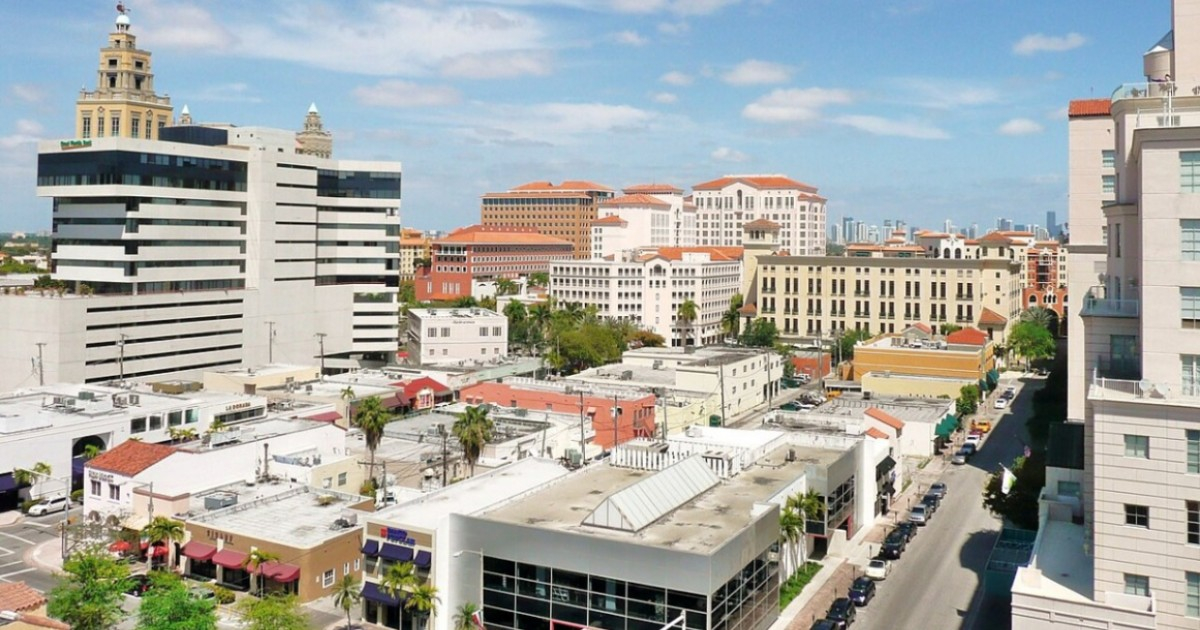
Rents requested in the Miami-Dade area increased by 2.0% year-over-year to $2,669 monthly in September 2026, tripling the national increase of 0.7%, according to a report published by MIAMI REALTORS + RWorld on Tuesday, prepared by chief economist Gay Cororaton, with data from Yardi Matrix.
The increase is not uniform: the largest rises are concentrated in the most sought-after submarkets of the county, where supply still fails to meet demand.
Coral Gables leads the increase with an +8.6% year-over-year, followed by Miami Beach (+6.2%) and Downtown Miami (+6.0%).
Overall, rents rose in 66% of the submarkets in South Florida, a sign that the pressure on tenants' finances extends beyond premium neighborhoods.
The West Palm Beach-Boca Raton area recorded the highest growth among the three major metropolitan areas in South Florida, with an increase of 2.6% to $2,605, led by Wellington (+6.1%).
In the Fort Lauderdale area, the average rent asked rose by 1.5% to $2,472, with Pompano Beach-South skyrocketing by 9.5%.
Miami contrasts with several markets in the so-called Sun Belt that are experiencing declines: Orlando (-0.1%), Nashville (-0.9%), Dallas (-1.0%), Phoenix (-1.1%), Tampa (-1.4%), Houston (-2.0%), and Austin (-2.5%).
The paradox highlighted by the report is that, while rents are rising, the cost of property insurance for apartment buildings has sharply decreased: by 14.9% in Miami-Dade—down to $1,321 per unit—and by 17.5% in Broward.
In global terms, multifamily operators in South Florida experienced a 16% reduction in their insurance costs compared to the previous year, according to the same report.
However, that savings does not reach the tenant.
Several reasons explain the paradox: property owners are holding onto their savings to stabilize their finances after years of exorbitant premiums—the multifamily insurance in Florida increased by 42.1% just in 2023; commercial policies for apartment buildings are not governed by the same rates as personal policies; and contracts are not renewed immediately.
The Federal Reserve has documented that approximately 72% of an increase in property insurance falls on the property owner's net income, and that the reverse process — the savings that reduce rent — is not automatic either.
Additionally, mortgage rates in South Florida hovered around 6.9% in September 2026, keeping the demand for rentals high among those who cannot afford to buy.
For Cubans and other tenants in the metropolitan area, the situation is challenging: with an average individual income of about $39,000 per year in Miami-Dade and a minimum wage of $15 per hour, paying $2,669 a month far exceeds the 30% income threshold that experts consider the limit of affordability.
Almost 60% of renter households in the metropolitan area are already spending more than 30% of their income on housing, according to data from the Federal Reserve Bank of Atlanta.
This report contrasts with the data published in early October by Realtor.com, which showed a decrease in the median rent in Miami-Dade of 2.29% down to $2,900.
The difference can be attributed to the fact that they measure different realities: the MIAMI REALTORS report collects the asking rents in market multifamily buildings, while Realtor.com measures the median rent for all types of housing listed in the county.
Investor confidence, in any case, remains high: loans for rental properties in South Florida reached $11.8 billion in the first three quarters of 2026, a 12% increase compared to the same period in 2025, which suggests that pressure on rents is unlikely to ease in the most sought-after submarkets in the short term.
Related videos:
Filed under: