Many Cubans and other migrants in the United States find that their Form I-94 does not appear on the official portal or contains incorrect information. The Customs and Border Protection (CBP) has established a step-by-step procedure for these cases, and being aware of it can make a difference in critical processes such as applying for permanent residency.
This guide does not constitute individual legal advice nor does it announce any new regulations. Its purpose is to explain, based on the official information from CBP, what steps to take when the entry record does not appear or contains errors.
First step: review the search data
Before concluding that the I-94 does not exist, it is advisable to verify that the information entered on the portal i94.cbp.dhs.gov matches exactly with the document used upon entering the country.
Resolver problemas con el I-94 es solo uno de los muchos trámites que enfrentan los migrantes en EE.UU. Mantente informado sobre visas, residencia y otros procesos en nuestra sección de
The fields that must match are the full name, date of birth, document number, and country of citizenship.
If the passport has more than one surname or name, all of them must be entered in the exact order they appear on the document.
CBP also allows for recovery attempts by scanning the machine-readable zone (MRZ) of the passport or through the CBP Link mobile app with a Login.gov account.
For those who entered with a Form I-862 (Notice to Appear) without a passport, CBP allows searching for the I-94 using the A number (Alien Registration Number) in the document number field, although the agency warns that not all cases can be retrieved this way.
If the registration still does not appear or has errors
When the previous checks do not resolve the issue, CBP offers two main avenues.
The first is the form from the CBP Information Center, selecting the topic "I-94 / Traveler Compliance" and the subcategory "Issue with my I-94/Travel History."
The form itself warns: "Check the subject you select, as an incorrect choice may delay the response." The average response time is 3 to 5 business days.
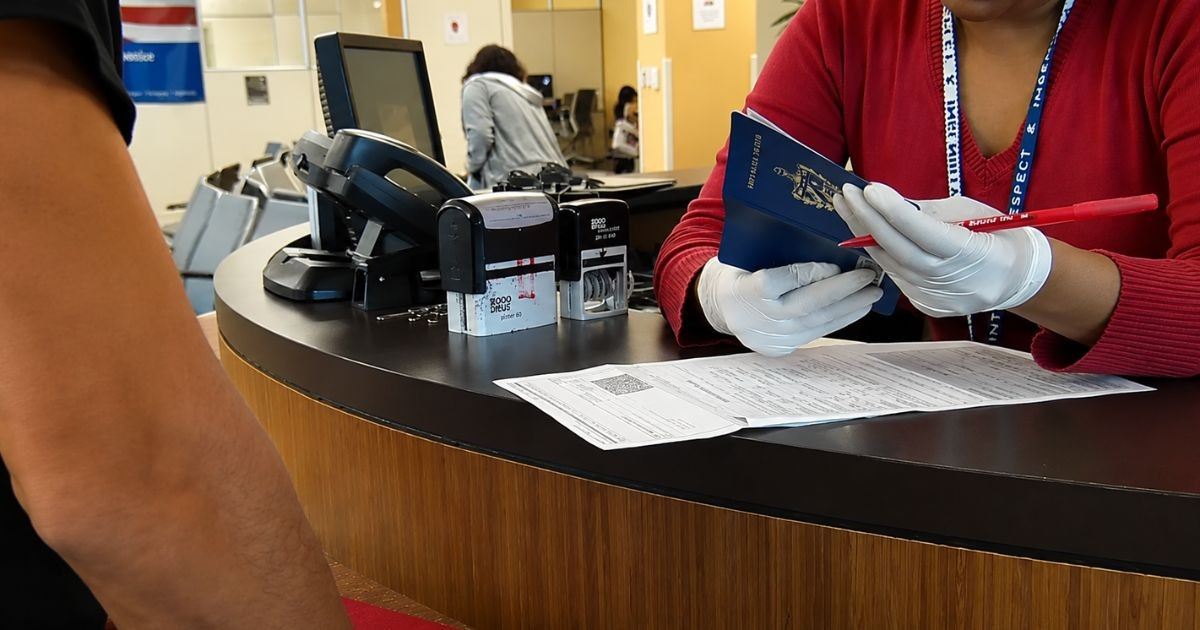
The second option is to visit a Deferred Inspection office of CBP, which can correct errors made during entry: name, date of birth, immigration classification, or admission period.
The CBP FAQ recommends doing so within 30 days following admission or parole, although there is no general rule preventing corrections after that period; acting quickly is, in any case, the most advisable approach.
When does USCIS intervene, not CBP?
If the I-94 was issued by the Citizenship and Immigration Services (USCIS) and not by CBP, the correct process is not Deferred Inspection but the I-102 Form with USCIS, which must be accompanied by the original incorrect document, a signed statement identifying the error, and evidence of the correct information.
As a last resort, if the record is still not found, CBP recommends a request under the Freedom of Information Act (FOIA). As of January 22, 2026, these requests must be submitted digitally through CBP SecureRelease or FOIA.gov; paper and email submissions are no longer accepted.
Important warnings
Not finding the I-94 on the portal does not, by itself, prove that a person lacks parole or a valid immigration status.
Correcting an I-94 does not convert an I-220A into parole nor does it guarantee eligibility for residency under the . As noted in a recent analysis regarding the required documents for the I-485, "if you received an I-220A instead of documentation indicating admission or parole, you should not assume that both documents have the same legal effect."
This distinction becomes increasingly important since USCIS strengthened its evidence standards in August 2026 and reminded that it can deny applications without first issuing a request for additional evidence (RFE), making it even more urgent to have the I-94 in order before submitting any residency application.
Related videos:
Filed under: