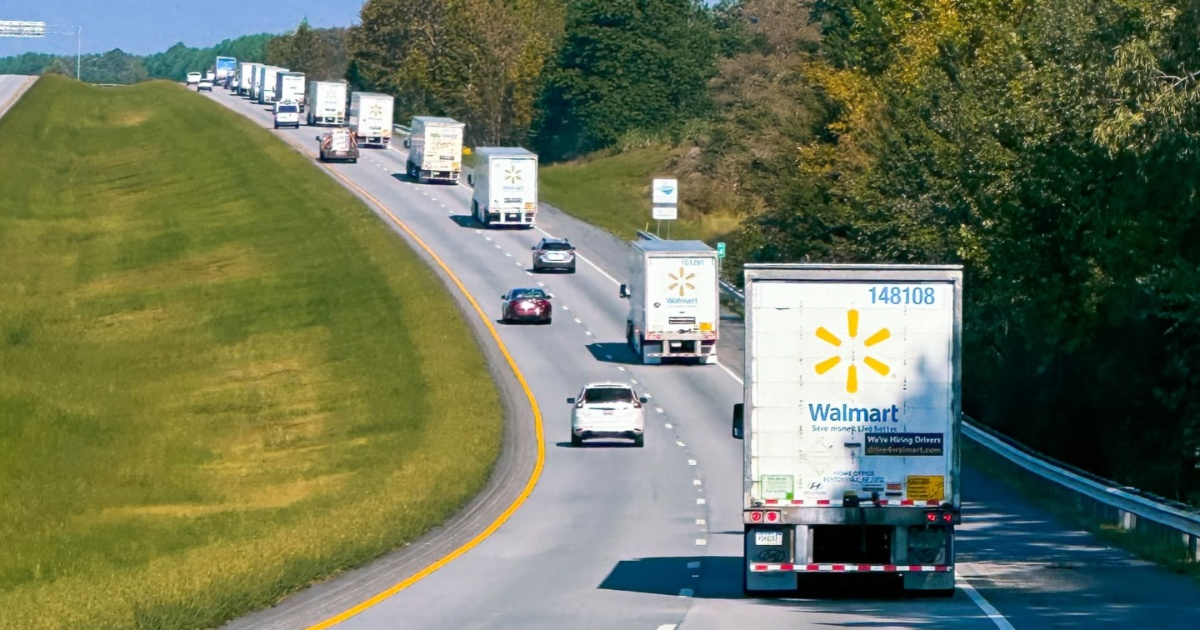
The Federal Trade Commission (FTC) ordered nine major companies—airlines, transportation platforms, and delivery and retail businesses—to provide detailed information on the use of personal data to determine how much consumers pay and how much they charge their workers.
The orders were issued under Section 6(b) of the FTC Act, which empowers the agency to conduct broad studies without the necessity of a formal accusation of violation.
The recipient companies are Delta, United, JetBlue, Lyft, Uber, DoorDash, Instacart, Target, and Walmart, and they have 45 days from the receipt of the orders to respond.
“We intend to examine the opaque methodologies that some companies in these industries may be using to determine how much consumers are charged or how much platform workers are paid for the same product or service,” stated Andrew N. Ferguson, chair of the FTC.
The agency wants to know if the price of an airline ticket, a ride through an app, a food delivery, or a store item varies from one customer to another based on factors such as browsing history, location, participation in loyalty programs, or the analysis of personal data through algorithms.
Ferguson added that "consumers deserve to know if companies are using their browsing habits or other personal data to estimate the highest price they can charge each individual," and that workers also have the right to know if their compensation is affected by the use of their data.
In the case of drivers and delivery personnel on platforms like Uber, Lyft, and DoorDash, the FTC will investigate whether payment offers depend on personal data from the worker, such as phone usage or their history of accepting previous orders.
Unlike airlines, which pay fixed or hourly wages, these platforms can vary the compensation offered to each individual through opaque formulas.
The special orders request information about methodologies, tools, algorithms, and tests conducted since January 1, 2023.
If any company refuses to provide the required data, the FTC has the authority to enforce compliance in a federal court. The internal vote to approve the orders was unanimous: two votes in favor, none against.
It is important to emphasize that this is an investigation, not a sanction or a conviction. The FTC has not determined that any of the nine companies have committed any infringement.
Delta, for example, has already publicly responded that it has never used nor is testing a system of individualized pricing based on personal data, and that its prices depend on demand and seat availability.
This action corrects a previous approach that the agency itself recognized as flawed. In July 2024, the FTC investigated eight technology intermediaries—among them Mastercard, JPMorgan Chase, and McKinsey—regarding pricing tools, but the resulting study did not provide information on actual pricing decisions.
"The agency learned nothing about the actual pricing decisions from the 2024 study," the FTC acknowledged in its statement this Wednesday.
The research is particularly relevant for the numerous Cubans and other immigrants in the United States who work as Uber and Lyft drivers or DoorDash and Instacart delivery workers, sectors where the lack of transparency in payment setting has led to previous protests.
In February 2024, thousands of drivers and delivery workers held a two-hour nationwide strike in Miami and other cities to demand greater transparency and better working conditions.
In August, the FTC had already published a proposed policy statement warning that the undisclosed use of personal data to customize pricing could constitute an unfair or deceptive practice under federal law.
The research announced on Wednesday is a distinct and complementary step: it aims to obtain concrete data that will allow the agency to assess whether these practices exist and to what extent.
Related videos:
Filed under: