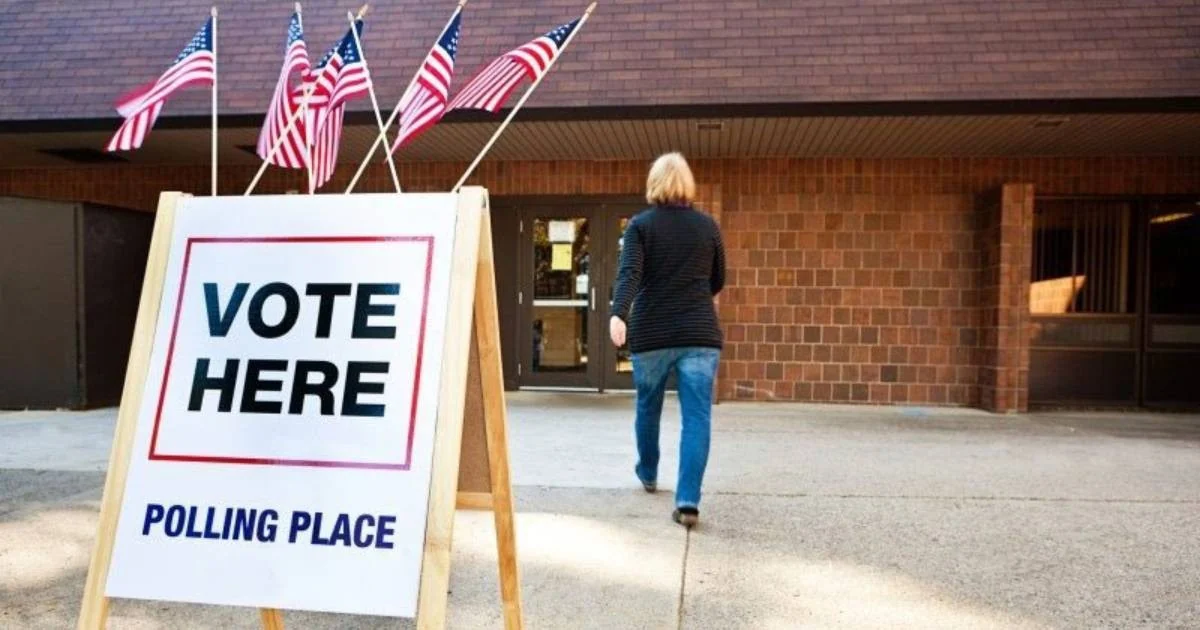
With five days to go until the elections on November 3rd, voters in Miami-Dade are preparing to decide who will govern Florida, who will represent the state in Washington, and what changes will be made to housing taxes and the functioning of local government.
The event will hold special significance for the Cuban-American community, amid a growing debate on deportations, Donald Trump's immigration policies, and the historical support of the exile community for the Republican Party.
An electoral guide published by Axios Miami summarizes the main contests, from the governorship to Congressional elections and referendums that could directly impact the pockets of residents.
Governorship and Senate: two contests of interest for Cuban Americans
In the race for the governorship of Florida, Republican Byron Donalds, backed by Trump, faces off against Democrat David Jolly, a former Republican congressman.
Recent state polls place Donalds ahead, although with varying differences. Among Cuban-Americans in Miami-Dade who expressed an electoral preference, the FIU Cuba Poll 2026 recorded a 60% support for Donalds, compared to 24% for Jolly. However, 39% of all respondents were still undecided.
In the federal Senate, Republican Ashley Moody, who holds the seat vacated by Marco Rubio when he became Secretary of State, is competing against Democrat Angie Nixon.
The FIU survey gave Moody 51% of the expressed preferences, compared to Nixon's 26%, although 44% of the total respondents had not yet decided on their vote in that contest.
Nixon has sparked controversy in recent days due to her statements about Cuba. Following an ambiguous response to CBS News regarding the dictatorial nature of the Cuban regime, she clarified this Thursday in an exclusive interview with CiberCuba: “Cuba is a dictatorship, absolutely. I am not a communist, I am not a socialist”.
María Elvira Salazar confronts journalist Eliott Rodríguez
One of the most hotly contested congressional races is taking place in Florida's District 27, which includes areas of Miami, Little Havana, and Coral Gables.
The Republican Congresswoman María Elvira Salazar is seeking her fourth term against Democrat Eliott Rodríguez, a Cuban-American journalist and former host of CBS Miami.
A survey from August showed a tie at 45% between both candidates, while a more recent poll conducted from October 20 to 23 by RedBox Research placed Salazar at 49% compared to Rodríguez's 46%.
The campaign has also been characterized by differences on immigration. In September, Salazar publicly criticized Trump's deportation policies, believing they had gone too far.
In other districts of South Florida, Republicans Mario Díaz-Balart and Carlos Giménez are seeking to retain their seats against Democratic candidates Nicole Locklin and Phil Ehr, respectively.
Housing taxes and local referendums
Voters will also decide on proposals with potential economic consequences.
One of the most important is Florida's Amendment 3, which would raise the property tax exemption for the primary residence from non-school taxes to $150,000 in 2027 and $250,000 in 2028.
The measure would provide tax relief for eligible property owners, but Miami-Dade estimates that it could reduce its annual revenue by approximately $386 million in the first year, with potential repercussions for public services. The proposal requires the support of 60% of voters to be approved.
The proposal would also reduce the annual limit on the increase in the taxable value of properties that are not primary residences from 10% to 5%. Property owners who establish their residency in Florida starting in 2027, on the other hand, would generally have to wait until their fifth year of exemption to access the expanded benefit.
Additionally, the county will put seven local referendums to a vote, including one to establish an independent commission to determine the salaries of the commissioners.
In District 5 of the County Commission, Vicki Lopez and Rob Piper are facing off, while voters in the city of Miami will also decide whether to authorize the issuance of public debt bonds totaling $450 million for the renovation and construction of fire facilities and a new public safety headquarters.
The Cuban vote: between Republican support and opposition to deportations
Elections are arriving at a time of political contradictions among Cuban Americans.
According to the FIU Cuba Poll 2026, 68% of those expressing a preference would vote for their district's Republican candidate for Congress, compared to 28% who would choose the Democratic candidate. 12% of the total sample remained undecided. Furthermore, 87% support resuming the processing of immigration benefits for Cubans who are already in the United States.
The study, conducted between September 4 and 29, shows that dissatisfaction with certain immigration measures has not yet resulted in a widespread abandonment of the Republican Party among Cuban Americans in Miami-Dade.
Until when can you vote in Miami-Dade?
Early voting will be available until Sunday, November 1, from 7:00 a.m. to 7:00 p.m., at 28 designated centers in Miami-Dade.
On Tuesday, November 3, election day, the polling places will be open from 7:00 a.m. to 7:00 p.m. Mail-in ballots must be received by the election authorities by 7:00 p.m. that day.
Voters can check their polling place, review their sample ballot, and obtain updated information on the official Miami-Dade Elections page.
Related videos:
Filed under: