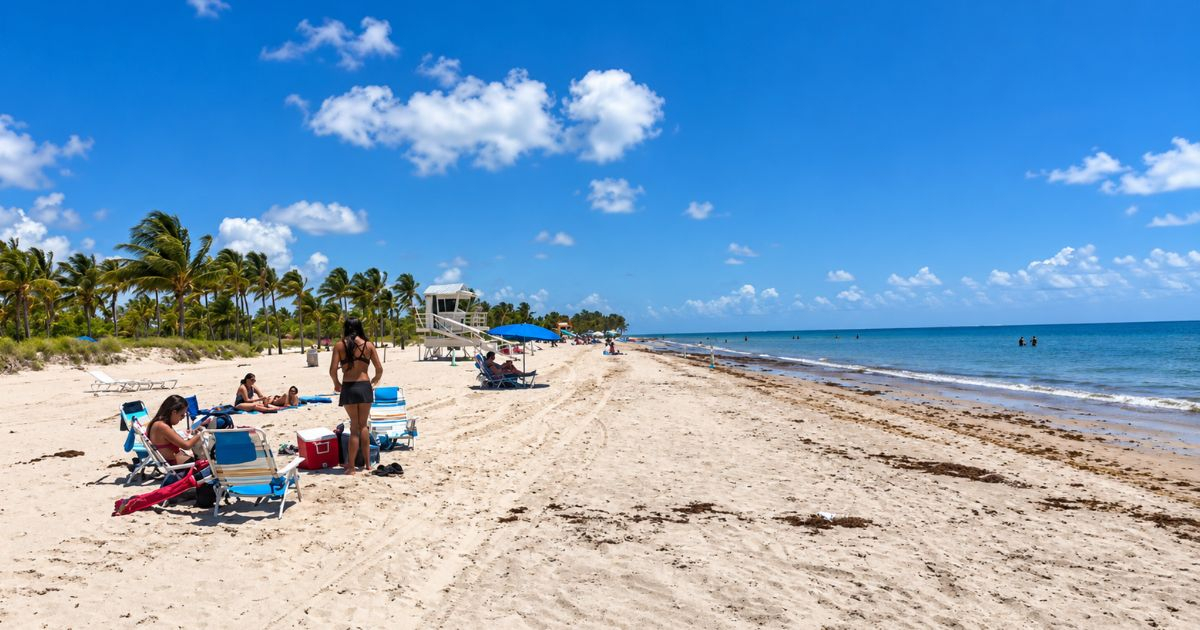
The health authorities of Florida recommended this Friday to avoid swimming and engaging in water activities at Crandon Park South, a beach in Key Biscayne, in Miami-Dade County, after detecting levels of the bacteria Enterococcus exceeding the established limits for recreational water use.
The Florida Department of Health in Miami-Dade (DOH-Miami-Dade) confirmed the alert in an official statement published this Friday.
According to reported by Telemundo 51, the tests completed on Thursday, October 29, revealed that the water does not meet the recommended health standards for swimming.
The samples were collected as part of the regular water quality monitoring program at Florida's beaches. The results showed concentrations of enterococci exceeding the levels permitted by state guidelines.
The Department of Health recommends avoiding any activities that involve contact with water at Crandon Park South, due to the increased risk of diseases and infections among those who swim in that area.
The warning includes swimming, engaging in water sports, and other activities that directly expose individuals to seawater.
This is not a complete closure order for the park, but rather a health advisory to avoid contact with water in the affected area.
The authorities clarified that the advisory will remain in effect until the levels of bacteria drop to values deemed acceptable for health.
For the moment, the statement does not specify the exact concentration of Enterococcus detected in the samples from October 29, nor does it identify a specific cause of the contamination.
Enterococci are bacteria that normally inhabit the intestinal tract of humans and animals. Their presence in high concentrations in recreational waters is used as an indicator of possible fecal contamination.
According to the Florida Department of Health in its Healthy Beaches program, these microorganisms can enter the sea through stormwater runoff, pet waste, wild animals, or wastewater discharges.
Exposure to water with high concentrations of these bacteria can increase the risk of gastrointestinal diseases, infections, and skin rashes, especially when the water is accidentally ingested or comes into contact with open wounds.
The risk may be higher for young children, elderly adults, and people with weakened immune systems, which is why authorities recommend taking extra precautions.
Florida's health surveillance program classifies water quality based on the concentration of enterococci per 100 milliliters of sample.
According to state guidelines, a concentration of between zero and 35 colony-forming units is considered good; between 36 and 70, moderate; and starting from 71, poor.
When test results and confirmation analyses exceed established limits, the Department of Health may issue a warning to prevent recreational water activities.
This is not the first time that Crandon Park South has faced a health alert due to elevated levels of this bacteria.
On October 3rd, authorities issued a similar warning for the same beach after tests completed on the 2nd showed concentrations exceeding the established criteria.
That notice was rescinded on October 6, when new analyses confirmed that Enterococcus levels had returned to acceptable values.
Similar issues have also been reported at other beaches in Key Biscayne. At the end of August, authorities advised against swimming at Crandon Park North due to elevated concentrations of enterococci, associated with potential fecal contamination.
In September 2025, two other beaches in Miami-Dade, Crandon Park North and South Point Drive Beach, were also under a health alert due to the presence of excessive levels of the same bacteria.
Related videos:
Filed under: