
Related videos:
The Florida Department of Health has issued an urgent health alert due to elevated levels of the Enterococcus bacteria at two of the most frequented beaches in Miami-Dade County.
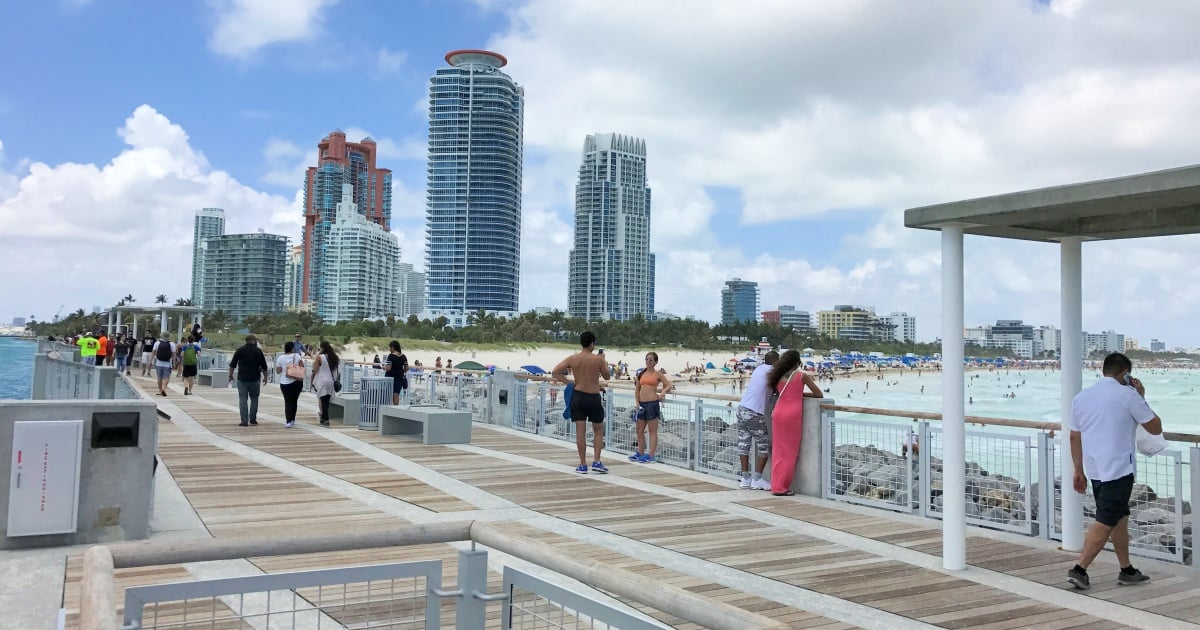
The affected beaches are Crandon Park North, located near Key Biscayne; and South Point Drive Beach (South Beach Park), at the southern tip of Miami Beach.
Official notice: Avoid contact with water
Health authorities recommended that residents and visitors - through a statement cited by the local press - refrain from engaging in any activities in the water at both beaches.
The warning includes not only swimming but also engaging in water sports or any other form of direct exposure to the sea in these areas.
The decision is based on laboratory tests conducted on September 23, which revealed that the water quality does not meet the safety criteria defined by the Florida Department of Health for recreational use.
The analyses detected more than 70 colonies of Enterococcus per 100 milliliters of water, a figure that exceeds the permitted limit.
According to the protocol, a warning is issued when two consecutive samples show levels above the safety threshold.
What is Enterococcus and why does it pose a risk?
Enterococcus, also known as enterococci, is a bacterium that naturally resides in the intestinal tract of humans and animals.
Their presence in bodies of water is often indicative of fecal contamination, which may originate from wastewater, stormwater runoff, wildlife, or pets.
When these bacteria are present in high concentrations in beaches or recreational areas, they can cause various health problems, especially if the contaminated water comes into contact with wounds or is accidentally ingested.
Among the possible adverse effects are:
-Gastrointestinal infections.
-Skin rashes.
-Urinary infections.
-Diseases in immunocompromised individuals.
Authorities emphasize that the risk of illness is higher for swimmers exposed to these conditions, especially for individuals with cuts on their skin, young children, the elderly, or people with weakened immune systems.
Classification of water quality
The water quality at beaches is assessed by counting the colonies of Enterococcus per 100 milliliters.
The Florida Department of Health classifies these results as follows:
-Good quality: from 0 to 35 colonies
-Moderate: between 36 and 70 colonies
-Mala: 71 neighborhoods or more
In the case of Crandon Park North and South Point Drive Beach, the detected concentrations exceeded the threshold of 70, which indicates a "poor" classification and justifies the ongoing health alert.
When will it be safe to swim again?
The authorities continue with their periodic monitoring program on the state's beaches.
If the upcoming tests show a reduction in Enterococcus concentrations to acceptable levels, the "no swimming" advisory will be lifted, and safe access to these areas will be restored.
Although Crandon Park North and South Point Beach are popular destinations for their natural beauty and proximity to urban areas, authorities urge the public to heed warnings to protect their health.
Until further notice, it is advised to avoid any type of aquatic activity in these areas.
Frequently Asked Questions about the Health Alert on Miami-Dade Beaches
Why has a health alert been issued for the beaches of Miami-Dade?
The health alert has been issued due to the presence of elevated levels of the Enterococcus bacteria at Crandon Park North and South Point Drive Beach. This bacterium indicates fecal contamination, which poses a risk to the health of swimmers.
What health risks are associated with the Enterococcus bacteria in water?
The elevated presence of Enterococcus in water can lead to gastrointestinal infections, skin rashes, and urinary tract infections. The risk is higher for swimmers with wounds, young children, older adults, or immunocompromised individuals.
What measures should visitors and residents take regarding the affected beaches?
It is recommended to avoid any activity in the water at Crandon Park North and South Point Drive Beach, including swimming and water sports, until the health alert is lifted.
How is water quality classified at Florida's beaches?
The quality of the water is classified according to the concentration of Enterococcus colonies per 100 milliliters: good quality (0 to 35 colonies), moderate (36 to 70 colonies), and poor (71 colonies or more). The affected beaches have exceeded the threshold of 70, classifying them as poor quality.
Filed under: