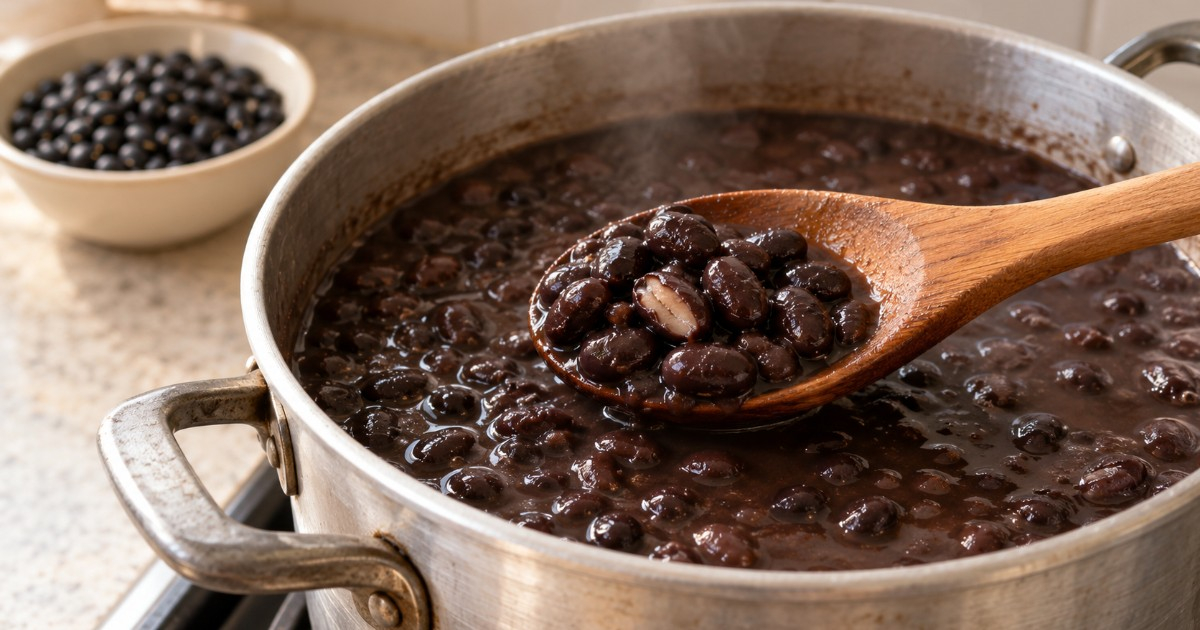
If the beans remain hard after a good while on the fire, the cause may lie in the age of the grain, the water, or the added ingredients. Prolonging the cooking time helps when time is short, but it doesn't guarantee that any bean can be salvaged: some aged grains no longer hydrate well.
The age of the grain and the water matters
The Utah State University explains that dry beans harden as they age and require more time for hydration and cooking. In extreme cases, they may lose the ability to rehydrate. Therefore, one batch may turn out tender while another may resist even when the same procedure is followed.
Preservation also matters. Keeping them protected from moisture and light, in a cool place, helps maintain their quality. It's advisable to use the oldest packages first and to avoid mixing grains from different batches if it's unclear how long they have been stored.
Another factor is hard water, which is rich in minerals. According to a guide from North Dakota State University, it can complicate softening. If this happens often, trying drinking water with lower hardness can help determine if the issue is with the water used for soaking and cooking.
How to make a useful soak
Before soaking them, check the beans, remove any pebbles and damaged grains, and rinse them. The University of Nebraska-Lincoln suggests covering two cups of dry beans with ten cups of water and letting them sit for about eight hours, or overnight, in the refrigerator. The container should have enough space because the beans will expand.
Afterward, discard that water, rinse, and start cooking with fresh water. Soaking helps with hydration and reduces cooking time, but it does not replace the heat needed for the beans to be fully cooked.
Salt should not be confused with acidic ingredients. The Utah State University notes that adding salt to water can promote more even hydration. Salting the beans at the beginning does not, by itself, prove that this is the cause of their toughness.
Leave the tomato and the vinegar for later
Tomatoes, vinegar, lemon, and wine can delay softening. The recommendation from Nebraska is to add them when the beans are already cooked. If the sofrito includes tomato, you can prepare it separately and add it when the grain is tender.
In a dish of Cuban-style black beans, a splash of vinegar adds flavor. It's best to add it after checking the texture, rather than incorporating it into the water from the beginning.
What to do if they're already on the fire and still hard
Check that they have enough liquid and continue cooking if they are still not fully cooked. Keep the grains covered with water and check their texture with a fork: they should be easily squashed. Avoid mixing varieties, as not all of them require the same cooking time.
If, after prolonged cooking, they barely change in texture, they may be overly aged grains. There isn't a specific number of minutes that guarantees they will be salvaged. Continuously adding water indefinitely also doesn't ensure they will become tender.
Baking soda can aid in softening, but the North Dakota guide advises against using it because it can alter the flavor and destroy thiamine, or vitamin B1. Adding it by eye is not a recommended solution to compensate for old grains or poorly planned cooking.
The pressure cooker can reduce cooking time, always following the manufacturer's instructions regarding liquid, cooking, and pressure release. Beans produce foam: North Dakota advises not to fill the pot more than halfway, counting ingredients and water. Adhere to any stricter limits set by the manual.
A slow cooker does not replace the necessary boil
Raw or inadequately cooked beans may contain lectins that can cause significant digestive discomfort. For red kidney beans, the U.S. Food and Drug Administration recommends soaking them for at least five hours, discarding that water, and boiling them in fresh water for at least 30 minutes. They should then continue to be cooked until tender.
Do not put those dry beans directly into a slow cooker, trusting that many hours at low temperature will be sufficient: it may not reach the necessary heat to inactivate the lectin. Canned beans have already undergone a heat treatment and can be used in this type of preparation.
Related videos:
Filed under: