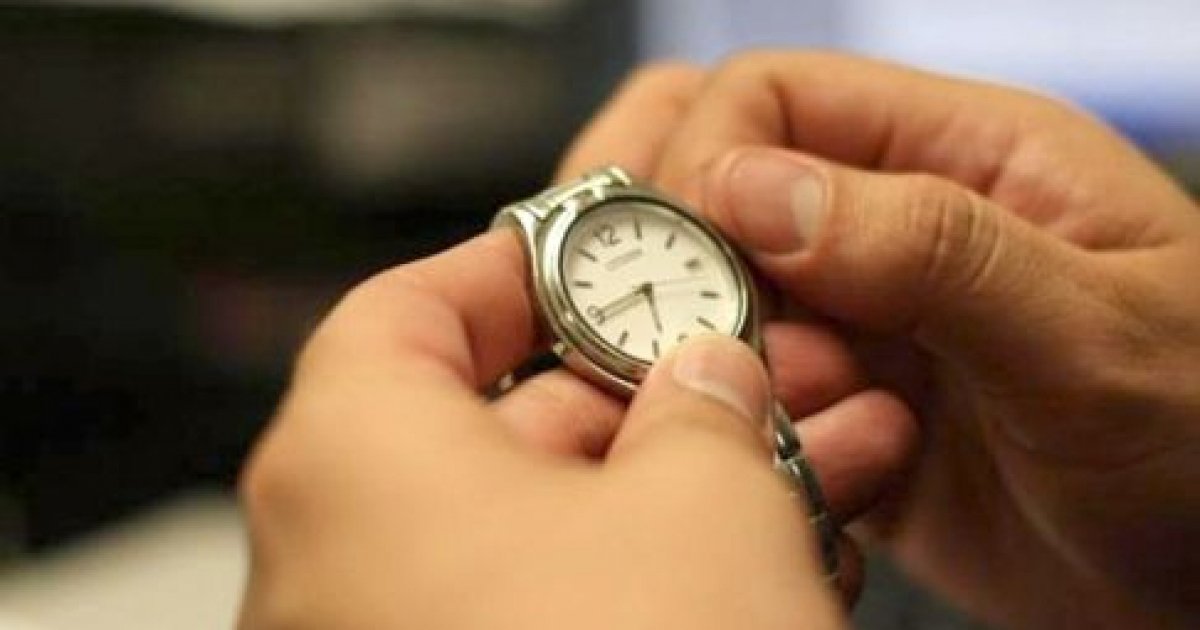
This Sunday November 1, millions of Floridians will need to set their clocks back one hour when Daylight Saving Time officially ends in the United States, according to Telemundo 51. The adjustment will take place at 2:00 a.m., at which point the clocks will turn back to 1:00 a.m.
The change is regulated by the Energy Policy Act of 2005, which sets the end of daylight saving time each year on the first Sunday in November. The period that is now coming to an end began on March 8 and lasted for eight months.
Unlike the spring adjustment, when an hour of sleep is lost, this Sunday Floridians will gain it back: the clocks will move from 1:59 a.m. directly to 1:00 a.m.
Smartphones will make the switch automatically. For other devices, most people choose to adjust their clocks upon waking up, without needing to do it at two in the morning.
The change affects Miami, Orlando, Tampa, Jacksonville, Fort Myers, and Naples, all in the Eastern Time Zone, which will move from UTC−4 to UTC−5. The northwest of the state, including Pensacola, operates in the Central Time Zone and will also adjust its clocks.
For the Cuban community in Miami, the adjustment has a direct consequence: Cuba and Florida will have a one-hour difference for the coming months, as the island decided not to set its clocks back this Sunday.
The Ministry of Energy and Mines and the Ministry of Labor and Social Security announced on October 24 that Cuba will maintain daylight saving time (UTC−4) until November 2027, aiming to reduce electrical demand by 126 MW during peak hours: 76 MW from decreased use of artificial lighting and 50 MW from enhanced utilization of photovoltaic solar generation.
The measure reflects the severity of the energy crisis in Cuba: at the time of the announcement, the electrical system was projected to have an availability of just 915 MW against a demand of 2,850 MW, resulting in a deficit of 1,865 MW.
This time difference between Cuba and Miami will remain until March 14, 2027, when the United States returns to Daylight Saving Time. During that period, when it is 8:00 p.m. in Miami, it will be 9:00 p.m. in Havana.
Those making calls, sending remittances, or coordinating trips between both destinations should be aware of the time difference. The remittance and recharge platforms that set their cut-off times according to Miami time will close, for users in Cuba, one hour earlier than indicated by the Cuban clock.
Regarding the political debate on the time change in Florida, the state passed the Sunshine Protection Act in 2018 to remain permanently on daylight saving time, but the measure requires federal approval. The House of Representatives approved the equivalent bill on July 14, 2026, by 308 votes to 117, although the Senate bill remains stalled in committee with no scheduled floor vote.
While Congress does not act, Florida will continue to change the clocks twice a year. The next return to daylight saving time in the United States is scheduled for Sunday March 14, 2027.
Related videos:
Filed under: