The Hungarian Prime Minister Péter Magyar announced that this Wednesday, November 4, his government will open to the public the files of the communist secret police, fulfilling one of the central promises of his party, TISZA. The date is not coincidental: it coincides with the anniversary of the crushing Soviet intervention that suppressed the Hungarian Revolution of 1956.
Without confronting the past, there can be no genuine political change, Magyar wrote on his social media platform X. The leader acknowledged that the opening will be a difficult and sensitive issue for many families, but he presented it as an indispensable act of historical justice.
The disclosure will be carried out through an online database managed by the Historical Archive of State Security Services (ÁBTL), searchable by name, date of birth, mother's name, codename, and type of document.
The first phase will include the so-called "database H," with approximately 58,000 names recovered from magnetic tapes created in 1989, the "number 6 cards" —files of agents and recruitment candidates— and the B records.
The total estimates of individuals registered as agents, informants, collaborators, or recruitment targets range between 50,000 and 80,000. A second phase, scheduled for February 25, 2027, will include around 9,000 complete files, some consisting of several hundred pages.
The government clarified that the inclusion of a name in the database does not, by itself, imply voluntary collaboration, as the records also include individuals who were considered recruitment targets. Information whose disclosure could compromise the security of Hungary or its allies in the European Union and NATO will remain confidential.
The Hungarian Parliament had initially approved that the publication would start on October 20, but TISZA pushed for a modification that moved the date to November 4 to allow for additional preparation of the materials.
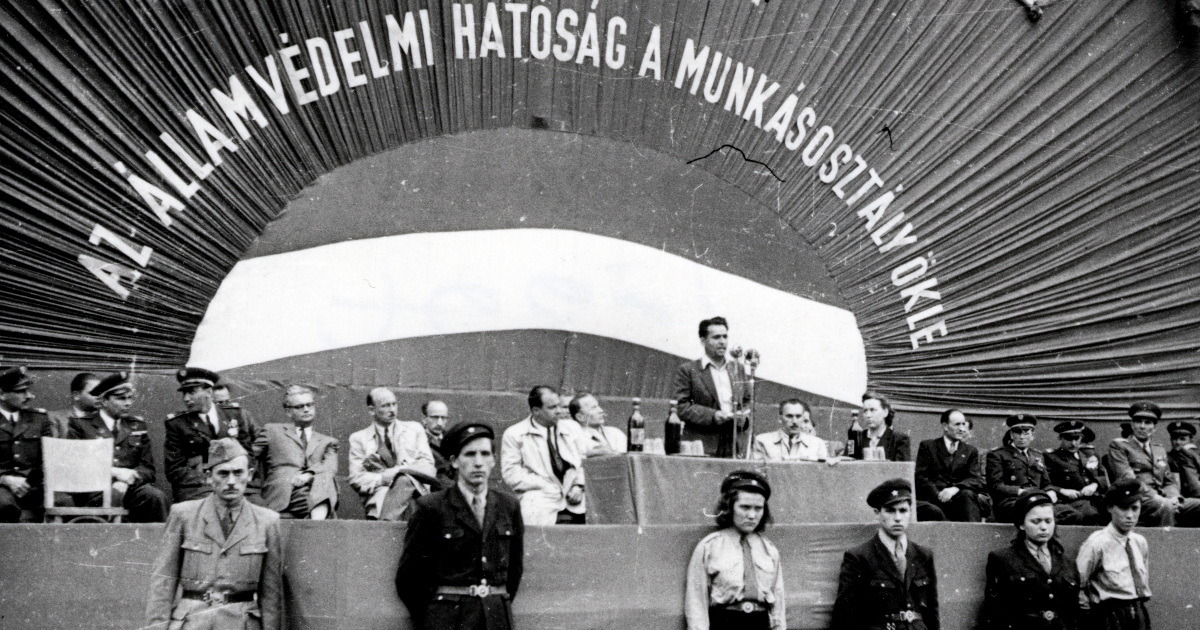
The Hungarian secret police, known as ÁVH (Államvédelmi Hatóság), was one of the main instruments of political terror of the communist regime. Established in 1948 from the security apparatus created since 1945, its methods included mass surveillance through networks of informants, arbitrary arrests, torture, sham political trials, and forced labor camps.
Its dissolution was announced during the Hungarian Revolution of October 1956, which was crushed by the Soviet military intervention that began on November 4. However, the repressive apparatus practically resurfaced immediately under the regime of János Kádár, who reintegrated thousands of former ÁVH agents into the new state security agencies.
Although the organization did not officially reclaim its name, its structures, functions, and a significant portion of its leadership survived the revolution.
With the opening announced now by Magyar, Hungary becomes one of the last countries in Eastern Europe to take this step. Germany opened the Stasi files in January 1992, the Czech Republic since 1997, Poland since 1998 with its National Memory Institute, and Romania since 2000 with the CNSAS for the Securitate files.
During the 16 years of Viktor Orbán's government, the process in Hungary has been systematically blocked or slowed down.
The practices of these political police —systematic surveillance, forced recruitment of informants, fabrication of charges, repression of dissenters— bear a close resemblance to the methods of the Cuban repressive apparatus.
State Security in Cuba remains active in 2026: it was identified as the institution most involved in episodes of repression against independent journalists, with 51 documented incidents and a year-on-year increase of 129%. Unlike the countries of the former Soviet bloc, Cuba has not experienced democratic transition or the opening of archives.
The fundamental difference between Hungary and Cuba is that Péter Magyar came to power after winning the elections in April 2026 with 53.18% of the votes, bringing an end to 16 years of Orbán's government. On the island, the dictatorship has been in power for 67 years without being accountable to its citizens or to history.
Related videos:
Filed under: