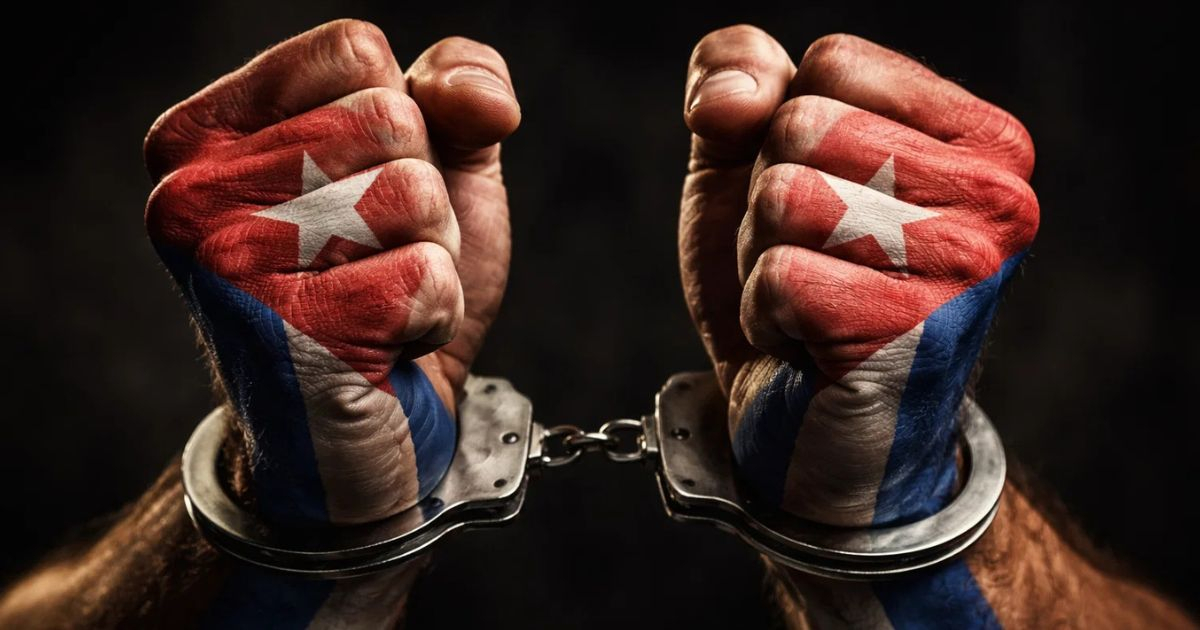
Violations of press freedom in Cuba increased by 129.4% during September 2026, rising from 17 recorded incidents in August to 39, according to the latest report from the Cuban Observatory for Freedom of Expression (OCLE), affiliated with the Cuban Institute for Freedom of Expression and the Press (ICLEP).
The report, published on Tuesday, October 20, documented 134 violations of freedom of expression and the press, resulting from 106 incidents recorded during September.
The total figure represents an increase of 8.9% compared to August and 57.6% compared to the same month in 2025. However, while violations of press freedom increased by 129.4%, those related to freedom of expression decreased by 10.4%.
Out of the 134 documented violations, 39 affected press freedom and 95 impacted the freedom of expression of citizens, activists, and opposition figures. A single incident may include multiple violations, so the figures do not necessarily represent distinct episodes or victims.
The abusive use of state power topped the repressive indicators, with 49 reports, followed by threats and psychological aggression (48) and arbitrary detentions (26).
The State Security was identified as the institution most involved in the documented events, linked to 51 episodes. Havana accounted for 63 of the 106 incidents recorded across the country.
Journalists and their families under pressure
Among the notable cases, is that of journalist Henry Constantín Ferreiro, director of the independent media outlet La Hora de Cuba, who was detained on September 16 in Camagüey after responding to a police summons.
Constantín was placed under provisional detention for the alleged crime of "disobedience" and was transferred to Kilo 7 prison on September 24. His incarceration sparked condemnation from international organizations, including Reporters Without Borders, which demanded his immediate release.
The report also highlights the harassment against journalists Yunia Figueredo and Frank Correa, who reported police threats and pressures that extended to their family environment.
On September 4, a sector chief from the Police informed Figueredo that he needed to report monthly to a police station and avoid any contact with the Embassy of the United States.
A day earlier, two agents had gone to the university where one of his daughters studies to request information about her, as documented by the OCLE.
The report also documents the forced exile of journalist Austin Llerandi, director of the independent media outlet Amanecer Habanero, and his wife, Soreidis Anisley Álvarez Peña, also a writer for the publication. Both left Cuba on September 29 heading to Brazil, after State Security threatened Llerandi with criminal prosecution if he did not leave the country.
The Observatory recorded 30 incidents related to journalists in its database of identified victims, compared to 29 concerning political prisoners, making these the two groups most represented in the September record.
ICLEP warns that the figures could be higher due to victims' fear of reporting, retaliation, and the difficulties in obtaining information within Cuba.
The data, as of September 30, may be updated in the OCLE Barometer as new cases are verified.
During all of 2025, the organization documented 1,188 violations of freedom of expression and the press, a 54.7% increase compared to 2024. Cuba currently ranks 160 out of 180 countries in the 2026 World Press Freedom Index by Reporters Without Borders.
Related videos:
Filed under: