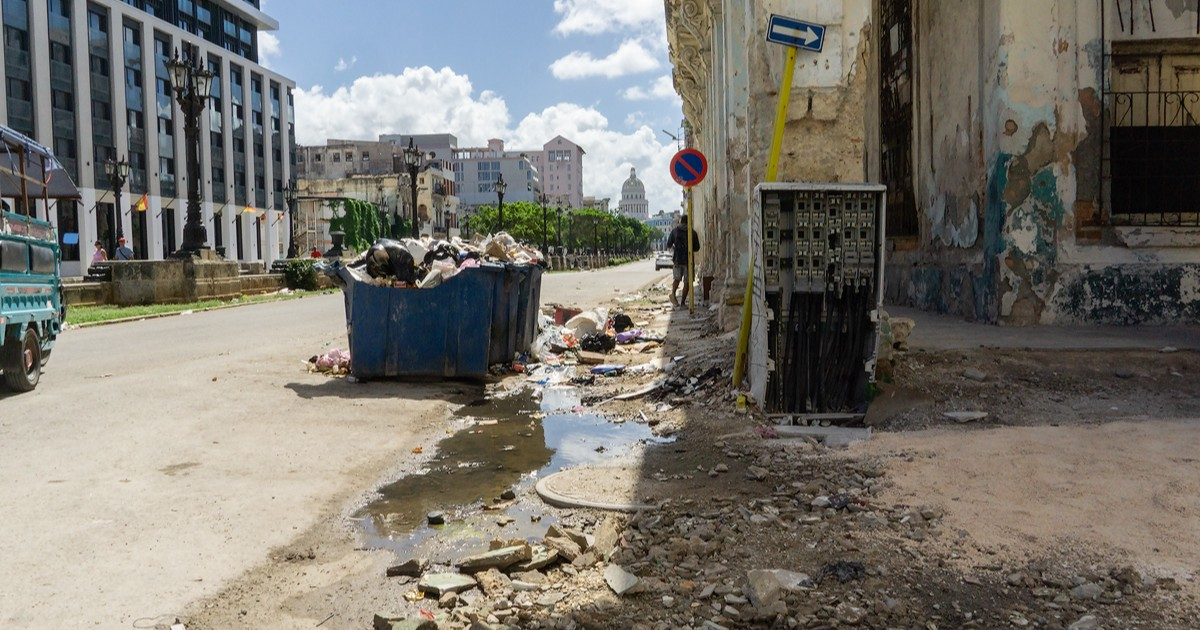
The doctor in Historical Sciences Ivette García González, former tenured professor at the University of Havana, introduced a proposal this week that counters the official discourse of the regime: while Havana presented a resolution to the UN regarding the damages of the U.S. embargo, she called for the construction of a citizens' resolution that documents the cost of the "blockade" imposed by the regime itself against the people.
The starting point for García González is the official data itself. According to the update of the resolution that the Cuban government presents each year to the United Nations, between March 2025 and February 2026, the embargo caused estimated damages of 8.083.3 million dollars, a 7% increase compared to the previous period and the highest annual cost recorded. The total since 1962 exceeds, according to that same official source, 178.7 billion dollars at current prices.
"But that is from the government. We should think of an alternative resolution as citizens," the academic wrote on her Facebook profile, proposing the title for that citizen document: "The need to end the economic, commercial, financial, and existential blockade of the Cuban regime against the people of Cuba."
García González proposes to calculate the cost of 67 years of dictatorship since 1959 based on at least 12 quantifiable indicators. Among these are the value of properties expropriated between 1959 and 1967; the value of businesses confiscated in 1968, when Fidel Castro's so-called "Revolutionary Offensive" took away tens of thousands of private establishments — warehouses, restaurants, laundries, and workshops — and the value of properties granted under promises that were never fulfilled.
The list also includes unpaid salaries for Cuban doctors and professionals sent on missions to Latin America, Asia, Africa, and Europe; the income lost by those who were unjustly imprisoned for exercising their rights; the value of the unpaid "voluntary" work of workers and students over decades; the amounts taken in the currency exchange of 1961 and the monetary changes of the last six years; and the compensation that has never been paid for workplace accidents or for air and maritime disasters.
"There are many other things that cannot be measured with money, such as human lives," acknowledged the academic, although she maintained that "that list of quantifiable indicators would grow significantly with contributions from everyone."
The proposal comes at a time of particular diplomatic significance. Two days after García González published his text, the UN General Assembly approved the resolution against the embargo with only 130 votes in favor, 17 against, and 25 abstentions — one of the worst results for Cuba since the report was first presented in 1992, representing a decline of 35 votes compared to 2025. The regime showcased the result as a victory, but the trend reveals a sustained diplomatic deterioration.
The internal context exacerbates the situation: the non-governmental organization Prisoners Defenders registered 1,372 political prisoners as of October 1st, a historical record; ECLAC projects a contraction of the Cuban GDP of 10.3% for this year; and the negative migration balance alone in 2025 was 245,264 Cubans, part of the largest exodus in the island's recent history, which took place in the last five years.
This reflection is part of a series of public interventions by García González throughout 2026. In May, heproposed a National Civic Movement based on nonviolent struggle; in September, he called to turn protests into an organized strategy; and in October, he stated that “everyone who supports the cause, whether inside or outside, Cuban or foreign, is useful and necessary”.
"Not even with 10 laws for the recovery of misappropriated assets can they compensate for the damage they have caused to the people of Cuba," concluded the scholar.
Related videos:
Filed under: