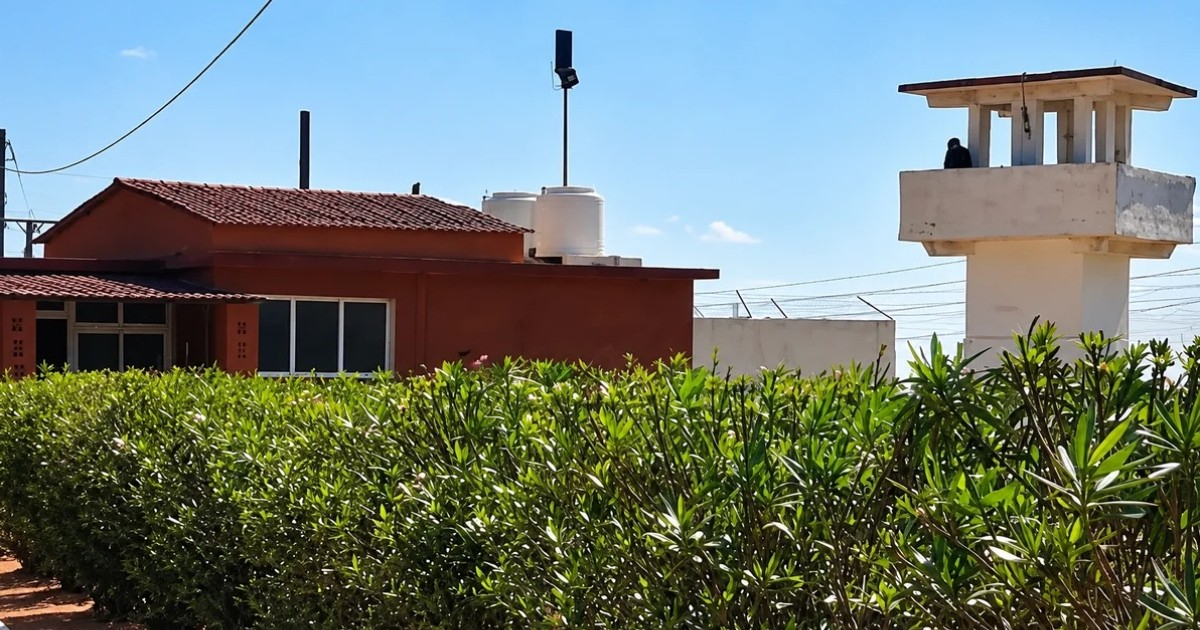
The human rights organization Cubalex published a report on the closure of the medical facility at the Cuba-Panamá prison in Güines, Mayabeque, a correctional center specifically designated for incarcerated individuals living with HIV.
The complaint is based on the protest of political prisoner Pedro Luis Fernández Peralta, a member of the United Antitotalitarian Front (FANTU), who confronted a lieutenant colonel from the Ministry of the Interior (MININT) during an inspection visit to the prison on October 21.
The officer, identified as a member of the Provincial Delegation of Mayabeque, had asked the inmates about their complaints regarding the prison's operations.
Fernández Peralta took the floor and described the closure of medical services as "premeditated genocide," considering that depriving inmates of medical attention exposed them to a progressive deterioration of their health.
The MININT official justified the closure by claiming that the staff of the Ministry of Public Health refused to work in the prison and that there were difficulties with the availability of doctors in civilian hospitals.
Fernández Peralta rejected that explanation and demanded that if the State could not guarantee the minimum conditions to keep the inmates alive, they should be set free. "By not doing so, they are murdering us day after day," the opposition member responded to the military.
The officer left without responding to the complaints.
Other inmates supported the protest and described a growing accumulation of shortages over time: "First, the shortage was related to food; then our family members can't even come to visit us here because there is no transportation. Recently, we haven't had water even to bathe, and there's very little to drink, and now they are closing the medical post and telling us to ask our families for medications," they reported, according to FANTU.
Cubalex emphasizes that the situation is particularly dire because HIV requires constant immunological monitoring and strict adherence to antiretroviral treatment to prevent virus mutations and virological failures. Without medical personnel on-site, such control becomes unfeasible.
The organization frames the complaint within the UN Minimum Rules for the Treatment of Prisoners—known as the Nelson Mandela Rules—and warns that "deprivation of liberty does not suspend the right to health nor does it exempt the State from its responsibility to provide adequate healthcare."
The closure is part of a documented pattern of health deterioration in that prison. In May 2026, Fernández Peralta had already reported that officials informed the inmates that the State could not guarantee the supply of medications, including antiretrovirals. In August, Cubalex reported that Lismani Acosta Gómez, a 19-year-old with HIV, transferred to Cuba-Panamá after being detained during a cacerolazo in Guanabacoa, was showing signs of weight loss, scabies, and tuberculosis.
The history of deaths linked to medical neglect in similar facilities raises further concern. In February 2026, political prisoner from 11J, Luis Miguel Oña Jiménez, aged 27, died at home shortly after receiving a medical leave of absence in critical condition; he had served part of his sentence in Cuba-Panamá and had suffered a cerebral ischemia without proper medical attention.
The broader context documented by Cubalex is equally alarming: between February 2024 and June 2026, the organization recorded 115 deaths in Cuban prisons, nearly 70% associated with neglect or denial of medical care. Just in September 2026, Cubalex reported 38 incidents of denial of healthcare or negligence in prisons on the Island, within a total of 298 repressive events that month.
Neither the Ministry of the Interior nor any other institution of the regime has officially confirmed the closure of the medical facility nor provided an exact date for the shutdown; all available information comes from reports by human rights organizations and testimonies from the inmates themselves.
Related videos:
Filed under: