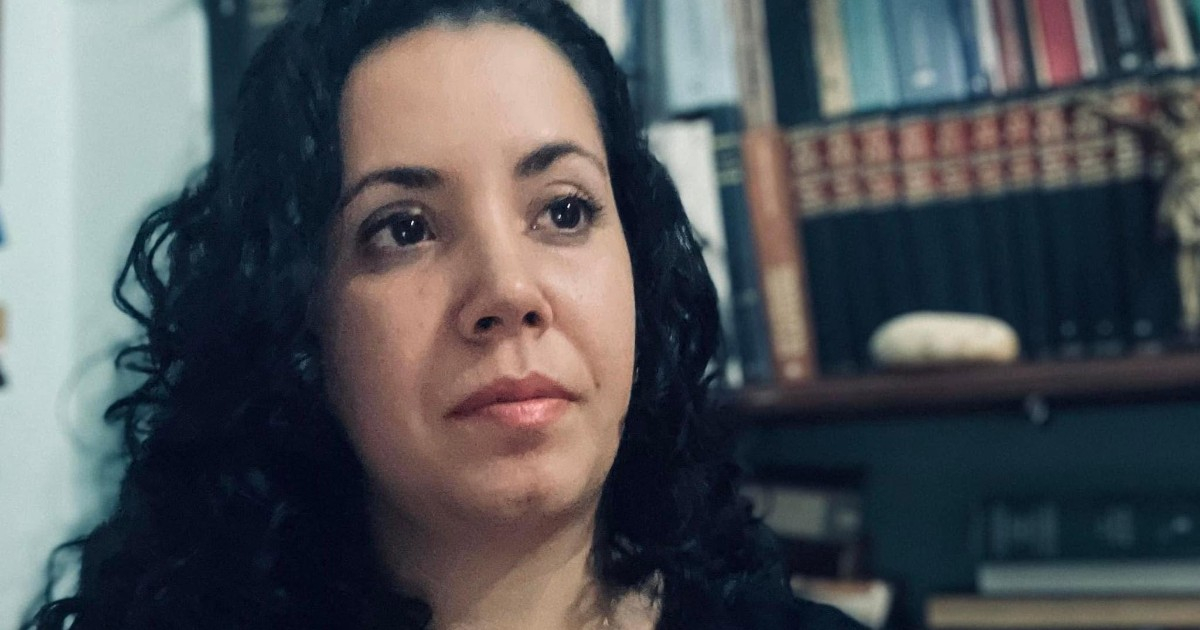
The independent journalist Camila Acosta, a reporter for CubaNet and correspondent for the Spanish newspaper ABC in Havana, was detained this Tuesday by State Security agents while walking to a veterinary appointment with her cat, at the corner of her home in the Plaza de la Revolución municipality. Since then, her whereabouts have been unknown.
According to the report published by CubaNet, the agents handcuffed Acosta and forcibly put him in a police patrol car in front of several neighbors who questioned their actions. The animal was left abandoned in the street until a neighbor picked it up. No family member has received any calls, and no formal charges have been communicated against him.
Ángel Santiesteban-Prats, writer, political prisoner, and husband of Acosta, visited several police stations without receiving any answers. "They were hunting her down on the corner to abduct her," he reported. He further recounted that officials described the journalist as "a decent person," but held her responsible for allegedly having beaten a family member of a revolutionary, without specifying any formal charges.
CubaNet demanded to "know where she is and her immediate release" and urged those following Acosta's work to call the police stations to demand information. Claudia Padrón, the editor-in-chief of the outlet, emphasized that international visibility was crucial to protect the journalist, as public pressure should raise the cost of keeping her imprisoned.
"We condemn the arbitrary detention of independent journalist Camila Acosta by the Cuban regime. Just one day earlier, the authorities violently and arbitrarily detained journalist Adelth Bonne Gamboa and confiscated his equipment. These consecutive attacks are part of a broader effort to silence independent journalism and conceal the reality of repression in Cuba," denounced Freedom House.
"Cuban authorities must immediately release those detained for their journalistic work and put an end to harassment, arbitrary detention, and intimidation against independent journalists. Journalism is not a crime," stated the American NGO.
Just five days earlier, a plainclothes officer had prevented her from leaving her home without showing a court order or identifying themselves. Acosta recorded the incident. In September, she was detained along with her husband to prevent them from attending the trial of activist Anna Bensi, and the Cuban Institute for Freedom of Expression and the Press (ICLEP) documented blockades and surveillance around her home in August and September.
The moment of the arrest is particularly revealing: on that same day, the Municipal People's Court of Diez de Octubre scheduled the oral trial for November 5 against Santiesteban and three other Masonic leaders on charges of illegal currency trafficking, indicating a coordinated pressure from the regime against the couple. Santiesteban was elected Sovereign Grand Commander of the Supreme Council of the 33rd Degree of Cuban masonry in September, and weeks earlier had met with the head of the U.S. diplomatic mission in Cuba to discuss the participation of masons in the distribution of U.S. humanitarian aid.
The repressive history against Acosta is extensive. She was arrested on July 12, 2021, a day after covering the protests of 11J, and spent four days in prison before being placed under house arrest for over ten months. The case was closed in May 2022 with a fine of 1,000 Cuban pesos. In April 2024, she was detained in Cárdenas, Matanzas, while on her way to visit family members of political prisoners. The journalist herself stated in 2022 that she had been detained approximately twenty times throughout her career, and she has been classified as "regulated" — banned from leaving the country — since 2019.
CubaNet emphasized that Acosta "is not alone" and called for continued pressure until her whereabouts are known and her release is achieved.
Related videos:
Filed under: