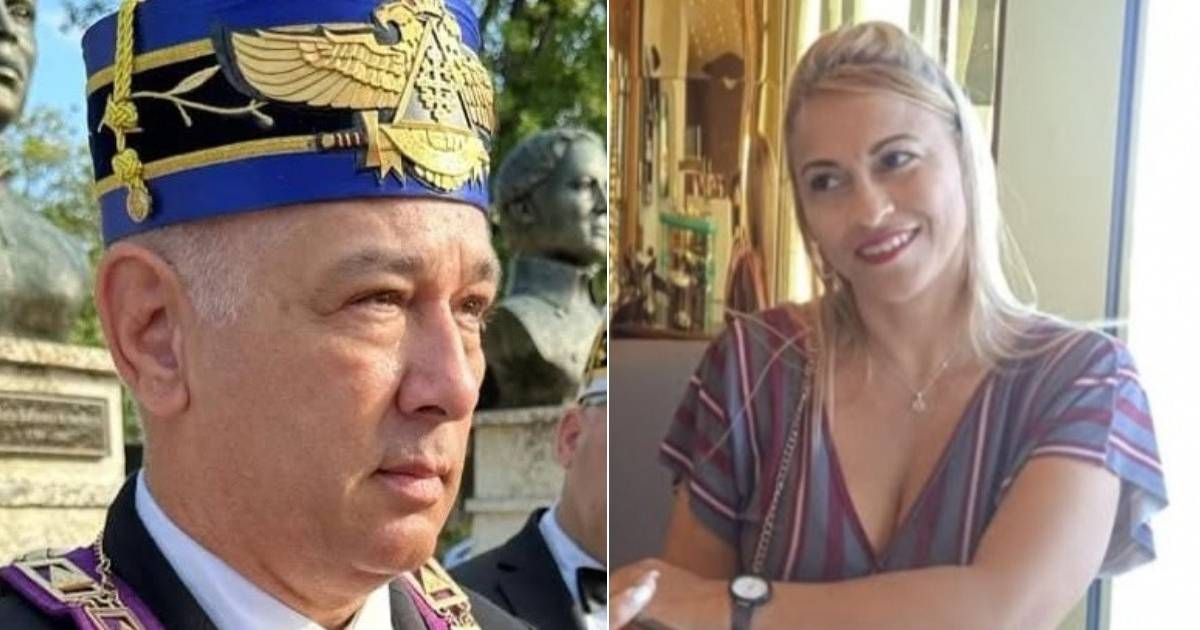
The judge Zamira Marrero Morgado, president of the People's Municipal Tribunal of Havana del Este, has been appointed to preside over the judicial proceedings against four leaders of the Cuban Freemasonry accused of "illegal currency trafficking" for exchanging a total of 300 dollars intended for charitable works, as reported by independent journalist Camila Acosta on Facebook.
The same judge has just sentenced, in early October, content creator Anna Sofía Benítez Silvente —known as Anna Bensi— and her mother to two years of limited freedom for recording and disseminating on social media the visit of a MININT agent to their home.
The history of Marrero Morgado is not limited to that case. Cubalex and Justicia 11J identified her as a member of the courts that, in December 2021, judged 17 protesters from La Güinera for the 11J protests, in a case where sentences of up to 30 years in prison were imposed.
The four freemasons who will face trial are José Ramón Viñas Alonso, former sovereign grand commander of the Supreme Council of the 33rd Degree; Fernando Marcos García, accountant of the National Masonic Asylum Llansó; Ángel Santiesteban Prats, current sovereign grand commander; and Osvaldo Ernesto Villegas Digat.
The Prosecutor's Office requests four years of restriction of liberty and 25,000 Cuban pesos in fines for Viñas Alonso; three years and 20,000 pesos for Marcos García; and two years with the same fine for Santiesteban Prats and Villegas Digat.
According to the provisional conclusions of the Prosecutor's Office, which were accessed by CubaNet, Viñas Alonso authorized two exchange operations involving dollars donated to the National Masonic Asylum Llansó. On September 14, 2023, Santiesteban Prats exchanged 49,600 Cuban pesos of his own for 200 dollars from the institution. On June 13, 2025, Villegas Digat traded 37,500 pesos for another 100 dollars from the asylum. According to the indictment, both transactions were carried out at the informal market rate.
The defense, led by lawyer Roberto Ortega Ortiz, requests the acquittal of the four defendants and argues that the operations were conducted within the institution, without constituting a crime. According to the lawyer, the first change allowed for the purchase of powdered milk for the elderly residents of the nursing home. In the second instance, Villegas Digat used personal funds to acquire 100 dollars intended for purchasing medication for his son, while the institution received Cuban pesos to address emergencies.
Acosta, a correspondent in Havana for the Spanish newspaper ABC and the author of the book "From the Temple to the Temple: Silences and Scandals of Cuban Masonry," is also the romantic partner of Santiesteban Prats, which makes her a source with direct knowledge and a personal connection to the case.
The process is part of a systematic offensive by the regime against independent Freemasonry that intensified starting in 2024: the suspension of bank accounts of the Grand Lodge and the Supreme Council, attempts to impose aligned leaders, and a ministerial resolution that disregarded Viñas Alonso as the highest authority. In August 2026, more than one hundred Freemasons gathered at the Scottish Cathedral in Havana to protest against state intervention.
Santiesteban Prats was elected sovereign grand commander on September 26, 2026, just weeks before the Prosecutor's Office formalized its sentencing requests.
"The appointment of this judge raises alarms about the lack of transparency and impartiality in the courts in Cuba," wrote Acosta, summarizing the concern shared by human rights organizations regarding a process in which the magistrate in charge has a documented history of political cases.
Related videos:
Filed under: