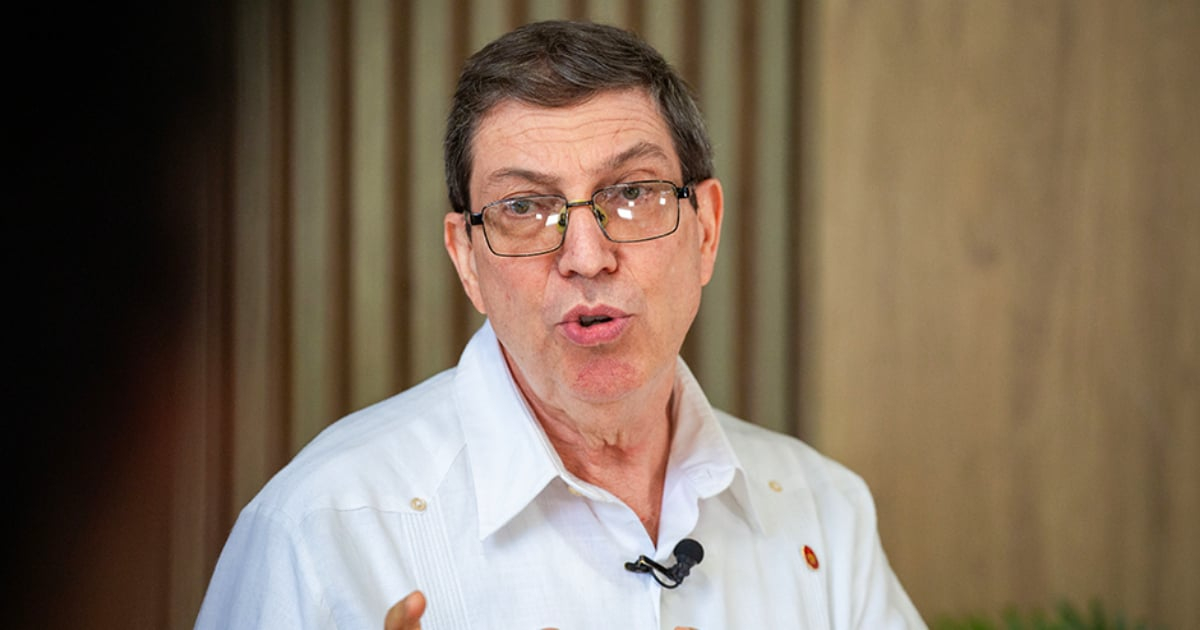
The Cuban Foreign Minister Bruno Rodríguez Parrilla is leading the Cuban delegation at the XXX Ibero-American Summit, which is officially set to open on the evening of this Wednesday in Madrid.
The Cuban leader Miguel Díaz-Canel did not travel to Spain. Only ten of the 22 participating countries will be represented by their highest authorities, with notable absences such as Lula da Silva, Claudia Sheinbaum, and Daniel Ortega.
On Tuesday, a day before the formal start of the meeting, Rodríguez participated in the Ministerial Dialogue with Associated and Consultative Observers.
In his X account, the Cuban chancellor wrote: "I reaffirmed Cuba's willingness to actively participate, with its experience and knowledge, in cooperation projects and exchange spaces aimed at benefiting our peoples."
He again blamed Washington for the economic crisis on the island. He described the Trump administration's measures toward Cuba as a "collective punishment" and an "energy blockade equivalent to a naval blockade." Furthermore, he condemned the secondary sanctions against those who maintain commercial ties with Cuba.
The Cuban opposition was present in Madrid
While the regime's diplomacy sought cooperation in official halls, the opposition platform "Pasos de Cambio" held the forum "Cuba at the Threshold" on Tuesday at the Wellington Hotel in Madrid, with nearly 80 attendees, including ambassadors, dissident leaders, and intellectuals.
The event, coordinated by Rosa María Payá, was attended by the Secretary-General of the OAS, Albert Ramdin, who advocated for a peaceful resolution in Cuba and emphasized the need to restore the rule of law and respect for human rights.
Payá presented the Democratic Transition Plan for Cuba at the forum. The document begins with the release of over 1,000 political prisoners and concludes with internationally supervised free elections.
«We are no longer just denouncing the dictatorship. We are preparing the Republic», asserted the opposition member, who stated that «Cuba is closer to freedom than many imagine».
The event was interrupted by a woman identified as Lucía Céspedes Ocampo, known for her statements supporting the regime and who had appeared on the official Cuban news expressing gratitude to Díaz-Canel.
Payá directly accused Havana: "The Cuban regime sent a repressor to sabotage the event in Madrid where we are now presenting a plan to support the democratic transition in Cuba."
The organizers of the forum proposed five courses of action for Ibero-America to support a transition: humanitarian aid, economic cooperation, political dialogue, exchanges in education and health, and coordination with international organizations.
Related videos:
Filed under: