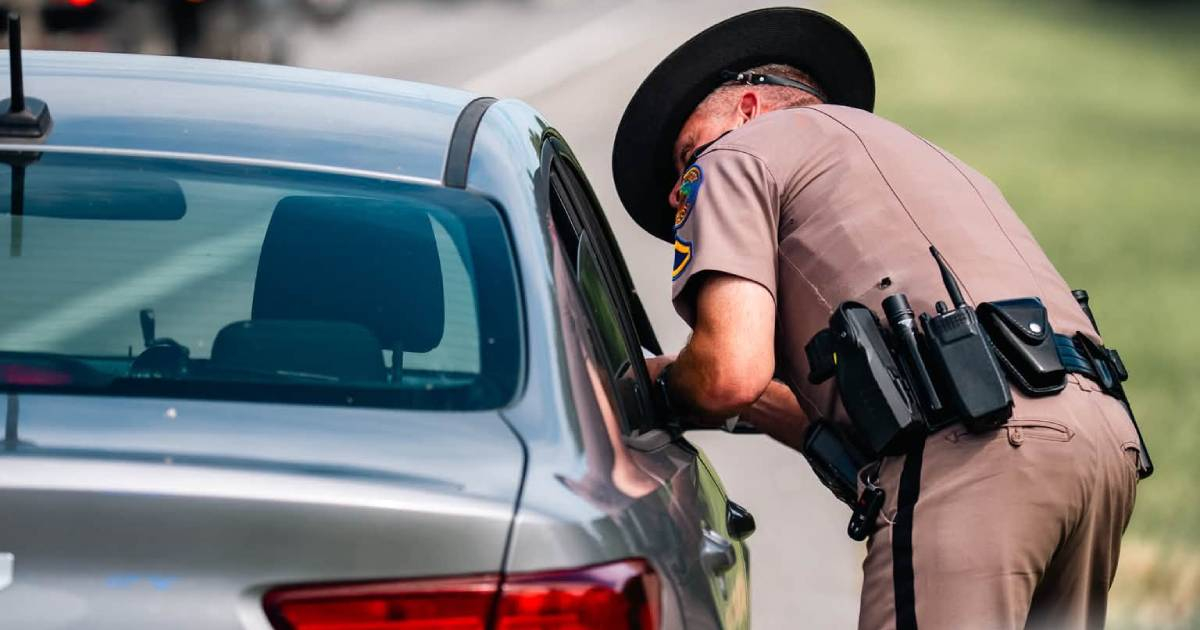
The Board of Immigration Appeals (BIA) of the United States issued a decision that reinforces the consequences of traffic violations in immigration proceedings: repeatedly driving without a valid license can be a determining factor in denying bail to a detained immigrant.
The ruling, published on Monday, November 2, sets a binding precedent for immigration judges across the country, including the courts in Florida where numerous cases of Cubans detained by ICE are processed.
The decision, identified as Matter of Cruz Aijiaco, 30 I&N Dec. 218 (BIA 2026), overturned a bond of $8,000 that a judge had granted to Jonnathan Cruz Aijiaco on April 1st and ordered him to be held without bond.
The immigrant, who entered the United States in August 2016, had accumulated several traffic violations. In June 2017, the police intercepted him for making an improper lane change. During the intervention, the officers discovered that his license was suspended and there was an outstanding arrest warrant, leading to his arrest.
Two months later, he was intercepted again because his vehicle had malfunctioning brake lights. Upon confirming that his license had been suspended several times, the officers arrested him for knowingly driving without a valid permit.
The BIA considered that repeatedly violating traffic regulations may be an indication that a person will also disregard the orders of an immigration court.
However, the infractions were not the only reason for the decision. The court also noted that Cruz Aijiaco had not established a permanent address, as he presented contradictory information about possible residences in Florida and Indiana.
Furthermore, he believed that he had not demonstrated that he met the requirements to request cancellation of deportation. According to the file, he entered the United States in August 2016 and was subject to a deportation proceeding in February 2026, before completing the ten years of continuous presence required for that immigration benefit.
The contradictions also reached his family situation. When he was arrested in February 2026, he claimed to be single and without children, but later stated that he had a wife and children, without providing a specific address where they resided.
With these elements, the BIA concluded that no amount of money would ensure their appearance at future immigration hearings.
An important aspect is that the court did not need to determine that the immigrant posed a danger to the community. The decision was based on the risk of non-appearance at hearings or failure to comply with future court orders.
What does it mean for Cubans in Florida?
The precedent may affect Cuban immigrants who are detained and have the right to request a immigration bond, especially if they accumulate traffic violations, cannot provide proof of their residence, or lack sufficient evidence of ties to the community.
This does not mean that a traffic ticket automatically results in the denial of bail, nor that all immigrants with pending cases can apply for it. Eligibility and the risk of flight must be assessed according to the circumstances and the detention regime applicable to each individual.
The concern is not new. In October, immigration lawyer Willy Allen warned that even minor traffic violations could harm detained immigrants, while analyzing another BIA decision that tightened the criteria for granting bail.
"This decision strengthens and empowers judges to determine that a fine is sufficiently severe to deny a bond," the lawyer explained.
The new resolution adds to other precedents issued during 2026, which have strengthened the review of background checks, family ties, residence, and the actual possibilities of obtaining immigration benefits.
Related videos:
Filed under: