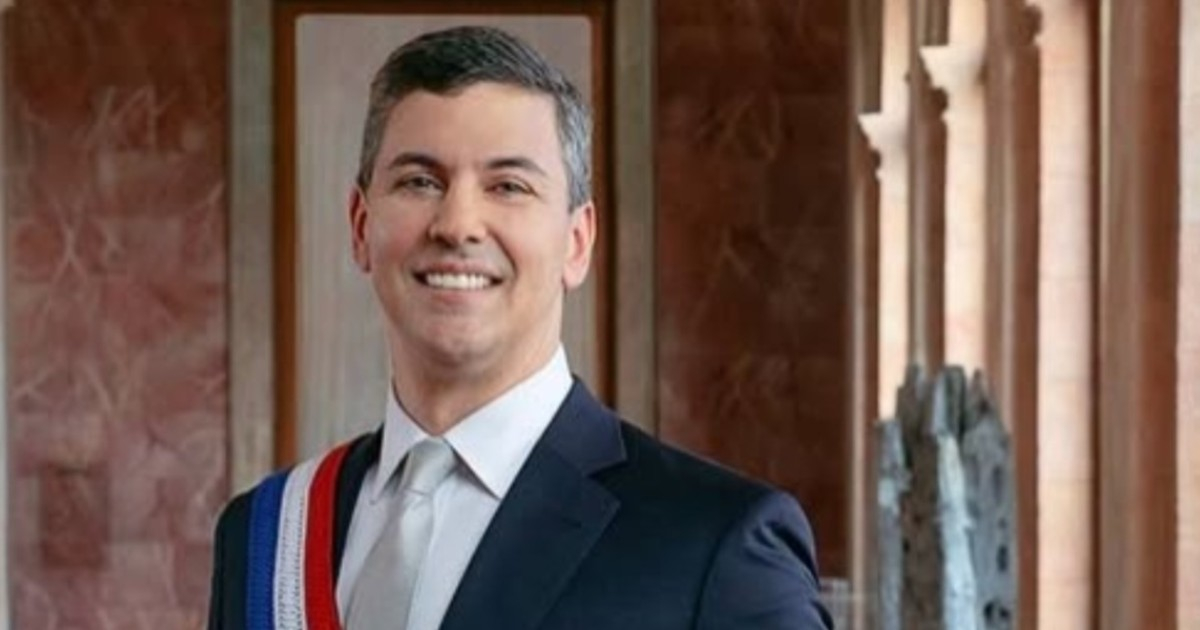
The Senate of Paraguay removed President Santiago Peña this Friday through an impeachment approved with 44 of the 45 votes from the Upper Chamber, for "poor performance of his duties," as reported by CNN en Español.
The dismissal brings an end to a political and financial crisis that erupted days earlier when the Central Bank of Paraguay ordered the closure of Ueno Bank, a digital institution with over 2.9 million clients in a country of 6.1 million inhabitants, after detecting that its solvency ratio had fallen below 50% of the minimum required.
The collapse of the bank left the funds of millions of citizens and state entities frozen, including the Social Security Institute (IPS), which manages the pensions of most Paraguayan workers.
The accusing congresswoman Rocío Vallejo reported to the Senate that Peña "created a hole of 1.2 billion dollars for the Paraguayan people" and "three million people harmed in a single day," and described his administration as "negligent," "criminal," and "with disastrous results for public finances."
Peña announced his resignation the day before through a video on social media, arguing that he sought to prevent further instability. "I submitted my resignation to avoid causing more damage to the country and to help restore peace to Paraguay. I do not want my presence to be a cause of greater division or instability," he stated.
However, government lawmakers blocked the joint session called to formally accept that resignation, which paved the way for impeachment proceedings. This maneuver was driven by a constitutional calculation: Article 189 of the Paraguayan Constitution establishes that elected former presidents are lifetime senators unless they have been found guilty in an impeachment trial, a benefit that Peña would have retained had he resigned.
The Senate also rejected, by a vote of 42 to three, the request for a 72-hour extension that Peña asked for to prepare his defense, according to a report by EFE.
The president did not attend the legislative chamber and delegated his representation to lawyers Adolfo Ferreiro and Ricardo Preda, who argued that the process was void since their client had already resigned.
Peña had been linked to Ueno Bank through the Vázquez Group, its main shareholder, of which he was a shareholder until March 2025, when he sold his stake. The Prosecutor's Office detained eight executives of the entity, including its president Juan Manuel Gustale and founder Federico Miguel Vázquez Villasanti, who are being investigated for alleged offenses of breach of trust.
The United States, through its embassy in Asunción, called on Friday to "maintain peace and respect democratic institutions" and expressed "solidarity with the people of Paraguay during the current situation they are facing."
The fall of Peña also has a regional dimension: the leader had been a close ally of Washington, participated in the summit "Shield of the Americas" called by Trump in Miami in March 2026, and his government voted in October against the UN resolution calling for an end to the U.S. embargo on Cuba, aligning with Washington for the second consecutive year.
After the dismissal, Vice President Pedro Alliana —whose own impeachment was rejected on Thursday by a vote of 48 to 30— remained the constitutional successor to complete the term until August 2028.
Related videos:
Filed under: