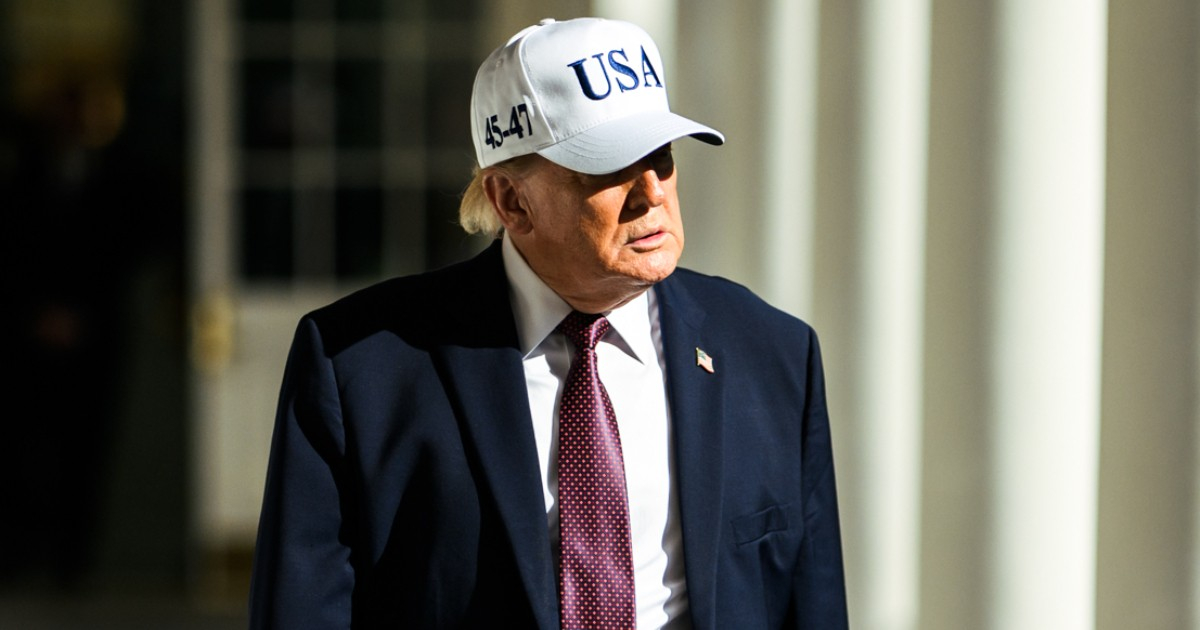
Donald Trump convened his national security team on Wednesday and Thursday at the White House to assess whether to resume large-scale military operations against Iran, according to senior U.S. officials cited by Fox News.
At the close of this edition, no formal attack order had been issued, but the United States Central Command (CENTCOM) was finalizing preparations for a possible operation, awaiting directives from Washington.
From the Oval Office, Trump issued a direct warning: "I would prefer not to destroy the rest of the country, if possible, but I may have to do it. You will know soon."
The president also stated that Iran will need 25 years to rebuild after the joint offensive launched by the United States and Israel in February, and described the current situation as "virtually an occupation," referring to the control that U.S. forces exert over the strategically important Strait of Hormuz.
Trump emphasized that Washington "is getting more oil now than before the war started" thanks to that control, and reiterated that Iranian authorities "are not doing anything without approval" from his administration. He was also categorical on one point: Tehran "is not going to have nuclear weapons."
The administration is considering three options: resuming military attacks, maintaining economic pressure through sanctions and maritime blockade, or negotiating an agreement that requires significant concessions from Iran.
Sources cited by Fox News indicated that the new moon on November 9 — which produces minimal nighttime illumination over the Middle East — could represent a favorable operational window, although there is no confirmation that Trump has ordered any attack for that date.
The internal political context complicates the calculation. Following the Republican defeat in the midterm elections on Tuesday, in which the Democrats regained control of the Senate and the House of Representatives, Trump himself acknowledged that the conflict influenced the outcome: "I think part of it was Iran," he told Fox News.
Despite this, the president defended his decision to attack: "I did the right thing. I would do it again," he stated to the Wall Street Journal.
In Tehran, the Iranian Revolutionary Guard reported on Friday that two oil tankers struck mines and caught fire in the vicinity of the Strait of Hormuz, a new indication of the ongoing tension in the area.
Iran, for its part, reportedly sent a nuclear proposal to Washington through Qatar on Thursday, while indirect negotiations remain stalled. Tehran is demanding the fulfillment of seven preconditions, including the lifting of sanctions and the end of the maritime blockade.
In that diplomatic context, the Emir of Qatar, Sheikh Tamim bin Hamad Al Thani, spoke by phone with Trump this Friday to urge him to prioritize diplomacy and avoid further escalation with Iran, according to the AP agency.
The conflict began on February 28, 2026, with Operation Epic Fury, a coordinated air offensive by the U.S. and Israel against Iranian nuclear and military facilities. A ceasefire agreed upon in June through the Islamabad Memorandum was broken in July when Iran attacked commercial ships in the strait, prompting Trump to order a new round of bombings.
Trump described the agreement this week as "a waste of time" and left the door open to resuming large-scale attacks, while the new Democratic majority Congress will not be established until January 3, 2027.
Related videos:
Filed under: