The video I published at midnight has over 375,000 views, featuring mothers threatened with fines for not sending their hungry children to school in Guamuta, El Cobre. In this locality and in the Reparto Zamorana area of Santiago de Cuba, humanitarian projects continue to progress as part of the Save Cuba Campaign.
This Friday, November 6, the political police carried out a significant operation in Havana: summonses, surveillance, and home blockades against independent journalists and activists. Yoani Sánchez, Camila Acosta, Adelth Bonne Gamboa, Yunia Figueredo, and Boris González Arenas reported the presence of agents or patrols in front of their homes. There was also police surveillance reported outside the houses of activists Marthadela Tamayo and Osvaldo Navarro. According to the reports, the operation aimed to prevent them from attending an event at the United States Embassy.
Yesterday, Thursday the 5th, the political police detained Yoani Sánchez when she went out shopping in her neighborhood. She was held for nine hours and, according to her testimony, she was threatened with prosecution for an alleged attack on the constitutional order. On the same day, Berta Soler and María Cristina Labrada from the Ladies in White were arrested in Havana. In Camagüey, State Security agents arrested former political prisoner Indomar Gómez Izaguirre as he attempted to reach the communist court where political prisoner Virgilio Mantilla was being tried. The week had already begun with the arrests of Adelth Bonne Gamboa on Monday the 2nd, and Camila Acosta on Tuesday the 3rd.
The closer the regime feels its end, the more it strives to survive. Hence the increase in harassment, surveillance, and violence. A patrol in front of a house can prevent a journalist from reaching an interview or an activist from accompanying the family of a prisoner, but it cannot stop the growing desire of a people weary of oppression and misery. The Cuban Observatory of Human Rights reported today that in October, it recorded at least 387 repressive actions, including 30 arbitrary detentions and 145 house raids. The first week of November demonstrates how this policy translates into daily life.
In prisons, where victims have fewer opportunities to report, violence reaches extreme levels of cruelty. Our brother in struggle Roilán Álvarez Rensoler, an activist from the Unión Patriótica de Cuba and promoter of Cuba Decide, remains in recovery after the brutal beating that left him unconscious for three days. The assault occurred on October 20 in the provincial prison of Holguín, the day after a video of him regarding the conditions in the prison was circulated. The blows caused bruises on his face and a head wound that required stitches. Concerns are also raised about Félix Navarro, 73, who had been isolated in Agüica prison for over two months when his family reported that, despite suffering from diabetes, he was lacking the necessary medical attention. Cubalex has also alerted about the deterioration of Saylí Navarro's health and the lack of an appropriate diagnosis.
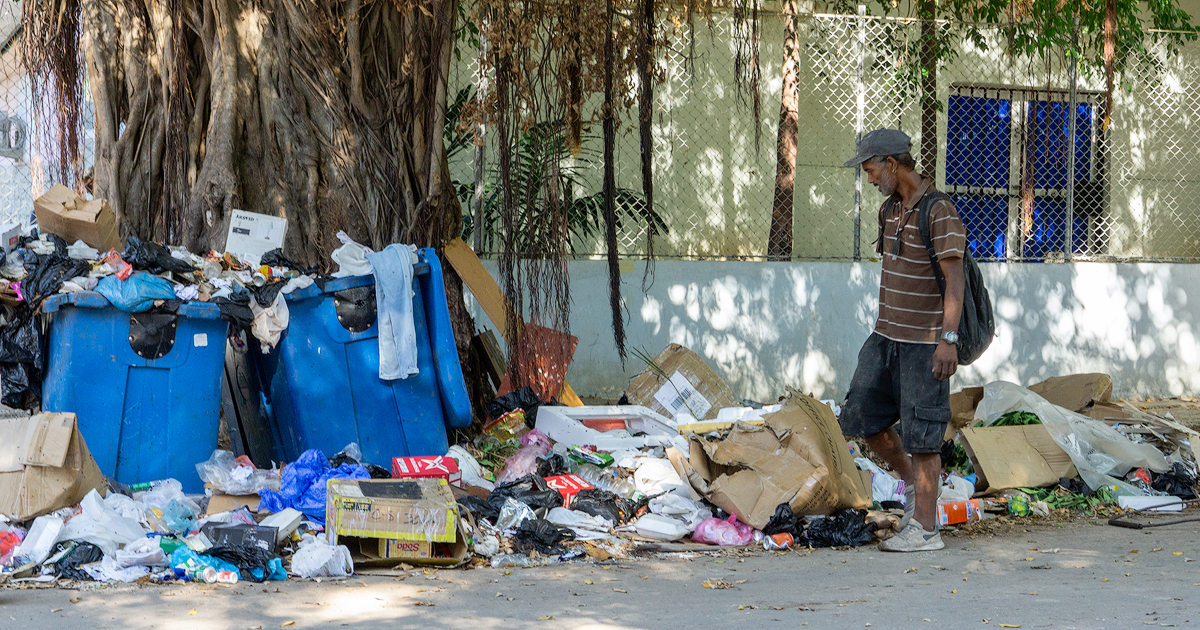
As these complaints multiply, the regime carried out the "Moncada 2026 Strategic Exercise" across the country on November 4 and 5. Today, on the 6th, the mobilization has transitioned to National Defense Day. The leadership of the Communist Party claims it is preparing the troops, territorial structures, and the population for a potential aggression from the United States. This supposed war dominates official discourse while hunger and misery spread throughout Cuba. Power outages disrupt the water supply and spoil the little food that families manage to obtain. The shortage of medicines and the issues in hospitals worsen the health crisis.
In the midst of this emergency, the United States has continued to send humanitarian aid to the most vulnerable families. For our part, the Patriotic Union of Cuba and the Assembly of the Cuban Resistance are moving forward with the campaign Save Cuba, which includes humanitarian projects such as the preparation and delivery of food to those in need in Santiago de Cuba and other regions of the country.
Every day, I receive more calls and messages for help from Cuba. I hear from mothers who no longer know what to feed their children, elderly individuals who need medication, and entire families who have exhausted their resources. The desperation is clear in the voice of those who ask for a little food to make it to tomorrow or who inquire if someone can find the medicine they have been searching for days.
In the midst of this tragedy, all Cubans, both those on the island and those in exile, as well as the entire diaspora, are compelled to make our greatest effort, with love and selflessness, to lift Cuba from the situation in which the Communist Party has plunged it. Defending the freedom of our homeland and assisting those who suffer the most are duties we can and must take on starting today. Promises and documents are not enough. Solutions are needed now. Tomorrow is too late. Our elders, our children, and the most vulnerable individuals need us to share whatever resources we have at our disposal. For many of them, a plate of food, a medication, or the outstretched hand of a fellow countryman can make the difference between life and death.
The end of the year is approaching, and many are asking: until when? The answer is simple: until we all say enough and confront the oppressor. Freedom is earned.
Related videos:
Filed under:
Opinion article: Las declaraciones y opiniones expresadas en este artículo son de exclusiva responsabilidad de su autor y no representan necesariamente el punto de vista de CiberCuba.