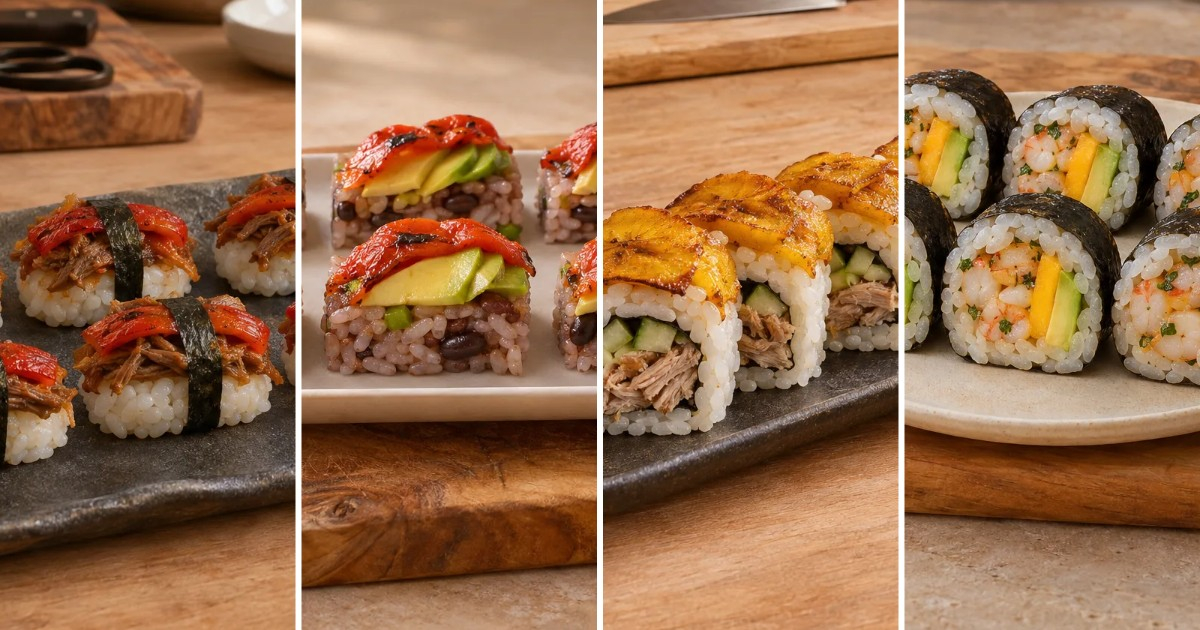
A nigiri of ropa vieja, a pressed sushi of congrí, and a roll of lechón topped with maduros: these are just a few of the combinations featured in the new selection of . Ten recipes to explore the fusion between Cuban flavors and different ways to prepare sushi.
There is nigiri, rolls with rice on the outside, nori seaweed cones, and even a bowl for those who prefer to forgo the roll. The common thread is sushi rice seasoned with vinegar, accompanied by sautéed ingredients, sauces, root vegetables, fruits, and cooked meats or seafood. Each recipe includes ingredients, quantities, and step-by-step preparation.
1. Nigiri of shredded beef with roasted chili
The features shredded meat atop a bite of rice, held together by a strip of nori. The roasted red pepper adds the finishing touch and provides a striking color contrast.
The key is to cut the strands and reduce the sauce well so that the meat retains its juiciness without falling apart. The recipe explains how to prepare ropa vieja from scratch and offers an alternative for using it once it is already cooked.
2. Pressed sushi with congrí, avocado, and roasted pepper
The combines short-grain Japanese rice, black bean broth, and a moderate amount of beans and sofrito. It is then placed in a mold and topped with avocado and roasted pepper.
Its shape is inspired by oshizushi or pressed sushi. The recipe uses a specific type of rice and method to obtain the portions: it is advisable to follow these guidelines, as the usual long-grain congrí has a different texture.
3. Lechon uramaki with fried plantains and sour orange sauce
In the , the rice is on the outside while the nori wraps around the filling of pork and cucumber. Slices of roasted ripe plantain cover the roll.
Mojo is served separately to control moisture. It is suggested to take your time if you start with raw pork, although it can also be prepared with already roasted lechón by following the variant indicated in the recipe.
4. Garlic shrimp maki with mango and avocado
The combines the flavor of garlic, the sweetness of the fruit, and the creamy texture of avocado in a roll wrapped in nori.
The shrimp are fully cooked before assembly. The mango should be ripe but firm, cut into strips, so it complements the seafood without becoming mushy inside the roll. With the quantities provided, you will get four rolls, approximately 32 pieces.
5. Futomaki inspired by the Cuban sandwich
Lechon, ham, Swiss cheese, pickles, and mustard transition from bread to rice in this . The nori seaweed encases a filling that retains the recognizable combinations of the sandwich.
The mustard is spread in a thin layer, the pickles are drained, and the cheese is placed in strips, un-melted. The preparation starts with cooked roast pork and is finished like a sushi roll, without heating it on a griddle.
6. Red snapper tempura maki with mojo sauce and plantain chips
The combines strips of battered and fried fish with cucumber and avocado. The tempura is inside the roll, surrounding the snapper, and the nori forms the outer layer.
The accompaniment enhances the Cuban touch: sour orange mojo and green plantain mariquitas. The latter are served on the side or crumbled over the pieces just before eating to preserve their crunchy texture.
7. Gunkan with crab in Creole style
The has a small base of rice surrounded by a strip of nori, which forms a wall to hold the filling. On top is the crab with a sauté of onion, pepper, garlic, and tomato.
The recipe uses cooked crab meat that is clean and well-drained. The filling should be juicy, but without any loose liquid, and the pieces are assembled close to serving time to maintain the texture of the seaweed.
8. Lobster temaki with mojo sauce and avocado
The substitutes slices with hand-formed nori cones. They include seasoned rice, cooked lobster, avocado, and cucumber.
Garlic, oregano, and sour orange season the seafood in the pan. The mojo is used in a measured amount so that it adds flavor without soaking the cone. The guide explains the folding technique and yields eight temaki to serve fresh.
9. Sweet potato, avocado, and pickled onion maki
The provides a plant-based option alongside the pressed sushi with congrí. It uses white or cream-fleshed sweet potato, roasted in sticks that maintain their shape.
The avocado adds creaminess, while the pickled onion introduces a tangy note. A mild mojo of garlic and sour orange is served on the side. This combination allows for a family dish to be incorporated into a roll with sushi rice and nori.
10. Sushi in a chicken bowl with guava
The is an alternative for those who want to prepare the combination without using a mat or cutting rolls. The seasoned rice serves as a base for layering the other ingredients.
The chicken is marinated with mojo and finished in the pan with a light glaze of guava and soy sauce. Cucumber, avocado, and strips of nori complete four individual bowls, with the sauce clinging to the meat to avoid soaking the rice.
How to choose where to start
To avoid rolling, you can start with the chicken bowl or the pressed sushi in molds. Those who enjoy preparing bites to share can choose from nigiri, gunkan, and various rolls. The options of congrí and sweet potato allow for the addition of two vegetable dishes to the table.
It is advisable to read the chosen recipe before planning the meal: some start with pre-cooked meats, while others include roasted or fried options. Preparing the fillings with the specified level of moisture and assembling them close to serving time helps maintain the shape and texture of each piece.
Related videos:
Filed under: