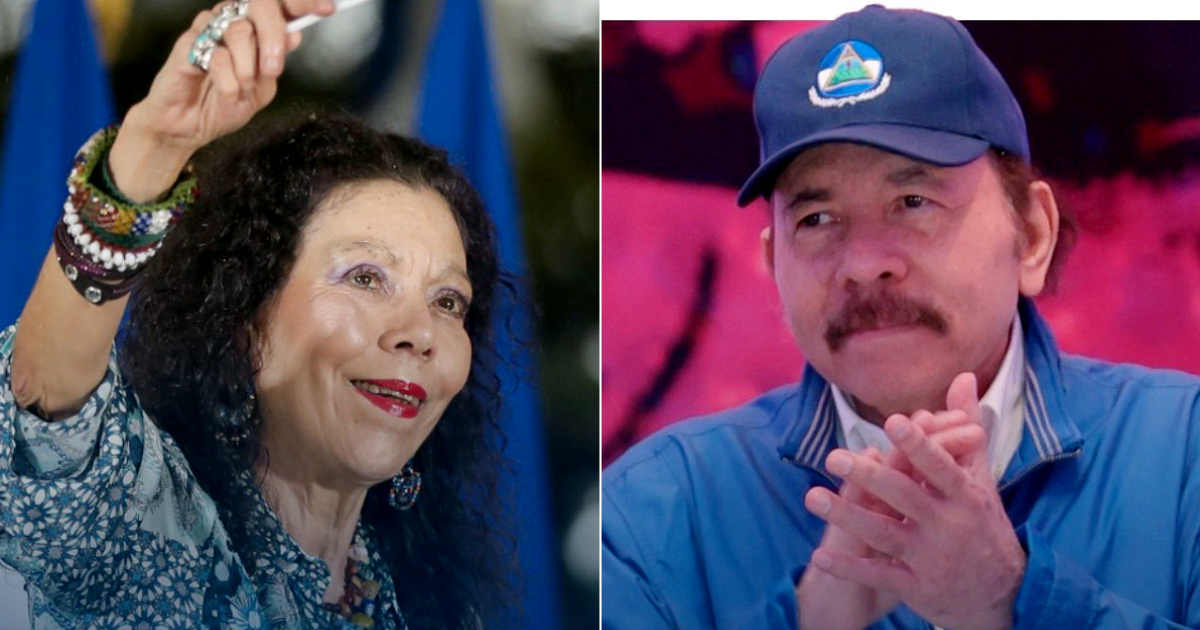
Juan Pablo Segura, U.S. Deputy Secretary of State for Western Hemisphere Affairs, reminded this Sunday that Nicaraguans should be voting in presidential elections, according to the democratic calendar that indicated the end of Daniel Ortega's fourth consecutive term.
In contrast, the Ortega-Murillo dictatorship manipulated the rules over the last five years to prevent citizens from choosing their leaders.
Segura referred to Ortega and his wife Rosario Murillo as "two despots" and reaffirmed the commitment of Washington and its regional democratic partners to advance the ministerial process of the Organization of American States (OAS) so that it is the Nicaraguan people —and not the ruling couple— who decide the future of the country.
We have not forgotten that Nicaraguans should be voting in presidential elections today, as Daniel Ortega's fourth consecutive and illegitimate term comes to an end, the official wrote on his official account on X.
The cancellation of the November 2026 elections is the result of a series of institutional reforms implemented by the regime.
In early 2025, the government approved a constitutional reform that modified 185 of the 198 articles of the Constitution, extended the presidential term from five to six years, created the role of co-presidency for Murillo, and enabled indefinite reelection.
On July 19, 2026, during an event marking the anniversary of the Sandinista Revolution, Ortega publicly declared that Nicaragua “would not hold elections again.”
Weeks later, in September, the ruling National Assembly approved in its first session a new reform that extended the terms from six to seven years, effectively canceling the 2026 elections and delaying the next ones to 2028. The final ratification is scheduled for January 2027.
The political repression accompanying the institutional closure is systematic. As of October 23, 2026, the Memory and Justice Association for Nicaragua documented 72 political prisoners, 33 of whom are in a state of forced disappearance, and a total of 1,506 political detentions since 2018.
The UN Human Rights Experts Group also verified 161 cases of enforced disappearance and eight deaths in state custody since April of that year.
The international response was primarily coordinated through the OAS. In August 2026, the U.S. promoted a ministerial process —the first of its kind since 1978— with the support of 28 member states.
On October 2, a Meeting of Foreign Ministers approved a resolution that called for the release of political prisoners, the restoration of civil liberties, and conditions for free elections, and established a Ministerial Follow-up Group with a mandate to present recommendations within 60 days.
The Trump administration has also applied direct pressure: sank two children of Ortega and Murillo, along with officials of the regime and companies in the gold sector, and imposed visa restrictions on over 2,350 individuals linked to the Nicaraguan government. Secretary of State Marco Rubio referred to the regime as an “enemy of humanity” in June 2026.
Nicaragua and Cuba maintain a long-standing political and ideological alliance, with both regimes supporting each other in international forums and sharing methods of repression against the opposition. Ortega publicly expressed his solidarity with the Cuban government in May 2026.
The OAS Ministerial Follow-up Group is expected to present its recommendations on Nicaragua before the end of the 60-day deadline set during the meeting on October 2, which would place that report at the beginning of December 2026.
Related videos:
Filed under: