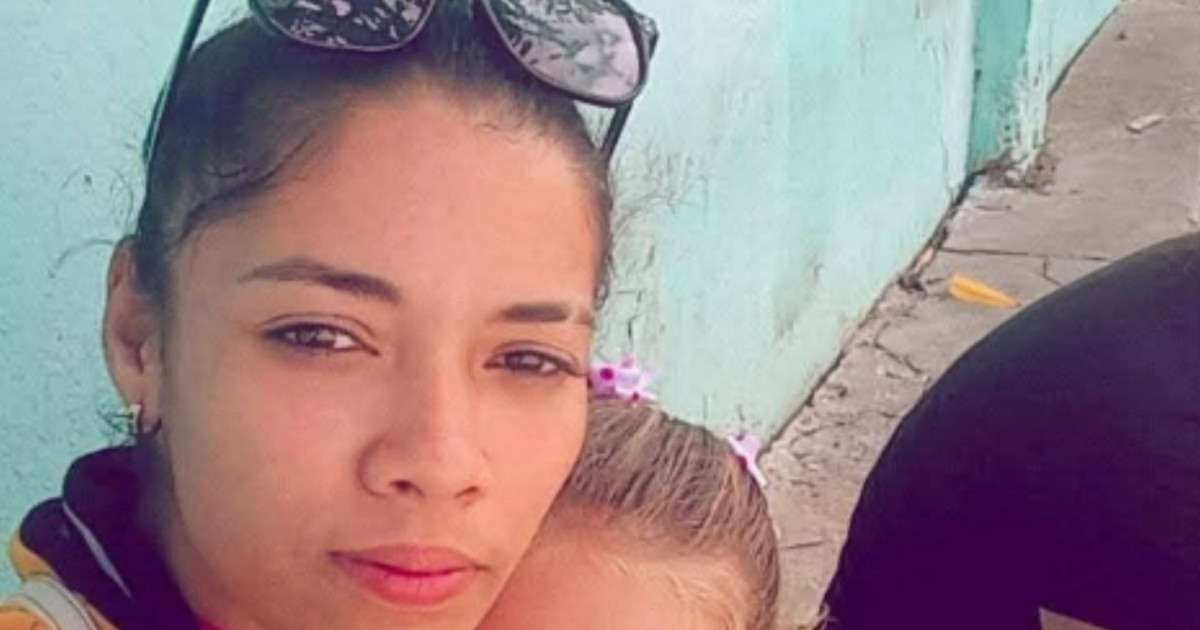
A mother residing in Bayamo, Granma province, was excluded from a donation for not being a state worker, according to her own report shared in the Facebook group "Bayamo chopi" that garnered almost 1,000 reactions and sparked a debate on discrimination in access to social aid in Cuba.
"It is a lack of respect what is happening in this country. I came to seek the donation that is supposedly due to the children, and when I arrived, they told me that it did not apply because I do not work for the State, a State that has a salary that is not enough for anyone to survive for a month," denounced Yude González, who shared an image with her daughter.
González, a single mother supporting her father and daughter, expressed that she feels outraged.
"I support my father and my 4-year-old daughter whose father never took responsibility for her. I've had to figure things out on the streets as best as I can, and I earn more than working for this country, where my salary wouldn’t even be enough to buy my daughter milk every day, because even that they hardly give anymore. What child can get by on half a liter of milk every 7 days and when they remember," she added.
International aid donations in Cuba are channeled through state organizations. In the comments, many expressed support for the mother, while others claimed to have experienced the same situation.
"The donations that are sent for children are for everyone, for the elderly, for all. Those bastards are the ones who sort people out to resell them outside, as they always do," denounced Elaidis Rosell Paumier.
"My love, I'm going through the same thing. I have a six-month-old and a five-year-old, and it's been two months since they started the donations, and my girls haven't received that food... This is absurd; I don't even have any ideas left to comment, I'm speechless," Maura Montel said.
The case illustrates a structural tension within the Cuban system: access to social benefits has historically been tied to the status of state employee, leaving those working in the private sector in a state of limbo.
With the expansion of self-employment and microenterprises since 2021, an increasing number of Cubans work outside the state and are practically excluded from certain benefits, although formal legislation prohibits such discrimination.
The Law 189 of 2026, the new Cuban Labor Code, expressly prohibits distinctions that affect dignity or the enjoyment of labor rights due to personal circumstances, which makes the case reported in Bayamo a potential violation of the regime's own regulations.
Bayamo has been a recurrent scene of extreme poverty situations that go viral on social media due to the lack of local independent media. In July of this year, a citizen campaign raised over 400,000 Cuban pesos for the girl Lía Isabel García Torres and her mother, who were living in extremely precarious conditions in that same city.
Another recent case illustrates the magnitude of the problem. At the end of October, Aidelis Arencibia, mother of three children with autism, reported that the food from the state medical diet card rarely arrives and that she relies on donations to feed her children.
The discrimination based on employment status in Cuba is a common complaint among those who work outside the state sector, and cases like that of this mother in Bayamo reveal that the gap between what the law states and what happens in practice remains significant.
Related videos:
Filed under: