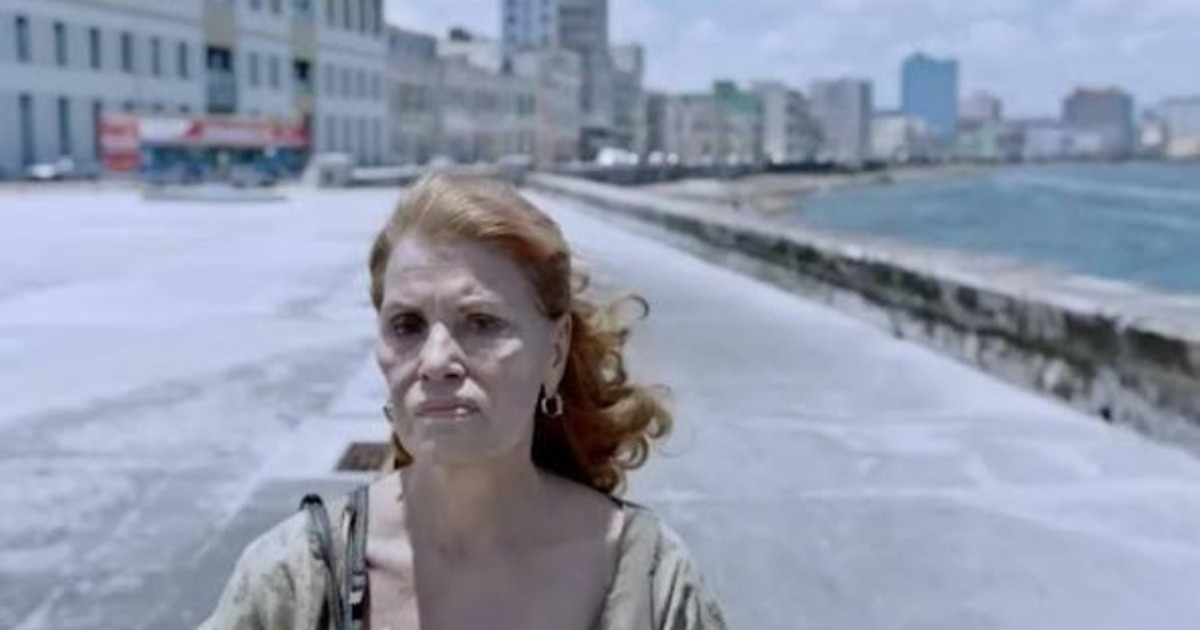
Jorge Perugorría succeeded in getting his fifth feature film as a director, Neurótica anónima, included among the 19 films shortlisted for the Goya 2027 for Best Ibero-American Film, as confirmed by the Spanish Academy of Cinema on October 7.
It is important to clarify that the preselection does not equate to a nomination or a position among the five finalists: that filtering will be revealed on December 15, 2026, when the final candidacies are announced in anticipation of the gala on February 6, 2027, in Navarra.
The film stars Mirtha Ibarra, National Film Award of Cuba 2025, who plays Iluminada, an 80-year-old usher who has worked in a Havana cinema for three decades and, faced with the looming threat of the theater's demolition, calls upon her colleagues to shoot a documentary in its defense.
The story is based on the play of the same name that Ibarra wrote and performed years earlier, and the film screenplay is co-written by both Ibarra and Perugorría.
The cast features cameos from Puerto Rican actor Benicio del Toro —winner of the Goya for Best Leading Actor in 2009— and Spanish actress Susana Pous, which enhances the international profile of the production.
In an interview with the EFE agency conducted in Havana, Perugorría described the film as "a tribute to the resilience of Cubans, to how some people refuse to stop dreaming and continue moving forward under the circumstances we face during this very difficult and complex time."
The director filmed the movie in Havana in August 2024, amid an economic crisis, and acknowledged that sustaining production required creativity and the dedication of the team: "We cannot give up making films."
Regarding Ibarra, Perugorría was straightforward: "Her character—Iluminada— is an example for me. The fact that this woman, already of advanced age, changes her life, starts anew, and tries to fight and assemble a whole team to save a movie theater, I find that admirable."
The real backdrop of the story is known to everyone in Cuba: the country once had nearly 400 cinemas, but about 80% have closed in recent decades, and power outages of up to 20 hours a day make it nearly impossible to keep a theater running.
The film had its international premiere in the Official Section of the Málaga Festival in March 2026, where it received a ten-minute standing ovation. Its premiere in Cuba was on October 16 at the Yara cinema in Havana, although the night was marred when the actor Néstor Jiménez's motorcycle was stolen during the subsequent celebration.
The presentation in Málaga also sparked a cultural controversy: Perugorría attributed part of the worsening crisis to Trump's policies, which led filmmaker Ian Padrón to publicly invite him to debate. When regime officials labeled the criticism received as "lynching," Padrón rejected the term and contrasted it with the real repression exercised by the State against dissenters.
For Perugorría, the pre-selection carries a particular symbolic weight: Cuba has not achieved a final nomination in this category for over a decade, and the last Cuban film to win the award was The Horn of Abundance, directed by Juan Carlos Tabío, in 2009.
The director's connection to the Goya Awards is personal: he starred in "Fresa y chocolate" (1993), directed by Tomás Gutiérrez Alea and Tabío, which won the award in 1995 in the same category contested today by "Neurótica anónima."
"The mere fact of being nominated is, for us, a reason for gratitude, and very special due to my professional relationship with Spanish cinema," Perugorría told EFE.
Related videos:
Filed under: