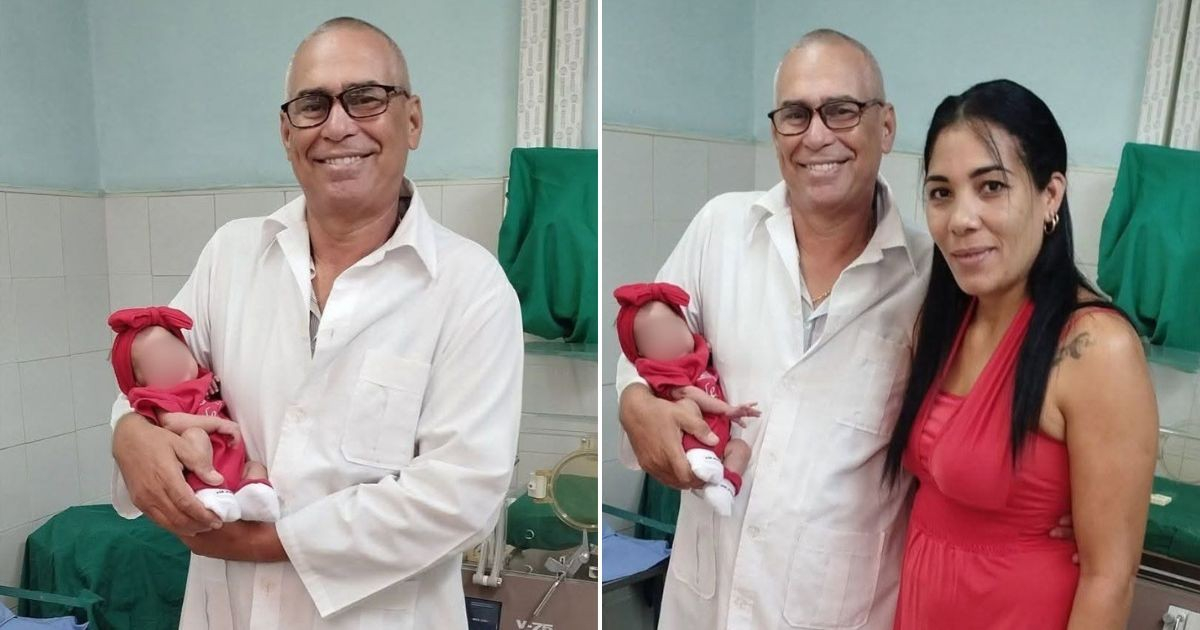
In a Cuba where the scarcity of resources and the deterioration of hospitals make medical care sometimes feel like wartime medicine, Mía Valentina's survival is extraordinary news.
The little one, born extremely prematurely and with very low weight, managed to pull through after 90 days fighting for her life in Camagüey, a recovery that brings immense joy to her mother, her family, and the doctors who cared for her.
The Provincial Directorate of Public Health of Camagüey reported this Monday on the medical discharge of the girl affectionately known as "Mía the Warrior."
The institution shared the testimony of Dr. Adrianyi Pacheco, who explained that the baby spent 35 days in intensive care and required mechanical respiratory assistance during her recovery.
Mía was born much earlier than expected and with an extremely low weight, which meant her first months of life were spent under medical supervision.
After 90 days, she was able to meet the necessary conditions to be discharged, following a process that required specialized care and constant attention from the staff at the Ana Betancourt de Mora Provincial University Gyneco-Obstetric Hospital.
One of the most significant moments in her development occurred when the specialists decided to transfer her to joint accommodation with her mother, through the so-called kangaroo program, despite the fact that she still weighed less than 1,000 grams.
This method promotes direct contact between the mother and the newborn, especially through skin-to-skin contact, and helps maintain body temperature, facilitates breastfeeding, and strengthens the emotional bond.
For extremely premature babies, it is a vital part of neonatal care.
According to the medical report, the team made the decision cautiously due to the very low weight of the infant.
The specialists regarded her admission to the shared accommodation as exceptional, as she was the lightest baby they had cared for under that arrangement up to that point, according to the information released.
Behind this recovery is Yadira, her mother, who went through the challenging early months of the girl's life. The post acknowledged her dedication and congratulated the family members who supported Mia during her stay.
After so many weeks of uncertainty, the medical discharge represents for them the opportunity to begin a new chapter outside the hospital.
The news also deserves to acknowledge the work of the doctors and nurses who cared for the baby, especially given the difficulties currently facing healthcare in Cuba.
However, the merit of those who stand by such vulnerable patients does not absolve the authorities of their responsibility for the material conditions in which they must work.
The hospital where Mia was treated has been the site of recent complaints.
In October, independent journalist José Luis Tan Estrada shared images of newborns lying on old chairs due to a lack of beds in the maternity ward of the center.
Days later, a pregnant woman reported that she had to spend the night on several aluminum chairs because there were no beds available.
Throughout 2026, similar reports concerning the deterioration of the facilities and hygiene deficiencies of the hospital have been frequently circulated on social media.
In May, Tan also reported the deaths of more than 15 newborns between January and May, amid reports of leaking sewage and lack of medications in the neonatal area.
Mía's story is not the only one that gives reasons for hope: other extremely premature babies have also managed to survive after long hospitalizations in Cuba.
In September, Aurora was discharged from the hospital in Holguín after spending 138 days hospitalized.
She was born at just 26 weeks of gestation and weighed 1,050 grams. Her mother, Mirelis Linares Alonso, was finally able to take her home after more than four months of care.
In July, another little girl named Patricia, born at 27.1 weeks of gestation and weighing just 770 grams, managed to leave intensive care after 82 days at the Iván Portuondo Hospital in Artemisa, and moved to cohabitation with her mother.
Related videos:
Filed under: