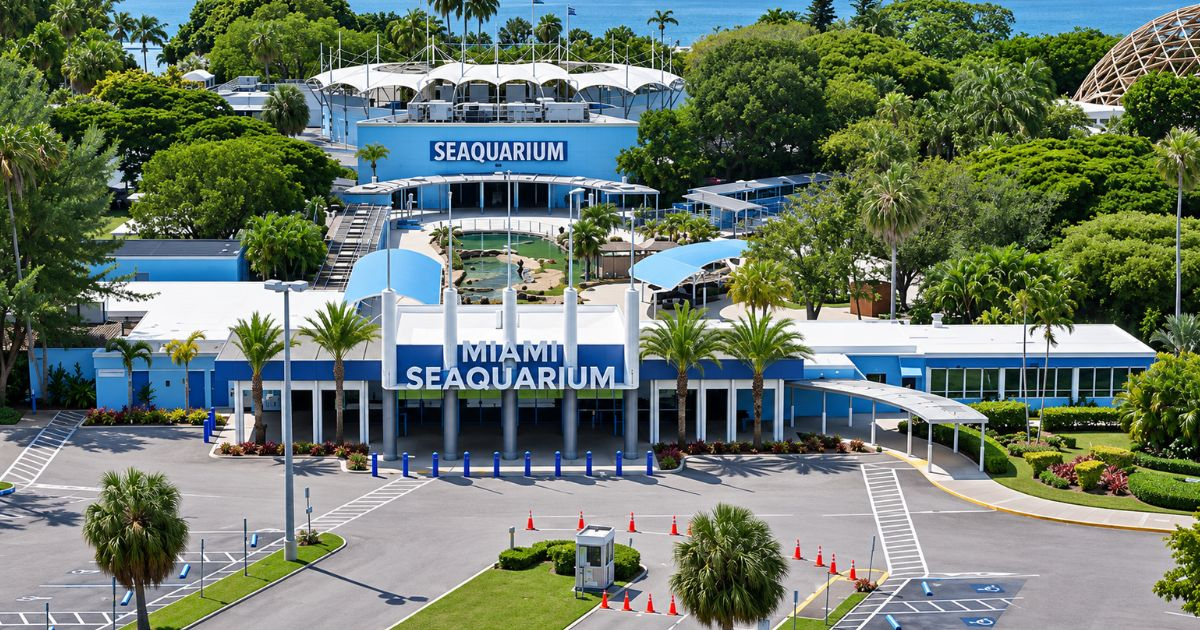
The transformation of the former Miami Seaquarium in Virginia Key faced another setback after a committee of the Miami-Dade Commission postponed the vote on the 99-year lease contract that would allow the historic marine park to be converted into a complex featuring an aquarium, marina, restaurants, and public spaces along Biscayne Bay.
The decision came after the commissioners received the 249-page document just a few hours before the meeting.
The postponement occurred this Tuesday when the Miami-Dade Recreation, Tourism and Resilience Committee decided, by a vote of three to one, to defer the approval of the agreement with the company Terra Group, led by developer David Martin.
The proposal could not move forward to the County Commission for final approval.
The president of the committee, René García, explained this Wednesday to Local 10 that he did not find it appropriate to put a contract of such magnitude to a vote without giving the commissioners and residents sufficient time to review it.
"I did not find it appropriate to proceed with this lease agreement without giving the public enough time to understand its content," stated García, who defended the right of citizens to review the terms of the agreement before a decision is made.
The contract had been added to the agenda and made available to the public the night before the meeting.
Several residents and environmental organizations criticized the attempt to approve a lease of nearly a century without an adequate period for analyzing its implications.
Commissioner Marleine Bastien expressed her concern about the intention to expedite the process by suspending customary requirements, including the public notice with four weeks' advance notice and the conduct of certain property assessments in the county.
Micky Steinberg also suggested that, although the agreement could be beneficial for Miami-Dade, it was necessary to review its conditions to assess whether they could be improved.
The only committee member who voted against the postponement was Raquel Regalado, the representative from the district where the Seaquarium is located.
The commissioner warned that delaying the agreement could jeopardize the entire negotiation and leave the county with an outdated contract that offers fewer public benefits.
The proposal includes transferring control of the land, owned by Miami-Dade, to a company connected with Terra Group for a period of 99 years.
According to the official documentation included in the committee agenda, the agreement establishes a minimum private investment of 100 million dollars for remodeling and an additional 10 million allocated for infrastructure and public services.
The project presented by David Martin aims to transform the old facilities into a year-round recreational destination, featuring a marine mammal-free aquarium, spaces for research and environmental education, seaside restaurants, and a marina for boats.
The new plan presented by Terra on Tuesday includes an 83,000 square foot aquarium, a marine research and innovation center, and a free public walkway of approximately three-quarters of a mile, named Ocean Walk, which would allow visitors to explore part of the shoreline of Virginia Key.
It is also proposed to restore the iconic geodesic dome designed by Buckminster Fuller and preserve other historical structures related to the old attraction, which was inaugurated in 1955.
The company asserts that the renovation will revitalize a deteriorated space, enhance public access to Biscayne Bay, and develop projects for the restoration of coral reefs, seagrass meadows, and other coastal habitats.
However, the construction of the marina is one of the most controversial aspects of the project. Environmental groups and residents are concerned that the presence of large vessels will impact the seagrass beds and areas used by manatees and other species.
In a report published in October by WLRN, it was revealed that the marina's design proposed facilities capable of accommodating large yachts and that environmental studies and permits related to potential impacts on the sea floor were still pending.
The Florida Department of Environmental Protection had requested clarifications regarding the impact on seagrass, navigation through narrow channels, and the measures to mitigate potential ecological damage.
Two residents also took legal action, believing that the project might require voter approval due to the provisions of the county charter that protect public lands designated for parks.
The promoters, on the other hand, argue that the Seaquarium and the marinas are included among the exceptions to that requirement.
The marina also holds economic significance for the developer. Representatives from Martin have argued that the revenue generated by the vessels would help finance other aspects of the complex, viewing the various facilities as part of a single project.
The postponement adds pressure to the operation's timeline. Terra must complete the acquisition of the lease contract by December 30, according to the deadline set in the bankruptcy process of the previous operator of the Seaquarium.
The federal bankruptcy court had authorized the transfer of the contract to the new company, but the operation still requires the final consent of Miami-Dade.
The developer's lawyers warned that a prolonged delay could jeopardize the purchase and open the possibility for creditors to seek another solution.
García acknowledged the pressure of the timeline, although he insisted that the county must carefully review the document. He believed there is still a possibility of negotiating better terms and suggested that the matter could come back through a special meeting or be examined directly by the County Commission.
The last ordinary meeting of the commission in 2026 is scheduled for November 17. An hearing on land use and zoning for the project is also planned for the 19th, so there are still pending administrative procedures.
The future transformation of the Seaquarium wasannounced in September 2025 as part of an agreement to replace the old marine animal performance park with a modern aquarium without captive mammals.
The facility, which was one of the main tourist attractions in Miami for decades, faced numerous complaints regarding the conditions of the animals, federal inspections, and legal conflicts that ultimately impacted its operations and led to the process of reorganizing its facilities.
Related videos:
Filed under: