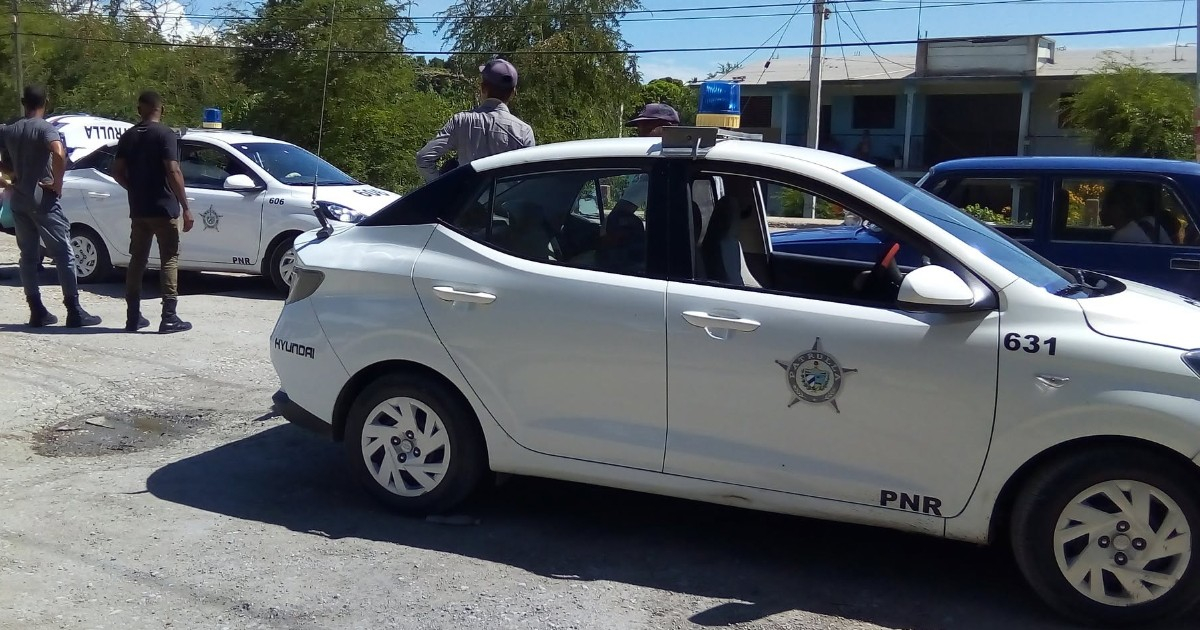
The Ministry of the Interior (MININT) and the General Customs of the Republic of Cuba announced this Tuesday, through state media reported by EFE, that more than 250 people have been detained since September as part of a deployed anti-drug "shock plan" in several provinces of the country.
According to the official version, those arrested "operated in complex environments and repeatedly engaged in drug trafficking, served as support bases for Cuban organizers based abroad, or were involved in the retrieval of drug shipments," a term used to refer to narcotics cargoes thrown into the sea by international networks and collected on Cuban shores.
The arrests focused on Havana, Matanzas, and Granma, and the operations included the dismantling of 15 crack houses located, according to the state statement, "in hotspots and complex areas, primarily in Havana."
The majority of the seized items corresponded to synthetic cannabinoids —commonly referred to as “the chemical”— distributed in leaves, strips, and papers. Cocaine, marijuana, crack, and methamphetamines were also confiscated, along with more than $43,000, 650 euros, two cars, seven motorcycles, and instruments for dosing and sale.
The figure far surpasses the annual total for 2025, when the regime reported 507 kilograms of drugs seized and 174 people arrested for drug trafficking throughout that year.
The announcement comes amid a documented rise in drug consumption on the island. According to official data cited by the AP agency, medical emergencies related to the "chemical" in Havana nearly doubled between 2024 and 2025, increasing from 467 to 886 cases. The most affected group is young people aged 14 to 25, with cases recorded as young as eight years old.
The MININT recognized at the end of October that the possession and consumption of drugs have now reached 15 provinces of the country. Colonel Juan Carlos Poey Guerra, head of the Specialized Anti-Drug Combat Agency, reported at that time that police laboratories have identified 46 different formulas of synthetic cannabinoids in circulation.
A dose of "chemical" costs about 250 Cuban pesos—approximately 0.50 dollars—making it the most accessible substance on the illegal market, especially for young people amid the economic crisis.
The official narrative insists on pointing to emigrated Cubans as the brains behind distribution networks, a tactic that the regime previously employed in February 2022, when it attributed a dismantled network to Cubans organized from abroad, with 26 arrests and more than 300 kilograms seized. Critics argue that this rhetoric also serves to divert attention from the internal conditions that fuel consumption and trafficking.
Authorities do not publish consolidated national statistics on drug consumption, and the issue is addressed, as EFE acknowledged, "mainly as a matter of public order," not as a public health concern.
The Cuban Penal Code penalizes "the possession and trafficking of illegal drugs with sentences ranging from four to 30 years in prison, life imprisonment, and even the death penalty" for international trafficking, while the regime proclaims "zero tolerance" and asserts that Cuba "is not a producing or transit country for illegal drugs."
Related videos:
Filed under: